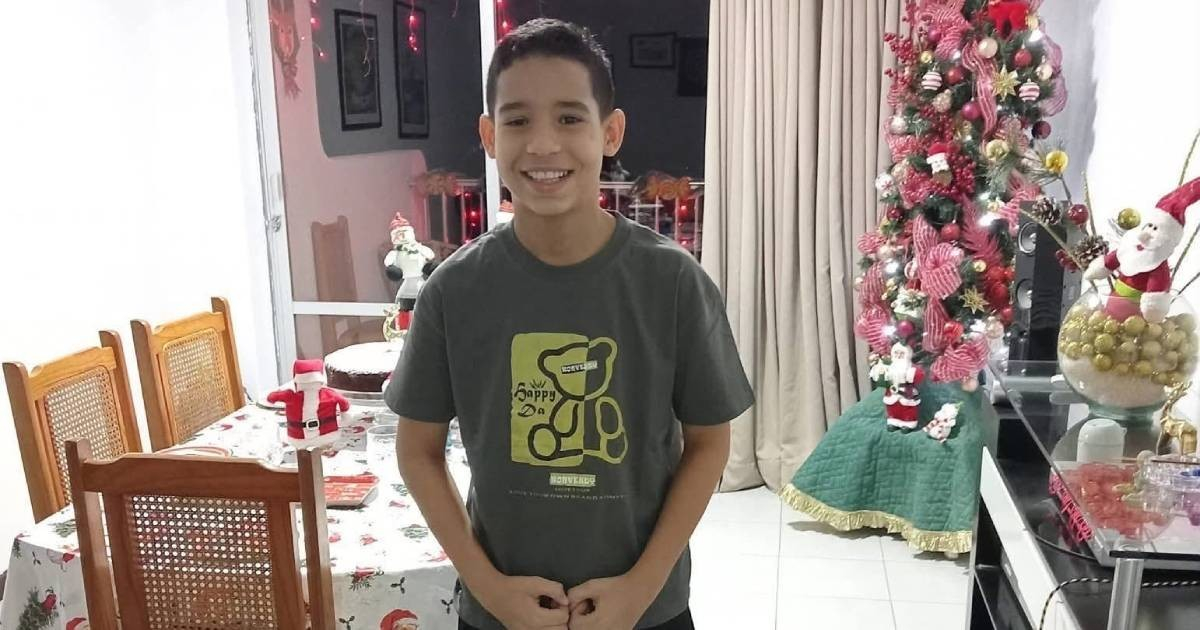
This past Sunday, the Martínez family confirmed the heartbreaking death of 10-year-old Dayán Martínez, a Cuban child who had been trapped for over 11 days beneath the debris of the Coral Beach building in Los Corales, La Guaira, Venezuela.
Journalist Jany González shared the sorrowful news on Facebook, posting a digital obituary released by Dayán's family.
González conveyed her grief, stating, "All hope has been extinguished. My deepest condolences to the Martínez family during this time of immense sorrow. It's devastating to learn of the loss of three children, including Dayán, for whom we had all been hoping for a miracle in recent days."
The obituary announced the tragic passing of the three young family members: "With heavy hearts, we inform our community that our beloved Vanesa, Ivanna, and Dayán are no longer with us."
Vanesa, Ivanna, and Dayán were cousins. The bodies of the two girls were discovered on Saturday, June 27, three days after the catastrophic earthquakes struck the nation.
The Martínez family concluded their message with gratitude to those who supported them: "We sincerely thank everyone who prayed, shared our story, sent encouraging messages, donated, or kept us in their thoughts during these challenging times. Your support was a beacon of light in our darkest hours."
Devastating Earthquakes in Venezuela
The family's ordeal began on June 24, 2026, when two massive earthquakes measuring 7.2 and 7.5 in magnitude, occurring just 39 seconds apart, obliterated numerous buildings in La Guaira.
Dayán, originally from Melena del Sur in Mayabeque province, was playing in the lobby of the Coral Beach building when the quake hit, trapping him in the basement with his friend Samuel.
On June 27, the family's first loss was confirmed when Dayán's sister, Vanessa Martínez, and his cousin, Ivanna Barreto, were found dead in the same building.
Efforts and Challenges in Rescue Operations
For more than a week, Dayán's story captured the attention of thousands on social media and drew international rescue teams from France, the United States, El Salvador, Mexico, and Taiwan.
On July 1, rescuers managed to make contact with the boy and confirmed he was alive alongside Samuel, sparking a surge of hope among his family and supporters.
Carleyns Kaina, a relative, stated at the time, "The correct information is that they found the children, meaning they spoke with them, they know it's Dayán and Samuel. Thank God they found another way to reach them."
However, numerous hurdles impeded the rescue: aftershocks—including a 4.6 magnitude tremor that halted operations for at least three hours—, the stench of decomposition that stopped a French team with tracking dogs, and reports from Dayán's father alleging that no rescuers were on-site: "There's no one there."
Dayán's grandmother, Isolina Dávila, had pleaded days earlier for the search to continue: "We've already lost two granddaughters. Dayán is the only grandson we have left."
Dayán's father, a Cuban doctor on an official mission in Venezuela, chose to remain in the country, while his mother resides in Cuba.
Widespread Impact and Loss
Dayán's death occurs amidst a disaster of historic scale. By July 4, the official earthquake toll had reached 2,954 dead and over 16,000 injured, with the UN estimating up to 50,000 missing nationwide.
Within the Cuban community, at least eight compatriots were confirmed dead, though the regime officially acknowledged only three fatalities, with 20 to 32 individuals still missing, primarily in Caraballeda, Catia La Mar, and Los Corales.
Key Questions About the Tragedy in Venezuela
What caused the building collapse in Venezuela?
The building collapse was caused by two powerful earthquakes measuring 7.2 and 7.5 in magnitude that struck La Guaira, Venezuela, on June 24, 2026.
Who were the victims in the Coral Beach building collapse?
The victims included three young family members: Dayán Martínez, Vanesa Martínez, and Ivanna Barreto, who were cousins.
How did the international community respond to the disaster?
The disaster prompted international rescue teams from several countries, including France, the United States, El Salvador, Mexico, and Taiwan, to assist in the search and rescue operations.