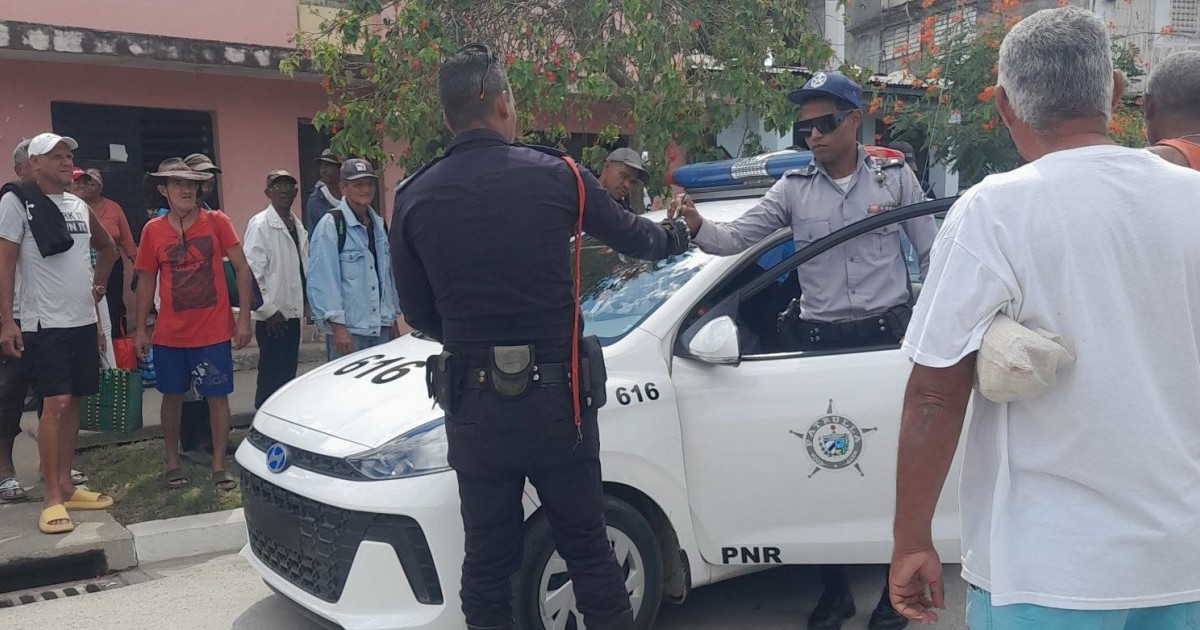
Five individuals are currently in custody following the theft of 110 liters of dielectric oil from two of the three transformers at "La Indiana" Pump Station in El Salvador municipality, Guantánamo. This incident directly disrupted the water supply to the community, as reported by the pro-government Facebook page "Guantánamo y su Verdad."
Initially, police apprehended three suspects identified as the primary perpetrators of the theft.
Subsequent investigations led authorities to two individuals involved in the illegal purchase, linked to a privately-owned truck. The thieves had sold them 80 liters of the stolen oil for 120,000 Cuban pesos.
The swift resolution of this case was made possible thanks to information provided by local residents and an undisclosed specialist from the electric company.
The source noted, "The information provided by the community was crucial in quickly identifying and apprehending the perpetrators."
Joaquín Díaz, Director of the Electric Company in Guantánamo, confirmed that the pumping system's failure was a direct result of the theft, exacerbating the already dire water crisis in El Salvador municipality, where over 15,000 residents lack direct water service from 15 non-operational pump stations. Water delivery cycles through tankers can last up to 25 days.
Dielectric oil, essential for operating and cooling electrical transformers, has become a coveted commodity on the Cuban black market, where it is resold as an alternative fuel for tractors and agricultural machinery at prices ranging from 600 to over 1,000 pesos per liter.
This trend has sparked a wave of dielectric oil thefts across the island in 2025 and 2026, driven by the energy crisis and fuel shortages.
Among the most severe incidents this year is the theft at the National Sanctuary of Our Lady of Charity in Santiago de Cuba, which left the church and its hostel without power, and the theft of 600 liters in Amancio, Las Tunas, cutting electricity to 40% of that municipality and affecting nearly 5,000 customers.
In response to the surge in these crimes, the Cuban regime has intensified its judicial measures.
The Supreme People's Court's Ruling 475/2025 classifies dielectric oil theft as sabotage of the National Electroenergetic System, with penalties ranging from seven to 30 years in prison, life imprisonment, or even the death penalty in aggravated cases. All those prosecuted for this crime in 2025 and the first quarter of 2026 received sentences exceeding 10 years.
Despite the threat of incarceration, the thefts persist. Cuba faces an electrical deficit exceeding 2,000 MW, with only 1,015 MW available against a demand of 3,150 MW, as of June 27. This structural crisis drives more people to seek on the black market what the state cannot provide.
Yoel Pérez García, the First Secretary of the Communist Party Provincial Committee in Guantánamo, warned that "there will be no impunity" for crimes related to the electroenergetic contingency in Guantánamo. This declaration starkly contrasts with the reality in a province where over 180,000 residents endure water pumping failures and the continual degradation of electrical infrastructure.
Key Concerns Surrounding Dielectric Oil Theft in Cuba
What is dielectric oil and why is it important?
Dielectric oil is essential for the operation and cooling of electrical transformers. It plays a critical role in maintaining the functionality and safety of power distribution systems.
Why is there a surge in dielectric oil thefts in Cuba?
The rise in dielectric oil thefts is fueled by Cuba's ongoing energy crisis and fuel shortages. The oil is resold on the black market as a substitute fuel for agricultural machinery, making it a lucrative target for thieves.
What actions are being taken to combat these thefts?
The Cuban government has increased judicial penalties for dielectric oil theft, categorizing it as sabotage with severe legal consequences. Despite these measures, thefts continue due to the country's severe energy deficiencies.