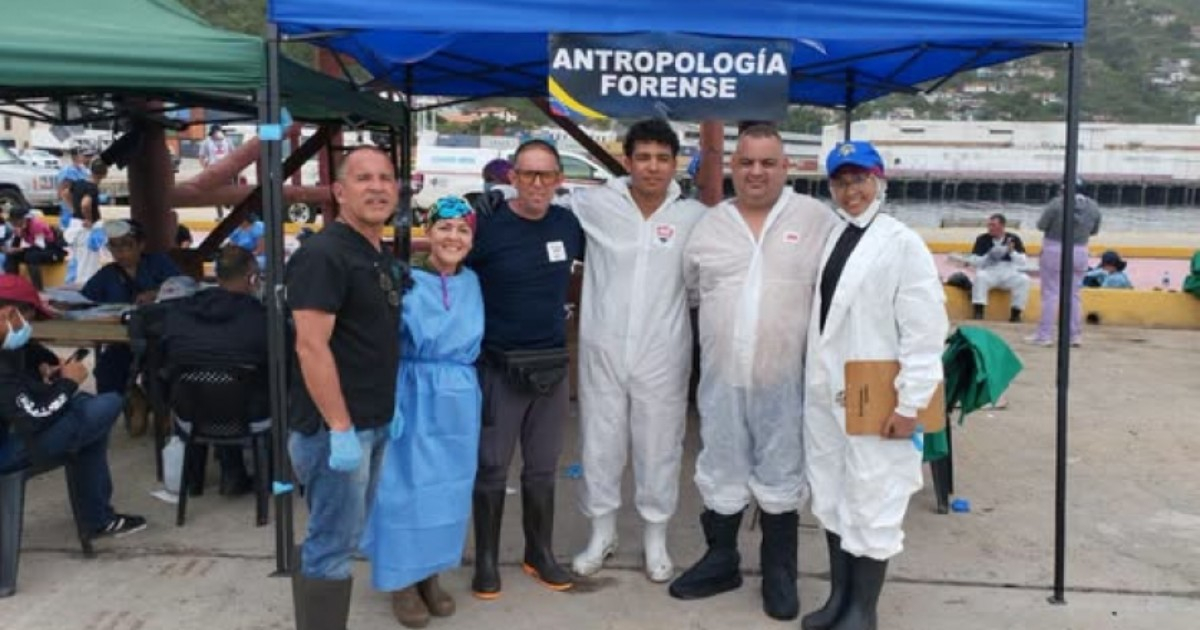
A team of eight Cuban forensic experts has been working tirelessly for four days, identifying between 50 and 60 bodies each day in La Guaira, the most devastated area by the double earthquake that struck Venezuela on June 24. These quakes, measuring 7.2 and 7.5 magnitudes, occurred just 39 seconds apart.
The team is comprised of five forensic pathologists, two forensic anthropologists, and a mortuary technician. They are the sole international group specializing in body identification collaborating with Venezuelan authorities during this crisis.
"In four days, we have identified approximately 50 to 60 bodies daily," stated Ruth Juárez Fontanet, a Cuban forensic pathologist, in an interview with La Jornada.
The gravity of these numbers is underscored by the official death toll on Saturday: 2,954 dead and 16,592 injured, according to Nicolás Maduro's government. However, the United Nations and the International Rescue Committee estimate between 50,000 and 68,000 people missing, highlighting the urgency of forensic work.
Challenges of Identifying the Missing
The citizen platform "Desaparecidos Terremotos Venezuela" reported over 35,564 missing persons by Saturday, while Maduro's administration has yet to provide an official count of the missing.
Alongside the forensic efforts, the Cuban Special Rescue and Salvage Brigade is operating in Caraballeda, specifically in the Coral Beach residences, where 18 Cubans are working to recover at least 10 bodies buried under rubble.
Rescuer Noel Silva described the brigade's protocol: "Our primary task is securing collapsed structures, as any movement poses significant risks to the rescue team. We then clear the areas to safely extract the victims."
Silva mentioned that the Cuban brigade has been on the ground since the second day following the disaster. They arrived in two groups: the first on June 28, and a second group of 13 specialists, including surgeons and forensic experts, on June 30. Together, they brought over seven tons of specialized equipment.
The Emotional Toll on Cuban Specialists
Among the specialists is forensic anthropologist Yoel Monzón González, head of the Forensic Anthropology Team in Matanzas, who emphasized the importance of identification: "In these moments, there is significant uncertainty among families who do not know if their missing loved ones are deceased or still alive."
This situation is especially poignant for Cuba, as while their experts identify Venezuelan victims, over 20 Cubans remain missing in La Guaira, with at least eight confirmed dead, including a family of six found in Playa Grande.
Monzón González expressed the moral weight guiding Cuban forensic efforts in Venezuela: "Every disaster results in numerous deaths that must be treated with dignity, and identities must be restored so families can continue their grieving process."
Recognition for Cuban Rescue Efforts
On Friday, the Venezuelan government awarded the "Heroes and Heroines of Venezuela" medal to the Cuban rescue team and their working dogs during a ceremony in La Guaira.
The event, led by Interim President Delcy Rodríguez at the Jorge Luis García Carneiro Operations Base, also included participation from Diosdado Cabello.
The ceremony honored a total of 478 specialists and 36 canines from 12 countries. Representing Cuba was Lieutenant Colonel Rubén Pupo and Ambassador Jorge Mayo Fernández.
In addition to the main distinction, the brigade's three Labrador retrievers—Tito, Eva, and Choco—received the "Canine Heroes of Venezuela" award for their efforts in locating individuals beneath the debris.
Key Questions About the Earthquake's Impact
What is the role of the Cuban forensic team in Venezuela?
The Cuban forensic team is responsible for identifying the bodies of earthquake victims in Venezuela, working in conjunction with local authorities to manage the aftermath of the disaster.
How many people are estimated to be missing following the earthquake?
Estimates from the United Nations and the International Rescue Committee suggest that between 50,000 and 68,000 people are missing, highlighting the critical need for ongoing search and identification efforts.