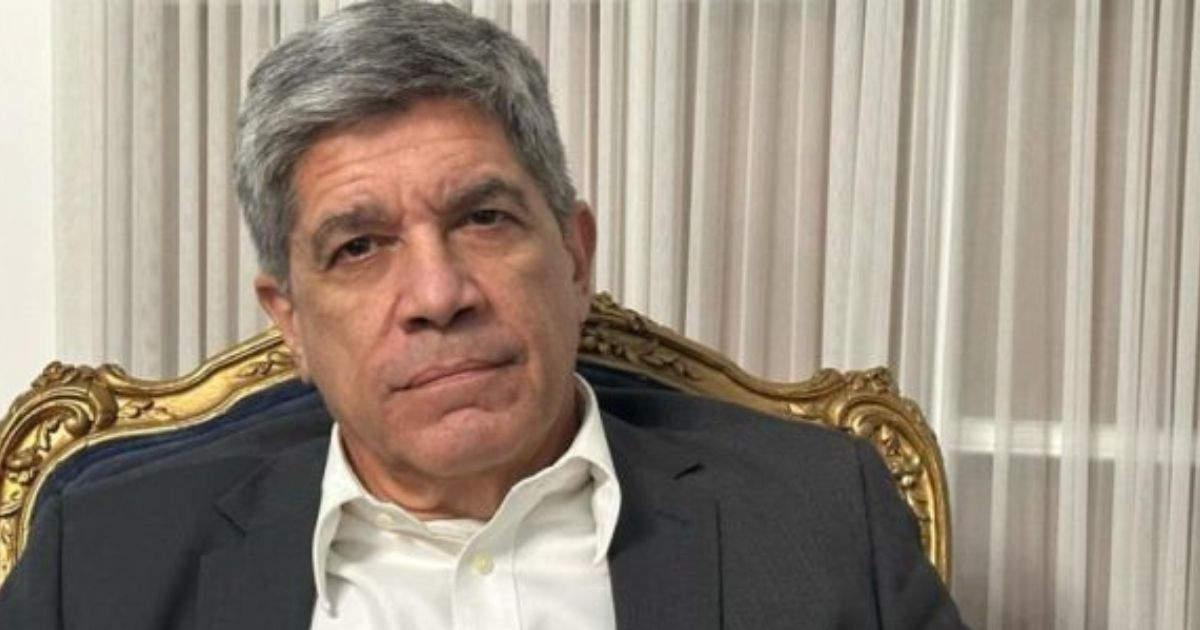
Carlos Fernández de Cossío, the Cuban regime's Deputy Foreign Minister, took to X on Sunday to post a series of statements accusing the U.S. State Department and what he called "Florida politicians with mafia ties" of denying tens of thousands of people in Latin America, the Caribbean, and Africa access to healthcare services.
In his thread, the official argued that "the gauge of success in the U.S.'s aggressive policy against Cuba is also measured by the number of communities, the tens of thousands of people in Latin America, the Caribbean, Africa, and other parts of the world who are deprived of access to health services."
Fernández de Cossío further elaborated in a follow-up message, asserting that "this deprivation results from the pressure exerted on the governments of these communities by the State Department and Florida politicians with mafia ties."
The vice minister's remarks come amid a rapid withdrawal of Cuban medical brigades from several countries, driven by pressure from the Trump administration.
Beginning in January 2025, Secretary of State Marco Rubio imposed visa restrictions on officials from countries that hire Cuban doctors, branding the program as an "atrocious practice of modern-day slavery" and "forced labor."
At least four countries have canceled or failed to renew their contracts with the brigades during 2026.
Jamaica ended nearly 50 years of cooperation in March; Honduras did not renew its agreement, leading to the departure of 168 Cuban doctors; Guatemala announced a gradual termination of the program; and Guyana also closed its agreement.
The Cuban regime defends its missions as "solidarity cooperation," but international organizations and the U.S. government point out that the state retains between 60% and 97.5% of the salary paid by host countries.
For instance, in Mexico, a Cuban doctor receives only 200 dollars from a monthly payment of 3,750 dollars.
The program generates over 4.9 billion dollars annually for the regime, making it one of its main sources of income.
In the same thread, Fernández de Cossío added a third ideologically charged message, claiming that "capitalism gave rise to modern slavery and the slave trade, to fascism and Nazism, to apartheid and Zionism, to human trafficking and drug trade," while acknowledging that "it also promoted advancements in science and culture, and enriched the most powerful."
This is not the first time the vice minister has stirred controversy on social media.
In May, he labeled those supporting military intervention in Cuba as "accomplices," and in June, he criticized Rubio's latest measures, calling the sanctions "extraterritorial" and "unbelievable."
In April 2025, the European Parliament approved Amendment 311, which also labels Cuban medical brigades as "modern slavery," aligning with Washington's stance.
Cuba currently maintains over 16,000 health collaborators in 50 countries, according to data from the regime itself, a figure that could decrease further if Washington's pressure on host countries continues to escalate.
Frequently Asked Questions about Cuba's Medical Brigades
What is the Cuban medical brigade program?
The Cuban medical brigade program involves sending Cuban doctors to various countries, purportedly as a form of international solidarity and cooperation. However, it has been criticized for being a source of revenue for the Cuban regime and for the exploitation of medical professionals.
Why are countries canceling contracts with Cuban medical brigades?
Countries are canceling contracts due to pressure from the U.S., which has imposed restrictions and criticized the program as modern slavery and forced labor. These claims have led to reevaluations of the agreements by host nations.
How does the Cuban government benefit from the medical brigade program?
The Cuban government benefits financially by retaining a significant portion of the salaries paid by host countries for the medical services provided by Cuban doctors, generating billions of dollars annually.