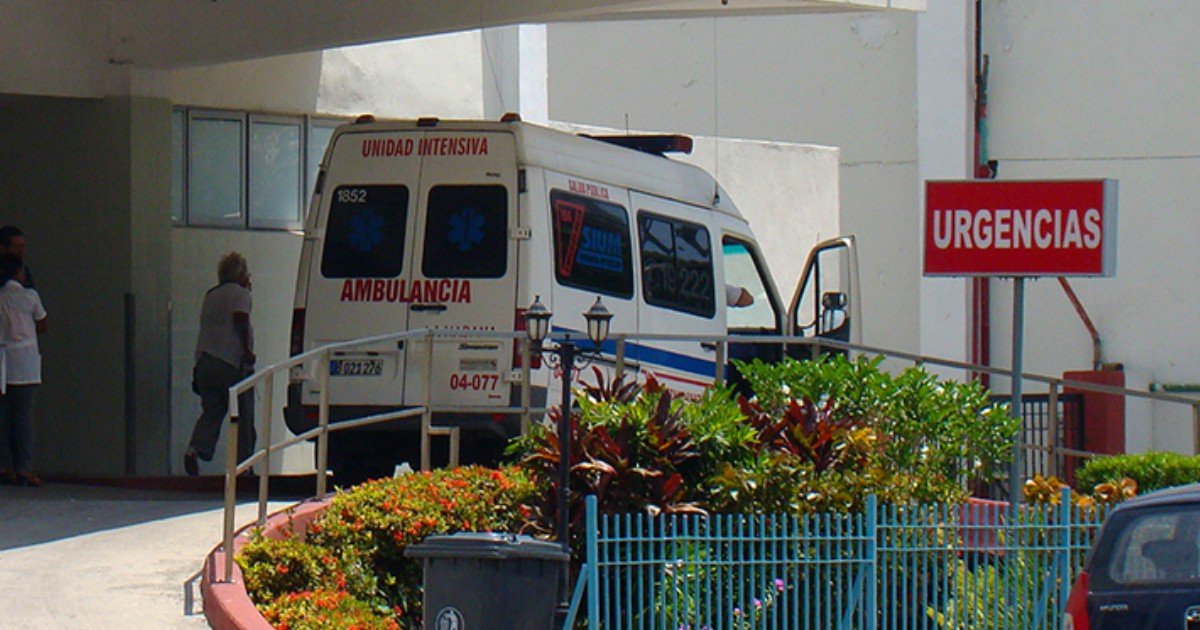
In 2025, Cuba reported a total of 664 workplace accidents resulting in 701 injured workers and 38 fatalities, as detailed in the Workplace Protection report. This information was released by Cuba's National Office of Statistics and Information (ONEI).
This marks a decrease of 271 incidents compared to 2024, which saw 935 accidents and 52 deaths. The downward trend has been ongoing since 2023, when 1,498 accidents with 52 fatalities were recorded.
Despite the reduction in accident numbers, there has been no significant improvement in safety conditions, and accidents continue to occur across nearly all economic sectors in Cuba.
Geographic Disparities: High Concentration in Havana
The geographic distribution of these incidents reveals stark differences between provinces. Havana, with its high population density, accounted for 255 accidents, representing nearly 40% of the national total. This is largely due to Havana's status as the most populous province, housing 18% of Cuba's population and numerous workplaces.
Other affected areas include Holguín with 95 accidents, Santiago de Cuba with 65, Guantánamo with 39, Granma with 35, and Camagüey with 31. Together, Havana, Santiago de Cuba, and Holguín make up 37.2% of the nation's population within just 14.6% of its land area.
Sector-Specific Impacts: Highest Risks and Fatalities
Manufacturing industries led in accident numbers with 112 cases, followed by Public Health and Social Assistance with 93, Transportation with 71, Commerce with 53, and Hotels and Restaurants with 48.
However, the sector with the highest fatalities was Construction, which, despite not having the most accidents, suffered 10 deaths. This was followed by Electricity, Gas, and Water; Commerce; and Transportation, each with five fatalities. This highlights the severity of incidents in certain sectors due to high-risk factors like working at heights and handling heavy machinery.
Of the 701 injured, 488 were men (approximately 70%) and 213 were women. The higher male injury rate is linked to their prevalence in high-risk sectors such as construction, mining, and transportation. Among women, the highest injury rates were in Public Health, Education, Hotels and Restaurants, and Commerce.
Illustrative Cases of Structural Issues
The statistics reflect individual tragedies. On June 18, two workers from Labiofam in Villa Clara—Luis Díaz "Yunior" and Eduardo—died from toxic gas inhalation while cleaning a molasses tank without safety measures.
Earlier, electrician Osmani Rosales Núñez, 39, was electrocuted in Cárdenas, Matanzas, while repairing a fault under extremely hazardous conditions.
In September 2025, Carlos Rafael López Ibarra, a 33-year-old turbine operator at the Renté thermoelectric plant, succumbed to burns covering 89% of his body due to a steam pipe failure.
These incidents share common factors: deteriorating infrastructure, lack of protective equipment, and inadequate safety protocols.
Skepticism Towards Official Data and Institutions
Independent unions are questioning the reliability of ONEI's data, suggesting possible underreporting. A survey conducted by ASIC and ACTAE between April and June 2025, involving 444 workers, found that 82% had never received occupational safety and health training, 52.5% lacked personal protective equipment, and 95.5% did not trust government institutions for accident-related support.
In 2024, the death rate per 1,000 injured rose nearly 60%, from 33.7 in 2023 to 53.3, indicating that while accidents are fewer, they are increasingly deadly.
Even state media outlet Cubadebate acknowledged that "although the 2025 statistics show a reduction in workplace accidents compared to the previous year, we must not overlook ongoing failures."
Understanding Workplace Safety Challenges in Cuba
Why is Havana experiencing the highest number of workplace accidents in Cuba?
Havana has the highest number of workplace accidents due to its large population density and the concentration of numerous work centers. Being the most populous province, it naturally sees more incidents.
What sectors in Cuba have the most workplace fatalities?
The construction sector, despite not having the most accidents, recorded the highest number of fatalities. Other sectors with significant fatalities include Electricity, Gas, and Water, Commerce, and Transportation.
What are the main causes of workplace accidents in Cuba?
Workplace accidents in Cuba are primarily caused by deteriorating infrastructure, lack of protective equipment, and inadequate safety protocols, which are prevalent across various sectors.