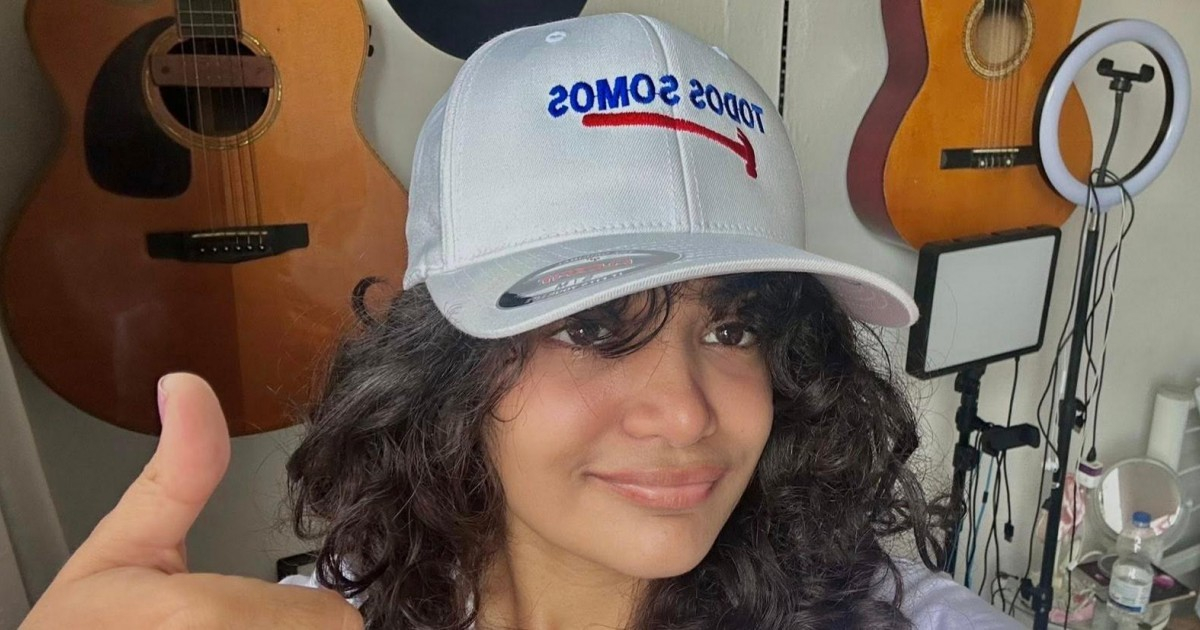
Cuban activist Anna Bensi stood her ground on Saturday against attempts to discredit her emotional response, clarifying that her tears upon leaving the Alamar police station were not a sign of weakness but rather a result of nearly 11 hours of psychological pressure.
In a tweet shared on Saturday, the 21-year-old member of the "Fuera de la Caja Cuba" collective stated, "My tears were out of helplessness, anger over so many hours of injustice. It wasn't weakness; on the contrary, all these experiences have only strengthened my convictions."
With a touch of irony, Bensi pointed out that "the order to discredit has been given" and posed a direct question to her critics: "They criticize me for crying after 11 hours of psychological mistreatment, yet the Dictatorship has been considering some 'little videos' a threat to their 'sovereignty' for months. Who is truly crying out of weakness?"
The Ordeal of July 3rd
The incident began on Thursday, July 3rd, when Bensi was summoned to the National Revolutionary Police Station in Alamar, Havana, at 10:02 a.m. under the guise of receiving an "official warning." She was not released until 8:56 p.m., nearly four times the legal two-hour limit set by Cuban law for such interviews.
During her detention, as Bensi revealed after being freed, officers demanded she alter the content of her videos, threatened her with imprisonment for "inciting public disorder," and coerced her into signing a formal warning under Article 268 of the Penal Code without providing her a copy of the document.
Upon her release, Bensi broke into tears and was met with applause from family, friends, and activists waiting outside. The video of this moment quickly went viral, becoming a symbol of resistance, but it also sparked a campaign by regime-affiliated accounts—known as "ciberclarias"—to portray her reaction as a sign of fragility.
Support and Solidarity
Support swiftly followed. Journalist Mónica Baró defended the young activist with a powerful statement: "You have to be very strong to come out of a detention of more than ten hours at just 21 years old. The light belongs to Anna Sofía."
Activist Saily González added that the tears were "the response to maintaining her composure amidst systematic torment."
Actor Erdwin Fernández Collado described the episode as "the true face of the dictatorship."
Ongoing Harassment
The harassment against Bensi did not begin on that Thursday. Since March 25, 2026, she and her mother, Caridad "Cary" Silvente, have been under house arrest, charged under Article 393 of the Penal Code for "acts against personal and family privacy," facing prison terms of two to five years after filming a MININT agent delivering an irregular summons at their home.
In April 2026, counterintelligence agents attempted to recruit her as an informant, offering support for her music career. Her response was unequivocal: "I will never work for a dictatorship."
In May 2026, U.S. Special Envoy for Cuba, Mike Hammer, met with her in Havana and conveyed greetings from Secretary of State Marco Rubio, elevating her international profile.
Amnesty International has been attentive to Bensi's case due to her defense of freedom of expression, while the Cuban regime continues to treat the videos of a 21-year-old as a threat to their "sovereignty."
Frequently Asked Questions about Anna Bensi's Detention and Activism
Why was Anna Bensi detained for so long?
Anna Bensi was detained for nearly 11 hours, far exceeding the legal limit, due to the authorities' demands for her to alter her video content and threats of imprisonment, which was a tactic of psychological pressure.
What was the reaction to Bensi's emotional response?
While regime-affiliated accounts tried to depict her tears as weakness, supporters quickly rallied to her defense, highlighting her strength and resilience in the face of oppression.
How has Anna Bensi's case gained international attention?
Her meeting with U.S. Special Envoy Mike Hammer, along with support from international organizations like Amnesty International, has brought global attention to her activism and the challenges she faces.