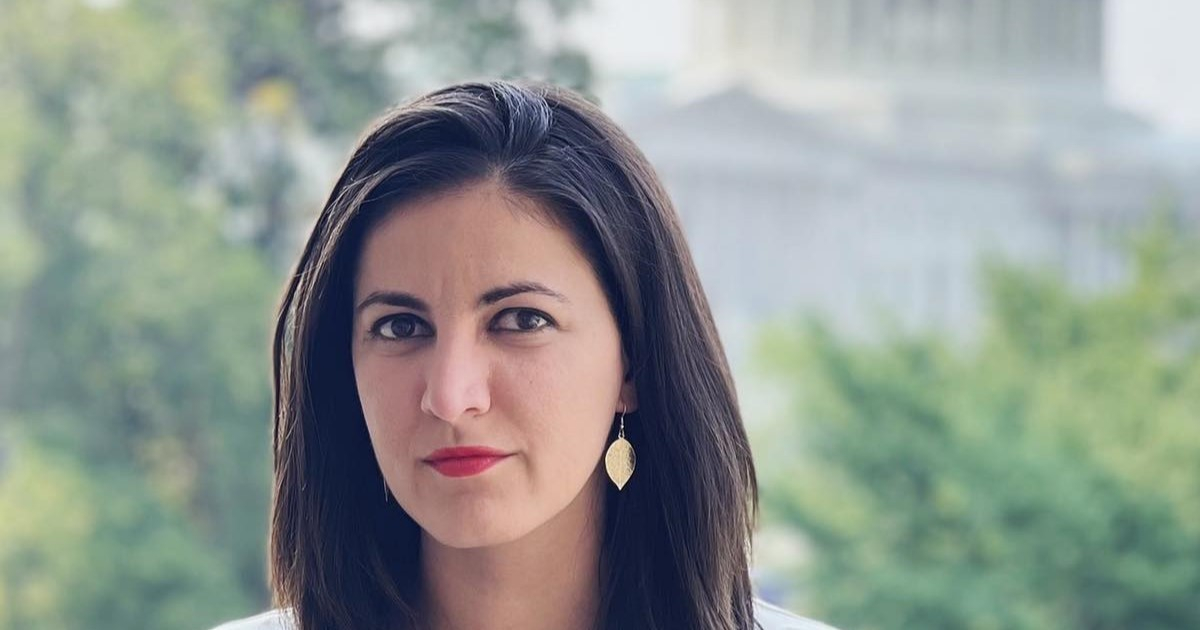
On Saturday, Cuban activist and opposition figure Rosa María Payá shared a heartfelt message with the Cuban-American community, commemorating the 250th anniversary of the United States' independence. She emphasized the profound significance of this day for those who fled to the U.S. seeking refuge from the oppressive regime in Cuba.
“Today, Cuban-Americans honor the nation that welcomed them with open arms. The United States marks 250 years. They arrived with nothing and built lives, all while never forgetting those still fighting. Cuba will be free too. Happy Independence Day!” Payá expressed on her X account, alongside an image of a neoclassical building adorned with the American flag against a clear blue sky.
The message encapsulates the feelings of numerous generations of Cubans who found sanctuary in the United States, celebrating July 4th as a personal emblem of freedom while holding onto the hope that such liberty will eventually reach their homeland.
The phrase “arrived with nothing and built lives” vividly reflects the over sixty years of Cuban exile experienced on American soil. Since 1959, successive waves of migrations have brought hundreds of thousands of Cubans to places like Miami and Tampa.
The Historical Journey of Cuban Exiles
Miami’s Freedom Tower, often referred to as the "Ellis Island of the South," welcomed over 500,000 refugees fleeing Fidel Castro's regime between 1962 and 1974. This iconic structure reopened in September 2025 as a museum after a $65 million restoration, featuring the "Exile Experience."
This year's 250th anniversary celebrations carry special significance. Former President Donald Trump delivered a speech at Mount Rushmore on Friday, the eve of the event, with the theme “Our Achievements Make Us American.” The official “Salute to America 250” event took place on Saturday at the National Mall in Washington D.C., featuring over 300 military musicians, aerial flyovers, and a grand fireworks display with 850,000 shells launched from ten different locations.
Cuban-American Contributions to U.S. Legacy
Secretary of State Marco Rubio, a Cuban-American born in Miami to Cuban immigrant parents, also participated in the celebrations. He highlighted the historical weight of the date, stating, “In 1776, a small group of patriots signed a document that challenged an empire and changed the world.” Rubio’s story embodies the journey Payá describes: the child of immigrants who now holds a prominent position in the U.S. government.
Payá's message comes at a time of significant activity for the opposition leader. In March 2026, she signed the “Cuba Liberation Agreement” in Miami, a three-phase democratic transition roadmap later ratified in Madrid in June and formally recognized by the Florida Senate in April.
In May, she was awarded the Alfred Moses Liberty Award by Freedom House in Washington, dedicating the honor to over 1,000 political prisoners in Cuba and condemning the prison death of Ernesto Brieva Sempé due to severe malnutrition.
As the daughter of dissident Oswaldo Payá—founder of the Christian Liberation Movement who died on July 22, 2012, under circumstances his family attributes to a state security operation—Rosa María has transformed her father's legacy into a global cause.
In June 2025, she became the first Cuban opposition member elected to the Inter-American Commission on Human Rights, an appointment the regime dismissed as “mercenary.”
Concluding her July 4th message, Payá reaffirmed the promise that fuels her efforts: “Cuba will be free too.”
Understanding Cuban-American Celebrations and Impact
Why do Cuban-Americans celebrate the U.S. Independence Day?
For Cuban-Americans, the U.S. Independence Day symbolizes the freedom and opportunities they found in America, a stark contrast to the oppressive regime they fled in Cuba.
What is the significance of the Freedom Tower in Miami?
The Freedom Tower in Miami, known as the "Ellis Island of the South," played a crucial role in welcoming over 500,000 Cuban refugees fleeing the Castro regime between 1962 and 1974.
Who is Rosa María Payá and what is her role?
Rosa María Payá is a prominent Cuban activist and opposition leader advocating for democracy and human rights in Cuba. She is the daughter of the late dissident Oswaldo Payá and continues his legacy on a global stage.