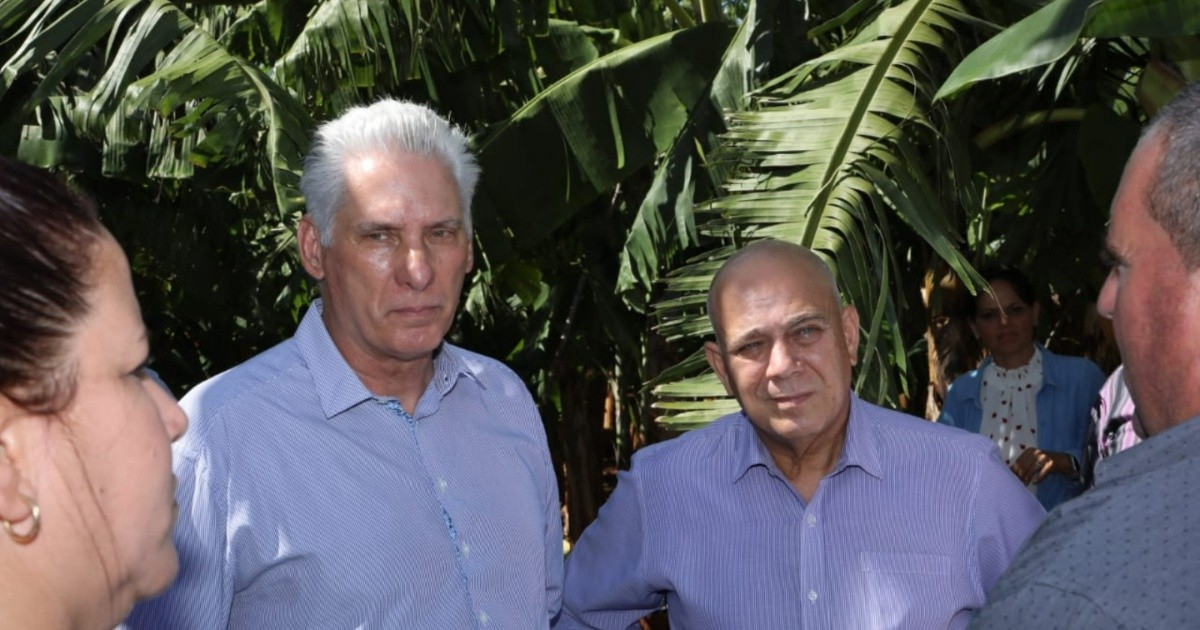
Roberto Morales Ojeda, the Secretary of Organization for the Central Committee of the Communist Party of Cuba and a member of the Political Bureau, took to X this past Saturday to extend a message to the American people on the occasion of their 250th Independence Day. He included a quote attributed to Fidel Castro, highlighting a distinction between American citizens and the Trump administration.
"We congratulate the people of the U.S. on their Independence Day," Morales Ojeda stated, before echoing words he credits to the late Cuban leader: "We know how to distinguish between a noble and supportive people on one side and an imperial government and a handful of haters on the other. We are anti-imperialists, not 'anti-Americans.'"
The message, marked with hashtags #Fidel and #CubaEstáFirme, was accompanied by an image of Castro speaking into a microphone with the Cuban flag prominently displayed in the background.
Context of Morales Ojeda's Message
The timing of this gesture is particularly notable. Morales Ojeda was added to the U.S. Treasury Department's Specially Designated Nationals list on May 18, 2026, under Executive Order 14404 signed by President Donald Trump on May 1, aimed at sanctioning those responsible for repression in Cuba.
During that same round of sanctions, ten other high-ranking Cuban officials were targeted, including Esteban Lazo Hernández, the President of the National Assembly, and Mayra Arevich Marín, the Minister of Communications, as well as three entities: the Directorate of Intelligence (G2), the Ministry of the Interior, and the National Revolutionary Police.
U.S.-Cuba Relations at a Low Point
Morales Ojeda's reference to the "imperial government" and "handful of haters" is directed at the same administration that sanctioned him just three days prior, following his public boast of what he claimed to be the Cuban regime's transparency.
The relationship between Havana and Washington is currently at its lowest point in decades. Since January 2026, the Trump administration has halted oil shipments from Venezuela and Mexico to Cuba, leading to widespread blackouts, food shortages, and hospital fatalities.
In April, a secret meeting between a U.S. State Department delegation and Cuban officials in Havana demanded the release of political prisoners within two weeks, warning that "the Cuban economy is in freefall."
By May, the Cuban regime rejected a $100 million humanitarian aid offer proposed by Secretary of State Marco Rubio, and by June 24, the U.S. had imposed a fresh set of sanctions on five Cuban entities. Since the start of 2026, over 240 additional sanctions have been levied against the island by Washington.
Morales Ojeda’s rhetorical distinction between the American people and their government—a staple of Cuban revolutionary discourse often reiterated by Castro—serves as an implicit response to the mounting pressure.
Meanwhile, the U.S. Embassy in Havana shared its own message for the day: "Cuba's future is bright, prosperous, and free."
Insights on U.S.-Cuba Diplomatic Dynamics
What prompted Morales Ojeda's message to the U.S.?
Morales Ojeda's message was a gesture to mark the U.S. Independence Day, drawing on Fidel Castro's rhetoric to distinguish between the American people and their government.
Why is the timing of Morales Ojeda's message significant?
The message was delivered shortly after Morales Ojeda was sanctioned by the U.S. Treasury Department, adding weight and context to his remarks.
How have U.S.-Cuba relations evolved under the Trump administration?
Relations have significantly deteriorated, marked by halted oil shipments, widespread sanctions, and diplomatic tensions.