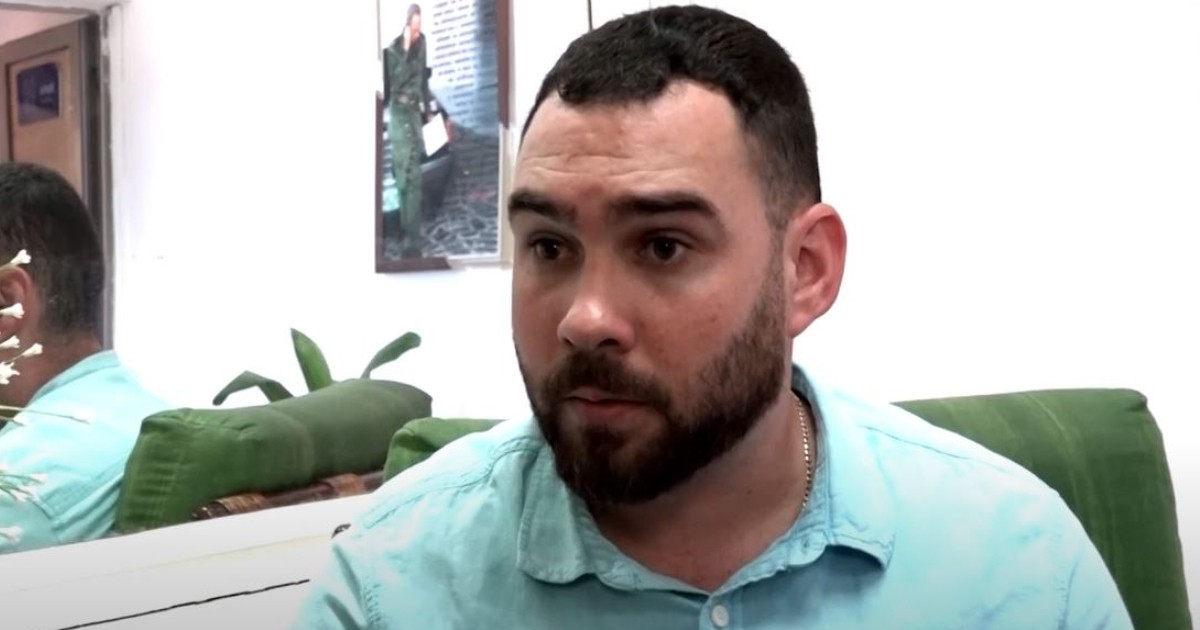
Elian Gonzalez, a member of Cuba's National Assembly and a prominent symbol of the Cuban regime, recently traveled to Spain to participate in the XVIII State Meeting of Solidarity with Cuba. During his visit, he granted an interview to the Asturian newspaper El Comercio, where he struggled to identify any faults within the Cuban government's policies when asked for self-criticism.
When pressed by the journalist to name specific errors of the Cuban government, Gonzalez responded, "The truth is, for me, it's difficult to pinpoint them. I wish I knew what needs to be done to overcome this situation."
The once-famous "little rafter" suggested that what are perceived as domestic policy errors "become errors when an external blockade is imposed," thus attributing the Cuban crisis to Washington's sanctions.
Gonzalez claimed that "Cuba is under a triple siege like never before," and described denying the existence of the U.S. embargo on the island as "slanderous" and "the lowest," blaming it for the fuel shortages and economic hardships faced by the Cuban people.
Nevertheless, he avoided discussing the 67 years of communist dictatorship, the regime's management, structural corruption, or the military's control over the economy as contributing factors to the nation's collapse.
The Elian Gonzalez Case: A Political Pawn?
Reflecting on his personal history, the child at the center of a major diplomatic crisis between Cuba and the United States acknowledged that "the Cuban exile community wanted to use my case as a trophy against Cuba," and that his father's family in Miami was ultimately swayed by political influences.
He denied being used by the regime, asserting, "What they did was return me to my father, and everything that has happened since was not because it was politicized but because it was my choice to do so."
Elian also acknowledged that Cuban emigration is a "natural phenomenon," primarily driven by economic reasons, although it "ends up being politicized."
Views on U.S. Intervention and Cuban Politics
Regarding the potential for military intervention by Donald Trump in Cuba, Gonzalez stated, "We fear an intervention because of the potential loss of life it could cause, but not from the perspective of confronting it. We do not fear facing the United States as an adversary."
Gonzalez's statements are consistent with his role as a propaganda figure for the regime. In October 2025, he blamed the United States for Cuba's problems during the Ninth Continental Meeting of Solidarity with Cuba in Mexico, where he also asserted that the government "does not make major mistakes."
In May of this year, he defended Raul Castro following the U.S. Department of Justice's criminal charges over the 1996 downing of the Brothers to the Rescue airplanes, dismissing the accusation as "nonsense" and admitting his initial reaction was "laughter."
Elian currently serves as the assistant director of AT Comercial Varadero, a company under the military-business conglomerate GAESA, and was elected as a deputy for the municipality of Cardenas (Matanzas) in March 2023.
His visit to Gijon, Asturias, which continues through this Sunday, includes a presentation alongside Fidel Castro Smirnov, Fidel Castro's grandson, titled "The Cuba That Lies Ahead: Memory, Peaceful Future, and Revolution," as well as the unveiling of a collective book commemorating the centenary of the dictator's birth.
Understanding Elian Gonzalez's Perspective on Cuba's Challenges
What are Elian Gonzalez's views on the Cuban government's errors?
Elian Gonzalez finds it difficult to identify specific errors by the Cuban government and wishes he knew what actions could be taken to resolve the current situation.
How does Elian Gonzalez explain the Cuban economic crisis?
Gonzalez attributes the Cuban economic crisis to U.S. sanctions, describing the embargo as a significant external blockade affecting the country's internal policies.
What is Elian Gonzalez's position on a possible U.S. military intervention in Cuba?
Gonzalez fears the potential loss of life from a military intervention but is not afraid of confronting the United States as an adversary.