On July 4, 2026, the United States commemorates 250 years since one of the most significant declarations in human history. The Declaration of Independence was not merely a political document or the dissent of thirteen colonies. It marked a break from the old order and the notion that people are born to serve kings or privileged classes. Its core assertion was that humans have inherent rights, legitimate power arises from the governed's consent, and a people can alter or abolish a government that violates their freedoms.
Thomas Jefferson penned the primary draft, but it was also shaped by John Adams, Benjamin Franklin, Roger Sherman, Robert Livingston, and those in the Continental Congress who risked severing their colonies from the era's largest empire. These founders lacked guarantees of success; they faced potential defeat, imprisonment, execution, or ruin. Yet, they understood that certain causes surpass comfort, wealth, and even life itself: freedom, human dignity, and a nation's right to self-governance.
Struggles and Sacrifices of the Revolutionary War
The Declaration set the stage, and George Washington ensured it didn't end in failure. Leading a poorly equipped and undernourished army, facing illness, desertions, and significant challenges, Washington fought the formidable British forces. Valley Forge remains a symbol of that resilience: in December 1777, the Continental Army entered exhausted and under-provisioned but emerged months later more disciplined, united, and prepared for continued warfare. American independence was not born of ease; it stemmed from perseverance through cold, hunger, uncertainty, and sacrifice.
International Support and Contributions
Victory also came from allies and nations recognizing the epic scope. France provided crucial forces; Spain opened another British front; and Cuba, then a Spanish colony, made a noteworthy contribution. In 1781, Francisco de Saavedra rallied Havana's residents to fund the French fleet aiding the Yorktown campaign. Per the U.S. National Park Service, over 500,000 pesos were raised in just six hours. This support reached Admiral De Grasse's squadron before heading to Chesapeake Bay, where French-American cooperation cornered British General Charles Cornwallis.
Enduring Legacy and Present Challenges
Two and a half centuries later, America's greatness isn't solely in military might, wealth, science, universities, businesses, inventions, or global influence. Its most valuable asset is upholding, refining, and defending an idea: no power should surpass the law, citizens have rights that cannot be arbitrarily granted or revoked by the state, and personal freedom, private initiative, faith, family, work, and personal responsibility are society's cornerstones.
While the U.S. has faced contradictions, errors, and painful episodes—no nation is perfect—its strength lies in principles and rights that address its shortcomings: equality before the law, freedom of expression, power division, political alternation, religious conscience respect, and the potential for humble individuals to rise through effort, talent, and discipline. The Declaration didn't immediately resolve all injustices but provided a moral benchmark for future generations demanding more freedom and rights.
Commemorating Freedom and Warning of Threats
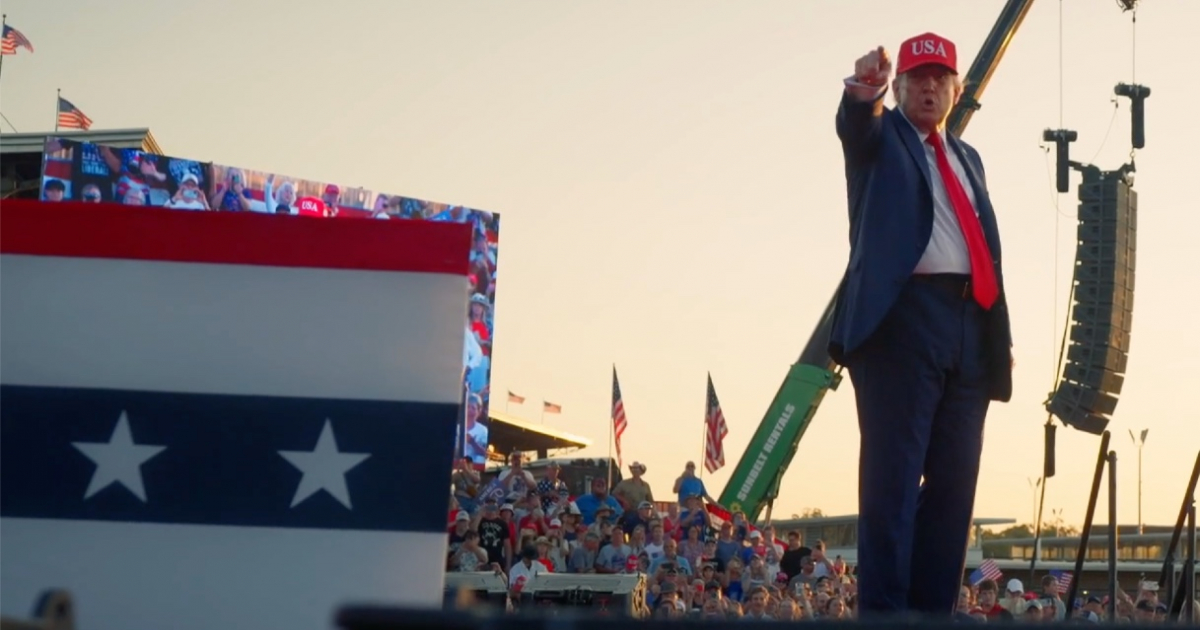
This underscores the significance of President Donald Trump's speech on July 3 at Mount Rushmore, South Dakota. Before the images of Washington, Jefferson, Lincoln, and Theodore Roosevelt, Trump framed the anniversary as a reminder that American freedom isn't preserved by inertia. He warned of the resurgence of communism, deeming it incompatible with freedom, the Constitution, and the essence of July 4, 1776. The president referenced the "defeat of Venezuela" and the "blow dealt to the Iranian fundamentalist regime," but omitted Cuba.
"Communism isn't a harmless difference in opinion on taxes or regulations." Where it has seized absolute power, it has destroyed private property, crushed press freedom, persecuted believers, punished dissent, created political police, and turned lies into governance. Communists promise equality and deliver misery; promise justice and impose oppression; promise liberation and produce slaves.
The Trump administration must remain steadfast against this grave threat domestically and internationally. It's not about persecuting legitimate thought or criminalizing democratic dissent; nor infringing on other nations' sovereignty. It's about preventing totalitarian ideologies from exploiting free institutions to destroy liberty and ensuring criminal dictators don't enslave their people.
Just 90 miles from Florida lies a communist dictatorship, unrelenting in oppressing the Cuban people and serving as a platform for interests hostile to the U.S. The executive order signed by Trump on January 29, 2026, declared the Cuban regime an unusual and extraordinary threat to U.S. national security and foreign policy, citing its ties with Russia, China, Iran, Hamas, and Hezbollah, alongside its repression of dissidents and citizens.
As long as Cuba, Venezuela, and Nicaragua remain undemocratic, the continent faces ongoing instability and authoritarian expansion. For over six decades, Castroism has proven unreliable: it deceives and manipulates to maintain power. U.S. policy should combine effective pressure and robust actions against repressive elites, direct solidarity with oppressed peoples, and clear support for genuine democratic transitions.
Washington, Jefferson, Adams, Franklin, Truman, Reagan, and many others understood, in their time, that freedom needs bold and firm defenders. The memory of young Frenchman Gilbert du Motier, Marquis de Lafayette, who voluntarily joined the fight for the independence of the Thirteen Colonies, comes to mind.
God bless this Great Nation on its 250th independence anniversary. Congratulations to all Americans striving for democracy, human rights, progress, prosperity, and their country's strength. The United States must continue to be, in America and globally, the guardian and defender of liberty against all tyranny.
Understanding the Threats to American Freedom
What principles does the Declaration of Independence emphasize?
The Declaration of Independence emphasizes inherent human rights, legitimate power deriving from the consent of the governed, and the right of people to change or abolish a government that violates their freedoms.
How did international allies contribute to American independence?
International allies like France and Spain provided crucial support, with France sending decisive forces and Spain opening another front against Britain. Cuba, as a Spanish colony, also significantly contributed by raising funds for the French fleet aiding the Yorktown campaign.
What are the current threats to American freedom according to President Trump?
President Trump highlighted the resurgence of communism as a current threat, describing it as incompatible with American freedom, the Constitution, and the values of July 4, 1776.