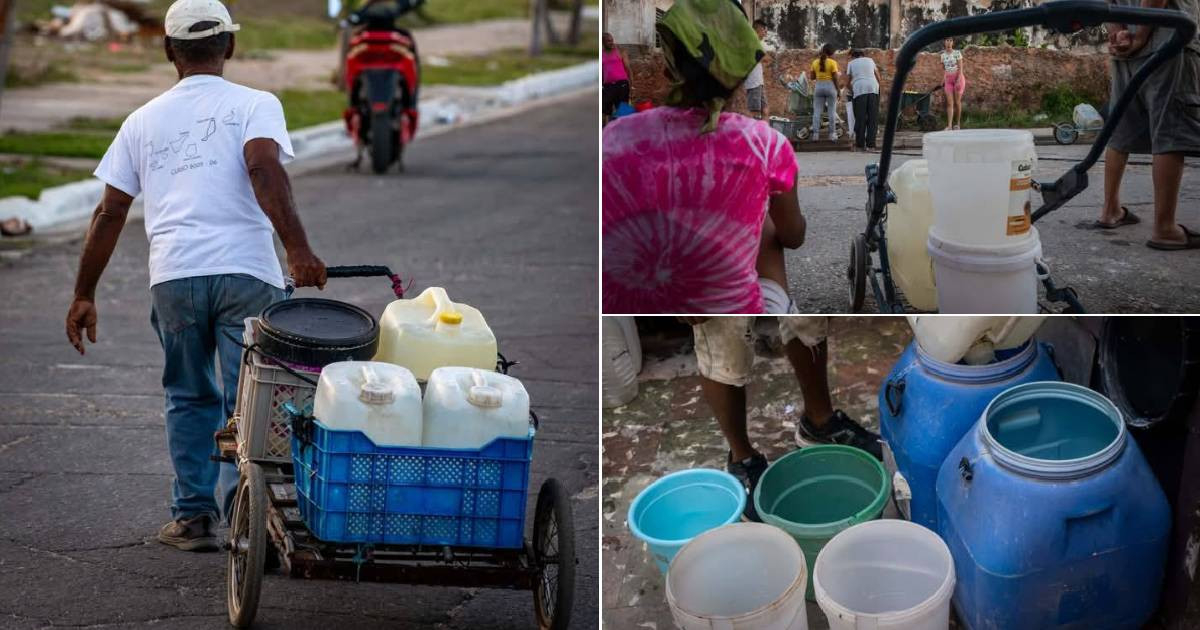
In Colón, Matanzas, residents are voicing their frustrations over a three-month-long drought of potable water in neglected areas of the municipality. This dire situation is exacerbated by ongoing power outages that extend beyond 72 consecutive hours, as detailed in a citizen's complaint circulated on social media this past Friday.
"Our situation is unbearable. We've been without drinking water for three months, which severely impacts our health, hygiene, and overall quality of life," states the complaint. This message is accompanied by an image of a rusty faucet surrounded by buckets and containers, along with a handwritten sign: "NO WATER FOR 3 MONTHS. ENOUGH IS ENOUGH! WATER IS A RIGHT, NOT A PRIVILEGE."
Residents have reported the crisis to authorities but have been met with silence: "Despite previously notifying the appropriate authorities, we have received neither a solution nor a clear response regarding when the service will be restored."
This crisis in Colón is not an isolated incident but rather the latest manifestation of a longstanding structural water crisis that has plagued the municipality for years.
Extended Power Outages Compound the Crisis
Back in January, Colón was already experiencing blackouts extending up to 40 hours, and throughout 2023, there were numerous pleas for help due to water shortages in the same area, highlighting the chronic and systemic nature of the problem.
The root of this water supply collapse is largely due to the Cuban hydraulic system's dependence on the National Electric System for 87% of its water pumping. Consequently, every prolonged blackout also halts the water supply.
In the province of Matanzas, power outages exceeded 70 hours in certain circuits by late June, attributed to damage inflicted on eight substations and numerous faulty transformers, coupled with thefts of dielectric oil.
Provincial Governor Sabines Lorenzo acknowledged on June 27 that some circuits had experienced between 50 and 60 hours of outages. Meanwhile, areas like Unión de Reyes and Santa Marta reported power cuts of 88 to 96 hours, leaving residents without electricity or water.
A National Crisis with Severe Implications
The situation in Matanzas is indicative of a nationwide crisis of alarming proportions.
As of May 2026, data published by the Los Angeles Times in Spanish revealed that approximately 2.7 million Cubans lack regular access to potable water, nearly 10 million experience intermittent supply, and in 43.3% of households, water is available only every three days or longer.
Compounding the issue, the hydraulic system operates with just 37% of the fuel required for pumping, and all municipalities in Matanzas report ongoing technical breakdowns that persist for months without resolution.
In desperation, residents across the province have resorted to digging between 20 and 40 wells in sidewalks and yards to alleviate the shortage, risking fecal contamination and potential hepatitis outbreaks.
Despite reported improvements through solar pumping initiatives by Recursos Hidráulicos, over 29,000 people in Matanzas still lack stable water access, according to 2026 data.
Colón's residents are demanding an immediate response from the regime: "Access to water is a fundamental right that cannot continue to be ignored."
FAQs on Water and Power Crisis in Colón, Matanzas
What is causing the water crisis in Colón, Matanzas?
The water crisis in Colón, Matanzas, is primarily due to the heavy reliance on the National Electric System for water pumping. Prolonged power outages halt the water supply, creating a dire situation for residents.
How are residents coping with the lack of water?
In response to the water shortage, residents have been digging wells in sidewalks and yards, despite the risk of fecal contamination and possible hepatitis outbreaks, as a desperate measure to access water.
What actions have been taken by the authorities?
Residents have reported the crisis to authorities, but so far, there has been no effective response or a clear timeline for restoring services. The authorities have recognized the issue, but solutions remain elusive.