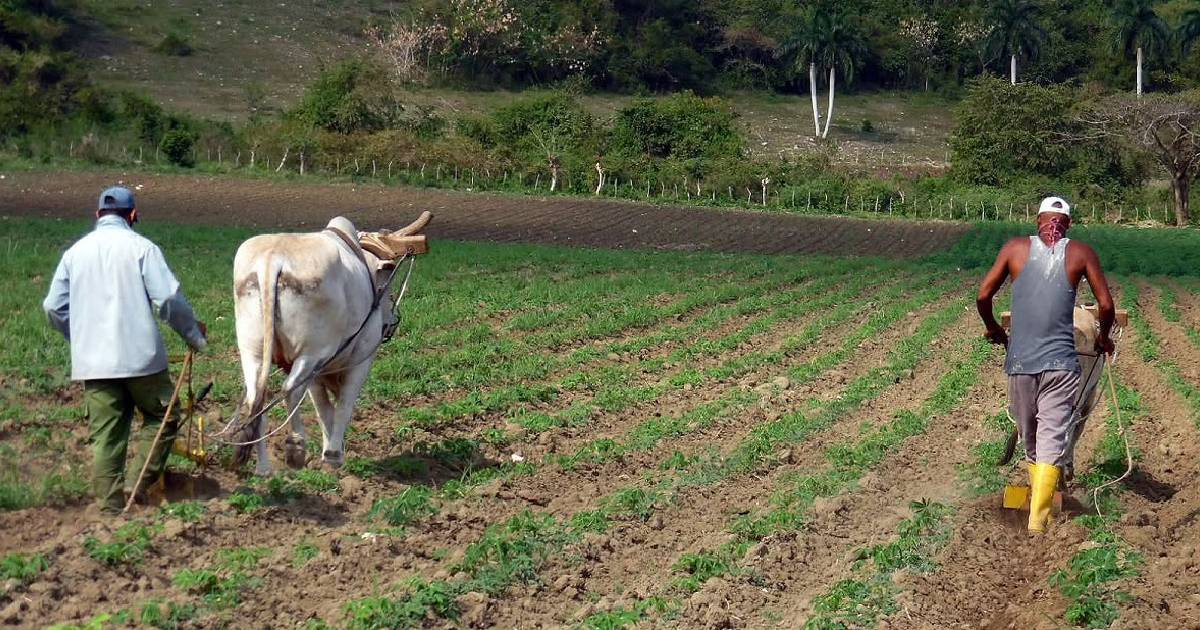
Researchers in Villa Clara are spearheading initiatives to lessen Cuba's reliance on imported food by developing indigenous potato seeds in four municipalities and cultivating coffee varieties suited for flatlands.
Raciel Lima Orozco, Vice Chancellor of the Central University of Marta Abreu de Las Villas and the coordinator of the Food Group at the Villa Clara Scientific Productive Pole, made the announcement, acknowledging the challenging conditions.
"Innovation faces a tough landscape," Lima noted, as reported by the provincial broadcaster CMHW. "There are results, but current circumstances hinder their implementation, even those with proven acceptance and impact," he emphasized.
Local Potato Production: A Step Towards Self-Sufficiency
The goal is to achieve local potato seed production, reducing dependency on imported seeds, mainly from Brazil, in collaboration with the National Institute of Tropical Root Vegetables (Inivit).
The urgency is evident: the 2024-2025 potato harvest in Villa Clara was a major disappointment, yielding just 2,240 tons across over 200 hectares, with a yield of 11 tons per hectare, less than half the typical 22.5, and far from the potential 30 tons.
Nationally, potato production plummeted by 51% by September 2025, primarily due to the soaring costs of technological supplies and imported seeds.
Breaking Traditions: Coffee Cultivation in Flatlands
Researchers are also working on coffee varieties capable of thriving in flatlands, specifically in the municipalities of Remedios and Placetas. This effort challenges the traditional notion of growing coffee in the mountainous regions of eastern Cuba.
"We are collaborating with four municipalities to develop a local potato seed, aiming to eliminate import dependency; alongside, we are devising coffee varieties to be cultivated in flatlands, particularly in Remedios and Placetas," Lima explained.
Innovative Solutions for Livestock and Poultry
Lima also mentioned the production of a mineral supplement for cattle, a premix for pigs, and a poultry supplement for egg production, all in partnership with Geominera del Centro and developed by experts from the Villa Clara university.
A National Crisis Demands Urgent Solutions
The backdrop of these projects is a national food crisis that the regime itself acknowledges as a state of emergency. Cuba imports between 70% and 80% of its food, with more than a third of households facing severe food access issues. Additionally, 98.8% of Cubans report a dramatic rise in prices.
On June 19, Prime Minister Manuel Marrero Cruz unveiled 176 economic and social transformations to the National Assembly, focusing on agricultural reforms. These include indefinite land usufruct, price decentralization, and increased freedoms for cooperatives.
Lima remains hopeful that these measures will pave the way for validated scientific results to reach consumers: "Everything consumed in Villa Clara has a touch of science, technology, and innovation. Perhaps the recently approved measures will enable these validated results to make an impact, boost production, and ultimately, ensure that Cubans see more affordable food on their plates."
Key Questions on Villa Clara's Agricultural Initiatives
Why is Villa Clara focusing on local potato seed production?
Villa Clara aims to reduce its reliance on imported potato seeds by cultivating local varieties, thereby boosting self-sufficiency and addressing the challenges posed by current agricultural dependencies.
What challenges are faced in implementing these agricultural innovations?
The primary challenges include adverse economic conditions and the difficulty in applying innovations due to the current socio-political climate, despite having proven successful results.
How is the coffee cultivation project different from traditional methods?
The project seeks to cultivate coffee in flatlands, specifically in Remedios and Placetas, diverging from the conventional practice of growing coffee in Cuba's mountainous regions.