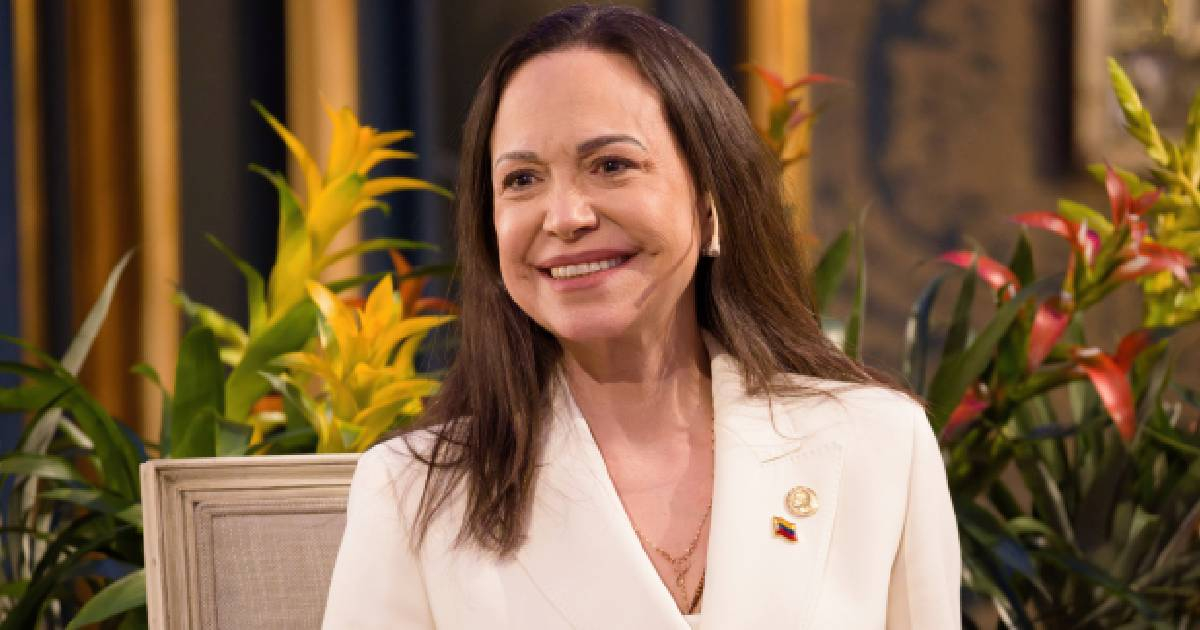
Venezuelan opposition leader María Corina Machado declared on Friday that she has not arranged for any kind of protection to facilitate her return to Venezuela, amid the political tension surrounding her planned comeback following the devastating earthquakes on June 24.
"Neither I nor our teams require or have requested any type of protection or allocation of security resources," she stated during a virtual press briefing.
When questioned about who would ensure her safety in a country where she faces charges of terrorism, conspiracy, and treason, the 2025 Nobel Peace Prize winner confidently replied, "Everyone asks: Who will protect you? Well, millions of Venezuelans."
During the press conference, Machado also criticized Venezuela as a "failed state" due to the government's response to the earthquakes, which, according to official figures, resulted in at least 2,595 deaths and 12,400 injuries. "This week has evidenced that, the complete absence of state capabilities (…). The country needs certainties," she asserted.
Political Challenges and International Reactions
Machado's attempted return was triggered by the earthquakes of magnitudes 7.2 and 7.5 that struck Venezuela on June 28, with epicenters in Yaracuy state. She announced her intention to return to "stand by my people," but the government led by Delcy Rodríguez initially closed the commercial airspace to prevent her entry, a decision that was later reversed.
Obstacles from the regime were compounded by Washington's stance. According to reports from The Wall Street Journal and Bloomberg, the Trump administration actively discouraged her travel, cautioning that she would be on her own without U.S. support. A senior White House official reportedly described her attempt as "grotesque political opportunism," as reported by Axios on July 1.
Commitment to Return Amidst Political Tensions
This Friday, Machado reiterated her determination to return and emphasized her commitment to aiding the humanitarian crisis. She also expressed her "deep gratitude" to the United States and other nations for their support.
The political context adds urgency: this Friday marks the constitutional deadline of 180 days—counting from when Rodríguez assumed the interim presidency on January 5, 2026, following Nicolás Maduro's capture—to declare the president's absolute absence and call for new elections.
This is not the first time Machado has announced an imminent return without following through. On March 1, she declared she would return "in a few weeks," and later that month, her party, Vente Venezuela, assured it would be "in the coming days," timelines that were not met.
Machado left Venezuela clandestinely in December 2025, traveling by boat to Curaçao to receive the Nobel medal in Oslo, after more than a year in hiding within the country to avoid arrest. Her daughter, Ana Corina Sosa, accepted the award on her behalf on December 10, 2025.
The question of when and how her return will occur remains unanswered, while the constitutional deadline that could redefine Venezuela's political future expires precisely this Friday.
Key Questions About María Corina Machado's Return
Why is María Corina Machado planning to return to Venezuela?
María Corina Machado intends to return to Venezuela to "stand by her people" amidst the humanitarian crisis following the recent earthquakes.
What challenges does Machado face upon her return?
She faces numerous challenges, including potential charges of terrorism, conspiracy, and treason, as well as logistical and political obstacles from the Venezuelan government and international actors.
What is the significance of the constitutional deadline?
The deadline marks the end of the 180-day period since Delcy Rodríguez assumed the interim presidency, requiring a declaration of the president's absence and the call for new elections, which could significantly impact Venezuela's political future.