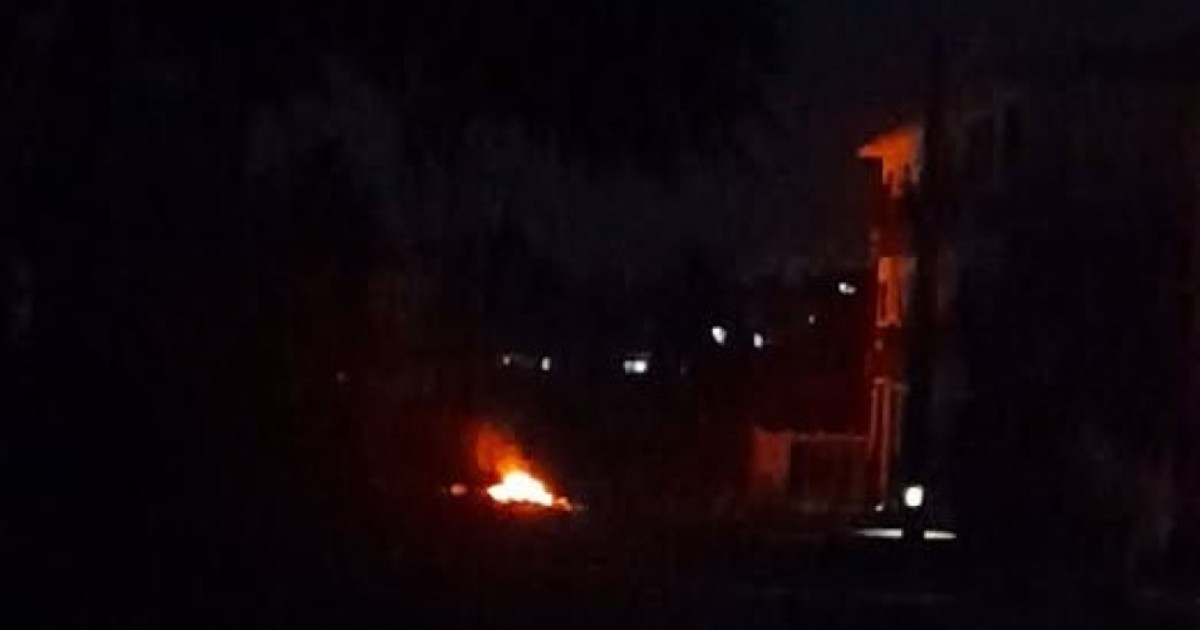
Residents of Zamora neighborhood in Marianao, Havana, took to the streets on Wednesday, July 1, to protest against persistent power outages and water shortages. The demonstration was captured on Facebook by local resident Zea Gisselle.
“ZAMORA PROTESTING! Over 24 hours without electricity, days without water. WE ARE HUMAN BEINGS, NOT ANIMALS,” Gisselle wrote, vividly describing the scene of outrage as neighbors chanted “Freedom!”
According to her account, authorities briefly restored power at 10:00 p.m. for just five minutes, an action many saw as a superficial attempt to placate the protestors without addressing the underlying issues.
Gisselle highlighted the frustrating contradiction that angers Cubans: “They have fuel to patrol the neighborhood and suppress us, but not to ensure basic services for the country.”
During the protest, an anonymous resident expressed the deep desperation felt in the neighborhood: “In the end, neither will they leave, nor will we remove them. It’s better for Cuba to vanish, even if it means we disappear too.”
Gisselle concluded her post by stating, “There is a people who would rather face death than allow them to remain in power. I see hope and courage emerging.”
Historical Resistance in Zamora
Zamora’s protest is not an isolated incident, nor is it the first time the neighborhood has risen up. Marianao has a history of resistance dating back to 2026, earning it the nickname “the frontier of light,” as reported by El Toque. In May and June, there were already instances of pot-banging and street blockades at the intersection of 124th and 35th streets.
In those earlier protests, a mother was detained and handcuffed for requesting food for her child, fined 30 Cuban pesos, and threatened with having her child taken away if she protested again.
Escalating Protests Across Cuba
The July 1 protest is part of a wave of demonstrations analysts deem the most extensive since July 11, 2021. In May alone, there were 1,311 protests nationwide, the highest monthly total since that uprising. The organization Cubalex documented an additional 109 protests in June.
Chants have intensified from “We want electricity!” to “Down with the dictatorship!” and “Freedom!”, reflecting a dissatisfaction that is as political as it is material.
The government has responded with a dual strategy of temporary concessions—such as briefly restoring power after protests or sending water trucks—and systematic repression. In June, at least 38 arrests were documented, including six minors.
Energy Crisis Fuels Unrest
The energy crisis fueling this unrest is deep-rooted. The power generation deficit reached a historic high of 2,208 MW on June 25 and 26, leaving approximately 70% of the country without simultaneous electricity. Nine out of 16 thermoelectric units are out of service.
The day after the Zamora protest, residents of La Lisa gathered outside the Communist Party headquarters after being without electricity for over 50 hours. Protests continued Thursday with pot-banging in Santiago de Cuba, El Cerro, El Vedado, and Regla, with the regime responding by militarizing the neighborhoods.
Understanding Cuba's Ongoing Protests
What triggered the recent protests in Marianao, Havana?
The protests were sparked by prolonged power outages and water shortages, which have severely affected daily life for residents in the Zamora neighborhood.
How has the Cuban government responded to the protests?
The government has employed a dual strategy: offering temporary solutions like brief power restorations while also intensifying repression, including arrests and neighborhood militarization.
What is the broader context of the energy crisis in Cuba?
Cuba is experiencing a severe energy crisis, with a record power generation deficit and multiple thermoelectric units out of service, affecting a large portion of the population.