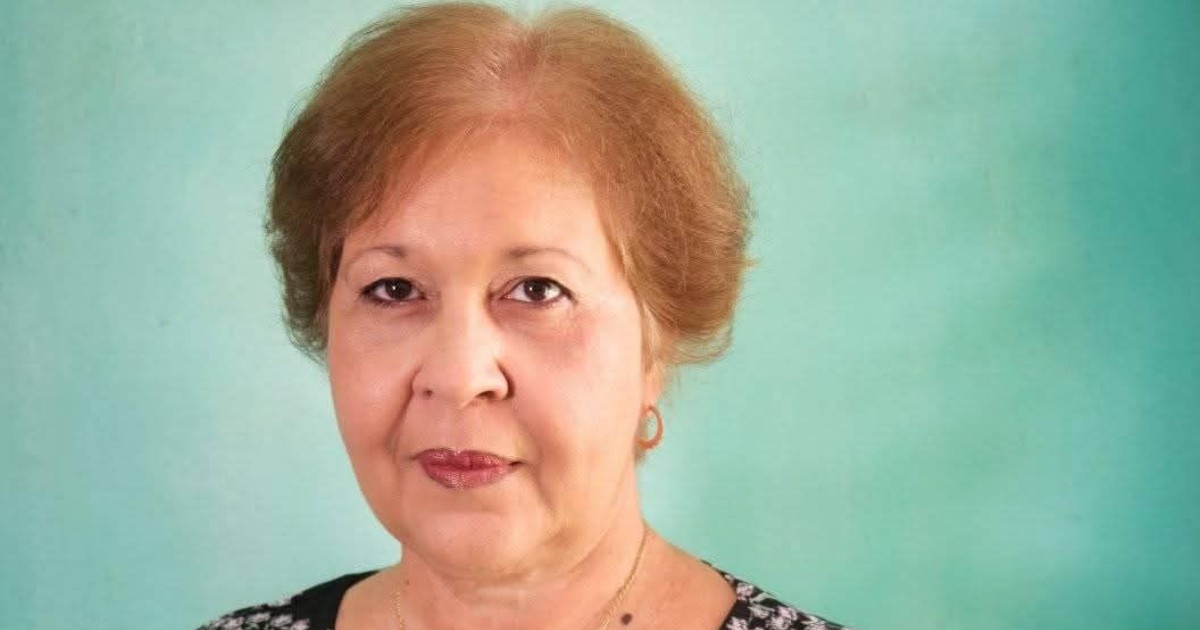
Philosopher and activist Alina Bárbara López Hernández took to Facebook on Thursday to expose the arrest of a young Cuban for participating in a pot-banging protest. She also painted a grim picture of the elderly in Cuba, who are left in dire straits.
"Summer intensifies. The heat is unbearable. While young Cubans face arrests or threats: Leonardo Romero Negrín, detained since yesterday at the Zanja station for joining a pot-banging protest, Anna Bensi, and the Navarro siblings from 'Fuera de Caja' summoned by political police; our elderly are left fainting from lack of food and hope," wrote López.
Leonardo Romero Negrín has been held since Wednesday at the Zanja police station in Havana for his participation in a protest. Both Cubalex and the Academic Freedom Observatory labeled his arrest as arbitrary, identifying him as a political prisoner.
Rampant Repression Amid Energy Crisis
Romero Negrín’s arrest was not an isolated incident of oppression that day. Activist Anna Bensi, under house arrest since March at age 21, and evangelical pastor Rolando Pérez Lora, known as "Pregonero de Cristo," were detained for nearly 11 hours at the Alamar Police headquarters. Bensi was released around 8:56 PM, greeted with applause and tears.
Meanwhile, siblings Amanda and Abel Andrés Navarro from the Fuera de la Caja Cuba collective were summoned to the Aguilera street police unit and held for hours, exceeding the legal two-hour limit for police interviews set by Cuban law.
Struggling with Environmental and Energy Challenges
As the regime intensified its crackdown on activists and youth, López highlighted the neglect faced by the most vulnerable, particularly in Matanzas. "People in Matanzas are desperate because they've restricted charcoal sales due to deforestation concerns, affecting the environment. Charcoal prices have skyrocketed. But there’s no gas, hardly any firewood, and days without electricity. Who is looking out for the people?" she questioned.
The contradiction is stark: the regime restricts charcoal sales citing environmental harm but offers no alternative energy solutions. Charcoal prices have surged to between 1,700 and 5,000 Cuban pesos per sack—equivalent to a full month's salary. In Matanzas, power outages have reached consecutive cuts of 85 to 87 hours, while in Havana, they exceed 30 hours straight.
Nationwide Protests and Regime’s Harsh Response
Cuba is grappling with the most severe energy crisis in its history. The electrical deficit hit a record 2,208 MW on June 26, with only 1,065 MW available against a demand of 3,200 MW.
In this climate of desperation, pot-banging protests have surged across the island. The Cuban Conflict Observatory recorded 1,311 protests in May 2026 alone, marking the highest monthly figure on record.
The regime's response has been systematic repression: deployment of armed special forces, internet shutdowns, and mass arrests, including minors.
López, who is under house arrest following her detention on June 18 en route to a peaceful protest in Matanzas, concluded her post with a warning many saw as a direct reference to the July 11, 2021, protests: "Summer is intensifying. And there's nothing worse than summer indignation. We've already seen the evidence. Life and dignity will always prevail. We are not an exception. Freedom and justice for all Cubans!"
Understanding the Current Crisis in Cuba
What led to the arrest of Leonardo Romero Negrín?
Leonardo Romero Negrín was arrested for participating in a pot-banging protest, an act of dissent against the Cuban government.
Why are charcoal prices rising in Cuba?
Charcoal prices are rising because the government has imposed restrictions on sales due to environmental concerns over deforestation, without providing alternative energy sources.
How is the Cuban government responding to protests?
The government's response to protests has been one of heavy repression, including deploying armed forces, internet blackouts, and mass detentions.