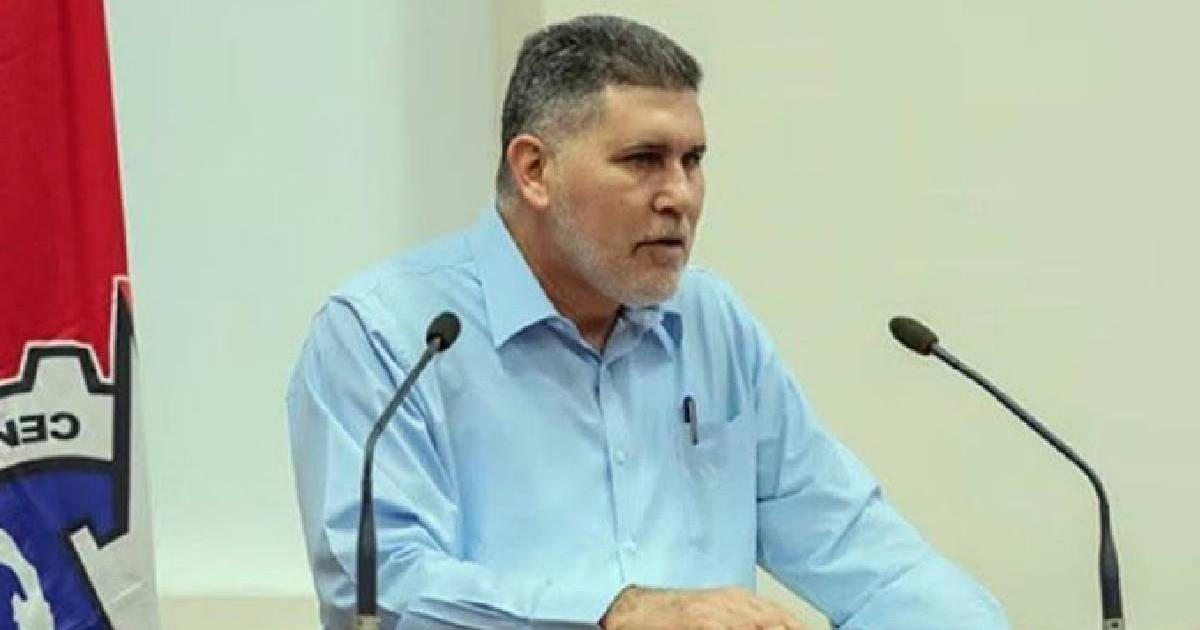
Oscar Pérez-Oliva Fraga, serving as both Vice Prime Minister and Minister of Foreign Trade and Foreign Investment under the Cuban regime, accused the United States on Thursday of attempting to impose an "enforced economic dependency" on Cuba, sidelining longstanding foreign partners and enterprises that have historically operated on the island.
The official, who is a great-grandnephew of Fidel and Raúl Castro, delivered this accusation during the General Assembly of Members of the Chamber of Commerce of the Republic of Cuba, held at the Hotel Nacional in Havana, as reported by the state-controlled media outlet Invasor.
The Impact of Sanctions on International Trade
Pérez-Oliva Fraga highlighted that while foreign shipping lines and airlines are retreating from Cuban ports and routes to Havana due to fears of secondary sanctions, American companies continue their operations to Cuba without fear of repercussions.
"There is an attempt to force upon us an economic dependency on the United States, undermining the involvement of our partners and companies which have actively contributed to the island's economic and social development for decades, some for over 30 or even 49 years," the official declared.
One-Way Trade and Its Challenges
The Vice Prime Minister described trade between the two countries as a one-directional relationship—from north to south—governed by administrative permissions across sectors, products, and companies, with increasing limitations on license renewals under financial conditions he termed "very rigid and disadvantageous for Cuba."
He also emphasized that Cuba is unable to export its primary goods—such as nickel, tobacco, rum, and biopharmaceutical products—nor can it receive American tourists, depriving the nation of significant external revenue.
Withdrawal of Tourism and Shipping Companies
Addressing the withdrawal of tourism and shipping companies, Pérez-Oliva Fraga attributed the primary cause to fuel shortages, not voluntary decisions: "Every tourism company, including those announcing partial or total withdrawal, wishes to remain in Cuba. No one wants to leave Cuba."
Additionally, the official criticized the second executive order signed by Trump on May 1, 2026, which internationalized secondary sanctions against any global company with commercial links to the island, stating it was "a free pass from President Trump to the Secretary of State, subcontracting policy towards Cuba."
These Washington measures are compounded by the executive order from January 29, 2026, which declared a national emergency and enforced an energy blockade with tariffs up to 50% on third parties supplying oil to Cuba, resulting in the withdrawal of shipping lines like Hapag-Lloyd and CMA CGM, and airlines such as Air Canada, Rossiya, and Nordwind.
Cuba's Economic Crisis and Reforms
The official's speech comes amid the most severe economic crisis in Cuba since the Special Period: a projected 7.2% GDP contraction for 2026, accumulating a 23% decline since 2019, with power outages lasting between 20 and 25 hours daily, and a reliance of 70-80% on imported food and energy.
Pérez-Oliva Fraga, who is seen as a potential successor to Díaz-Canel, defended the package of 176 economic transformation measures approved by the National Assembly on June 18 and 19, 2026, which include private banking, exchange houses, purchase of shares in state-owned companies, and direct export by private individuals.
"We must solve our problems ourselves, preserving our sovereignty, independence, self-determination, and social system, which no one doubts is the most just and needs to be built, but for that, the economy must function," the official concluded in front of Chamber of Commerce executives and representatives from state and private companies.
Understanding U.S.-Cuba Economic Relations
What is the main accusation against the United States by Oscar Pérez-Oliva Fraga?
Pérez-Oliva Fraga accuses the United States of trying to impose an "enforced economic dependency" on Cuba, which undermines the participation of traditional foreign partners and companies on the island.
How are trade relationships between the U.S. and Cuba described?
The trade relationship is described as one-directional—flowing from north to south—subject to administrative permissions and characterized by stringent financial conditions that are unfavorable to Cuba.
Why are tourism and shipping companies withdrawing from Cuba?
The primary reason cited for the withdrawal of tourism and shipping companies is fuel shortages, although it is not a voluntary choice, as these companies prefer to continue operations in Cuba.