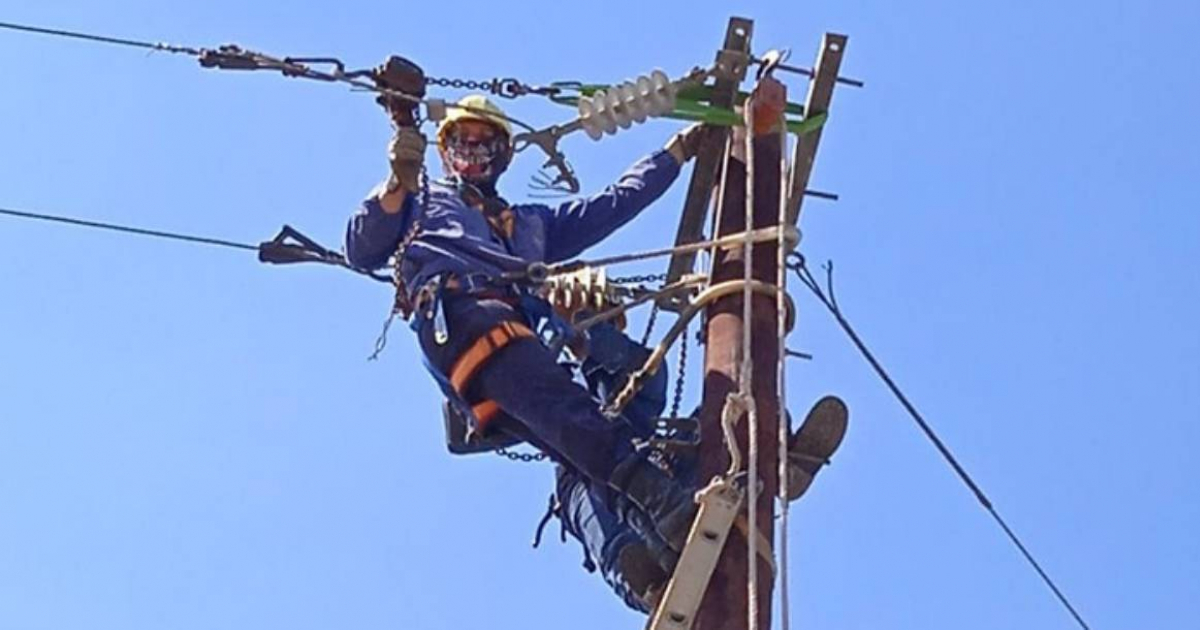
Between 80 and 90 families in the Frutas Selectas circuit of Matanzas have been left without electricity for several days since Friday, June 27, due to a fuse that blows each time the area's transformer is powered. Despite the simplicity of the issue, no technician has come to replace it, as reported by journalist Yuni Moliner on Facebook.
The situation is particularly frustrating not because of the malfunction itself, but due to its apparent ease of resolution. Residents claim it would take only a few minutes to fix, as the affected transformer is positioned near the site where electrical personnel routinely perform circuit operations.
"While the rest of the circuit receives power, this transformer remains offline because no one has come to replace the fuse," Moliner noted, adding that the same crew performing daily tasks could restore service simply by swapping out the component.
The families impacted by this outage are not just dealing with this specific issue; the Frutas Selectas circuit is one of the most frequently blacked-out areas in Matanzas. As a result, these households miss out on the limited hours of electricity they would otherwise receive under the rolling blackout schedule.
The Worsening Effects of Outages
The repercussions are tangible and growing. According to Moliner, residents face "spoiled food, heat, mosquitoes, difficulties in preserving scarce supplies, and disruptions to the water pumping from the so-called Plan CTC, which services several communities in the area."
Though the residents are aware of the national energy crisis, they cannot comprehend the lack of action in addressing such a simple issue. "What they can't understand is why a problem, which they claim can be resolved in minutes, drags on for days. I don't understand it either," wrote the journalist.
Moliner's assessment is straightforward: "If this is indeed the source of the problem, then the issue shifts from being technical to one of organization."
A Broader Context of Crisis
This incident is unfolding amid Matanzas' most severe electrical crisis, officially recognized as the province hardest hit by power issues as of April 2026. The province currently has eight substations offline, 63 damaged transformers, and over 200 unresolved outage reports just in the capital municipality.
In June, some circuits experienced up to 85 consecutive hours without electricity. Nationally, the Electric System is operating with only 1,100 MW available against a demand of 3,200 MW. This shortfall of roughly 2,100 MW results in more than 65% of the island enduring outages lasting over 22 hours daily, according to the system's own data.
Cuba is grappling with these blackouts while nine of the country's 16 thermal power plants remain non-operational.
The political paradox has not gone unnoticed. Just days before this new complaint, the first secretary of the PCC in Matanzas, Mario Sabines Lorenzo, celebrated the province's "Outstanding" status in the competition for the 73rd anniversary of the Moncada assault, even as entire circuits were without power for over 70 hours, sparking outrage on social media.
"The real question is why, if the problem is known and seemingly has a quick fix, days pass without anyone taking action," Moliner concluded. "In a scenario where every hour of electricity is incredibly valuable to the public, losing them to preventable causes is a luxury no public service should afford," she added.
Understanding the Power Outage Crisis in Matanzas
What is causing the power outages in Matanzas?
The outages are primarily due to a blown fuse in a transformer that has not been replaced, compounded by a broader energy crisis affecting the entire province.
How are the residents coping with the power outages?
Residents are struggling with spoiled food, increased heat, mosquito infestations, and difficulties in maintaining water supply, which are exacerbated by the frequent and prolonged blackouts.
Why hasn't the blown fuse been replaced?
Despite the simplicity of the fix, no technician has attended to the issue. The lack of action is attributed to organizational failures rather than technical difficulties.