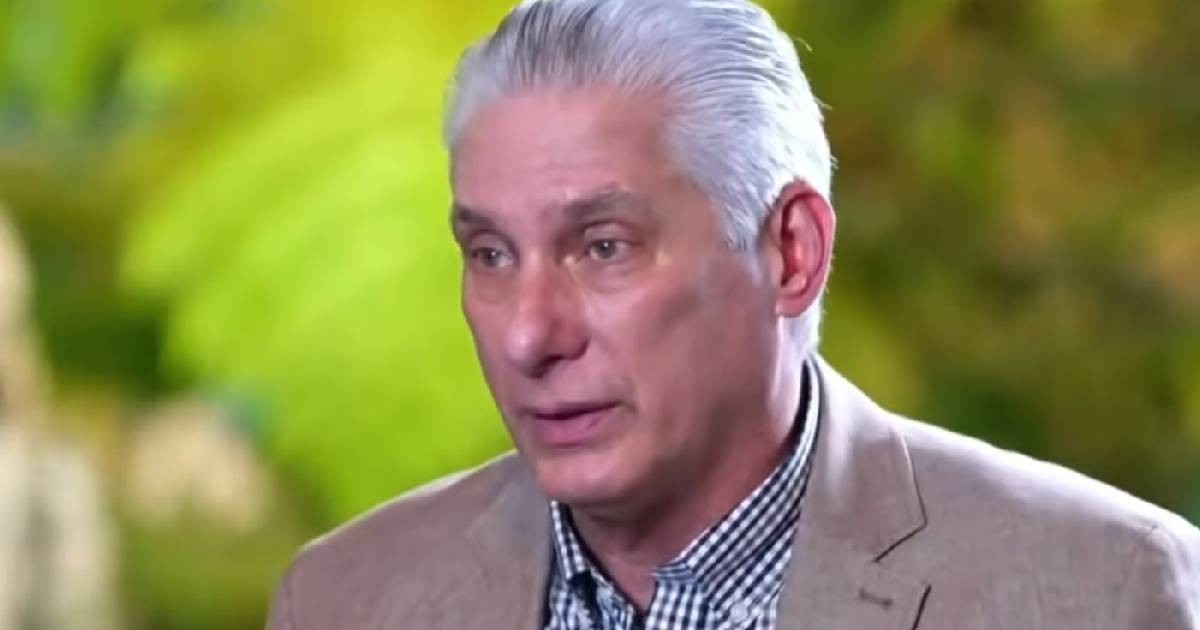
In an exclusive interview with the British television channel Sky News, Cuban leader Miguel Díaz-Canel countered remarks made by Donald Trump concerning Cuba. On Thursday, Díaz-Canel firmly rejected any military threats and asserted that the island nation will not relinquish its sovereignty.
Díaz-Canel's statements came shortly after Trump, during the opening of the Theodore Roosevelt Presidential Library in Medora, North Dakota, hinted at a shift in Cuba's stance, referencing the 1898 Spanish-American War. Trump suggested that after many decades, Cuba is moving closer to the United States.
The interview, conducted by Sky News international news anchor Yalda Hakim, took place in Havana, set against a backdrop of the Cuban flag and the word "PRESIDENCIA."
Defending Sovereignty
"We are a peaceful country. We pose no threat to anyone. Cuba is not in conflict. We are not a colony. We will not surrender our sovereignty or our independence," Díaz-Canel stated unequivocally.
When queried about the possibility of military action—highlighting Trump's previous threats toward Venezuela and Iran—Díaz-Canel was resolute: "We are prepared to fight to the last drop of blood to defend our rights, our independence, our sovereignty, and our achievements."
Tensions and Accusations
He denounced ongoing pressure from Washington as "an outrage and an affront to the dignity of our people," describing it as part of "a strategy of media intoxication and psychological warfare aimed at intimidating and destabilizing our society."
The Cuban leader's most emphatic statement summarized the regime's stance: "We do not desire war, but we are not afraid of it. We are preparing so we are neither caught off guard nor defeated."
Economic Hardships and Sanctions
Highlighting the severity of the situation, Díaz-Canel accused the Trump administration of deceit and manipulation of global public opinion, acknowledging that Cuba faces "a significant escalation of the embargo, reaching maximum pressure," with severe impacts on daily life for Cubans.
Hakim shared on social media that Díaz-Canel also mentioned "possibilities for dialogue," yet warned of Cuba's low trust in Washington following Trump's actions in Venezuela and Iran.
The interview occurred amid heightened tensions between the two nations. Since January 2026, the Trump administration has imposed over 240 sanctions on Cuba, including personal measures against Díaz-Canel, his wife Lis Cuesta Peraza, and Colonel Alejandro Castro Espín. Cuban Foreign Minister Bruno Rodríguez stated on Tuesday that bilateral talks have shown "no progress" and announced a special UN session on July 7 to protest the increased embargo.
Cuba is also experiencing its worst energy crisis in decades, with power outages lasting up to 24 hours daily and an expected economic contraction between 6.5% and 7.2% for 2026. This is exacerbated by the cessation of Venezuelan oil shipments, approximately 70,000 barrels per day, following the capture of Nicolás Maduro on January 3, 2026.
The full interview was released on Sky News' YouTube channel on Thursday, and the extraordinary UN session called by Havana to denounce U.S. sanctions is scheduled for July 7.
Understanding the Cuba-U.S. Tensions
What prompted Díaz-Canel's response to Trump?
Díaz-Canel responded to Trump's comments made during the opening of the Theodore Roosevelt Presidential Library, where Trump suggested that Cuba is coming closer to the U.S., evoking historical conflicts.
What are the main issues affecting Cuba's economy?
Cuba is facing a severe energy crisis with prolonged power outages and an economic contraction projected between 6.5% and 7.2% for 2026, worsened by the halt in Venezuelan oil supplies.