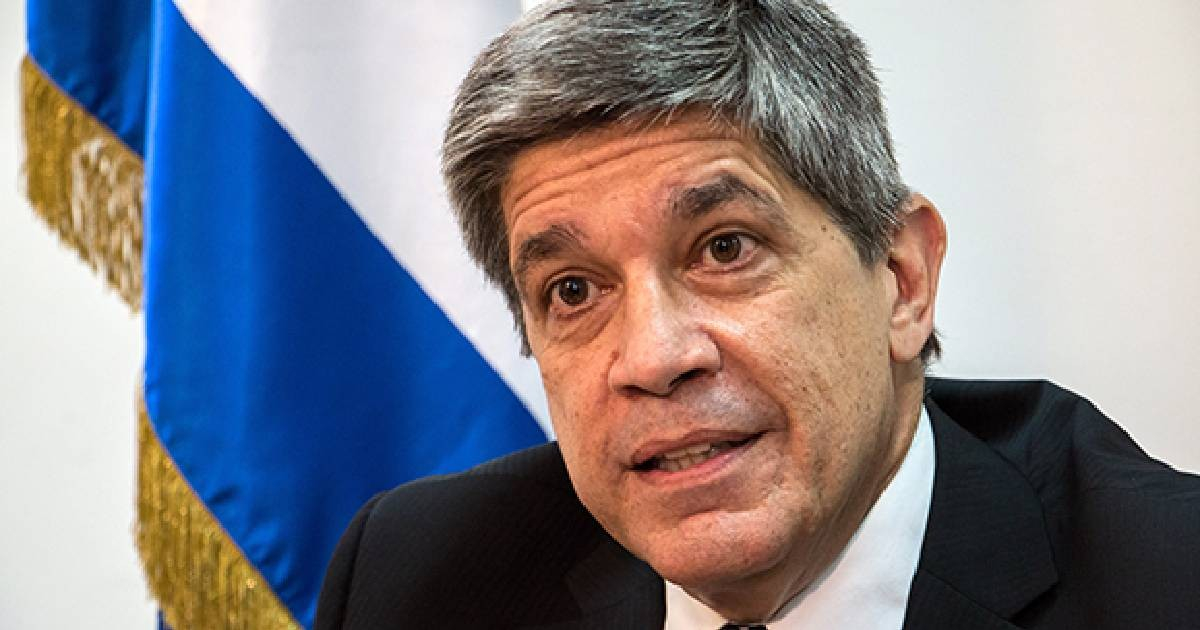
Carlos Fernández de Cossío, the Deputy Foreign Minister of Cuba's regime, recently took to Facebook to lay the blame on the United States for the blackouts, gas shortages, piling garbage, healthcare crisis, and inflation plaguing the Cuban populace. In his post, he neglects to acknowledge any faults of the regime itself.
Cossío portrays the situation as a "relentless and everyday war waged against the nation" and suggests that "certain politicians take pride in these achievements and celebrate among themselves," referring to U.S. officials.
He details the Cuban people's hardships: "The U.S. measures its success against Cuba by the number of blackout hours endured by the citizens, the families lacking cooking gas, the spoilage of food due to lack of refrigeration, postponed or unperformed surgeries, the decline in infant mortality rates, and the resulting newborn deaths."
Yet, Cossío fails to mention that the crisis also stems from structural issues tied to the regime's decades-long neglect of energy infrastructure.
Worsening Energy Crisis
Cuba faces an electrical shortfall exceeding 2,100 MW, with only 1,100 MW available against a demand of 3,200 MW. Blackouts in Havana stretch to 32 hours, while Matanzas experiences up to 85 consecutive hours without power. Nine of the country's 16 thermoelectric plants are in disrepair, including the largest, Antonio Guiteras.
The military conglomerate GAESA, which controls 40% to 70% of Cuba's formal economy—spanning tourism, foreign currency trade, ports, banking, and telecommunications—operates without accountability to any institution or the public. The U.S. State Department describes GAESA not as a corporation but as a "mechanism of repression."
Contradictory Statements and U.S. Criticism
On May 13, Cossío inadvertently contradicted his usual narrative by posting and quickly deleting a statement: "A country that collapses or fails on its own doesn't need a push." This slip reveals the inconsistency in solely blaming the embargo.
U.S. Secretary of State Marco Rubio dismantled the oil blockade argument in May: "Cuba used to get free oil from Venezuela. They received a substantial amount of free oil, sold 60% of it for cash, which never benefited the people." Rubio criticized the Cuban government as "incompetent communists running that country" who "don't know how to fix it."
The Trump administration responded with new sanctions targeting GAESA entities, including RAFIN S.A., Banco Financiero Internacional, and Almacenes Universales S.A., dismissing the regime's 176 economic reforms as "superficial smoke signals."
While Cossío concludes his post by portraying every makeshift solution by the Cuban people as a "defeat of imperialism," the Cuban Conflict Observatory reported a record-breaking 1,311 protests in May, with slogans evolving from "electricity and food" to "Down with the dictatorship!"
Understanding Cuba's Current Challenges
What are the primary issues facing Cuba currently?
Cuba is grappling with severe blackouts, gas shortages, a healthcare crisis, inflation, and accumulating waste. These issues are exacerbated by both external pressures and internal mismanagement of infrastructure and resources.
How does GAESA influence Cuba's economy?
GAESA, a military conglomerate, controls a significant portion of Cuba's economy, including sectors like tourism, foreign currency trade, and telecommunications. It operates without accountability, contributing to economic disparity and inefficiency.