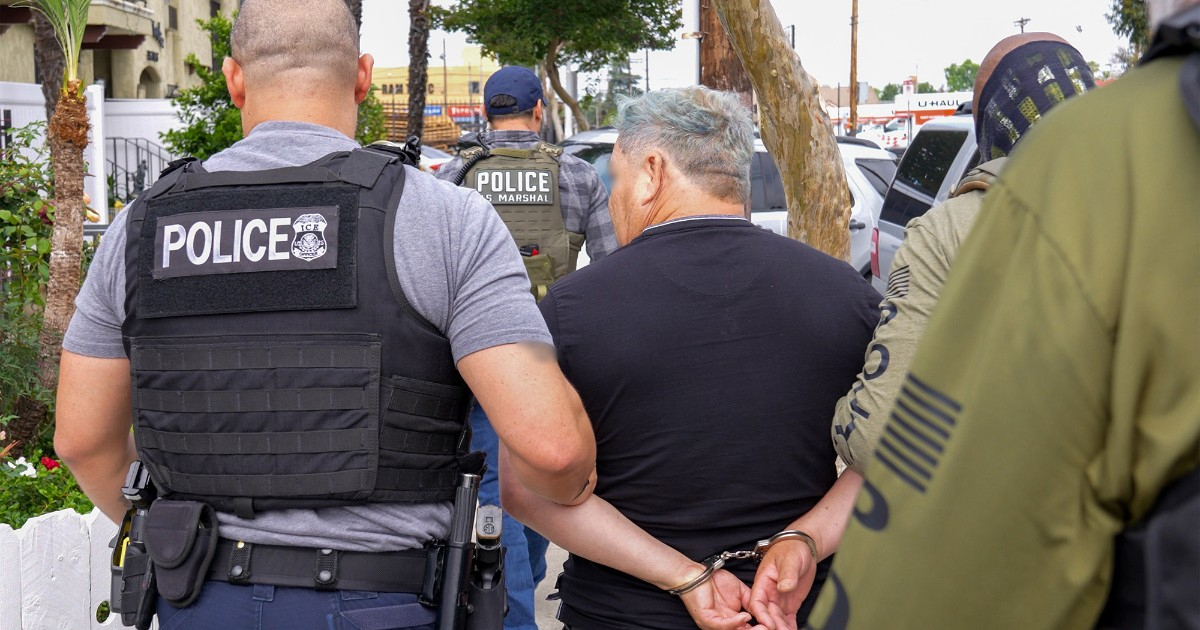
The United States Immigration and Customs Enforcement (ICE) has exceeded 10,000 arrests in just five days, effectively doubling the arrest rate from earlier this year. This development, reported by The New York Times and cited by EFE, is based on internal documents and interviews with federal officials.
Daily arrest figures have surged from about 1,000 at the start of 2026 to nearly 2,000 each day. This target was communicated directly to ICE agents by the White House, as confirmed by three officials to the New York-based newspaper.
However, one official cautioned that "it remains unclear how long this level of activity can be sustained."
Shift in Enforcement Tactics
Unlike the high-profile operations conducted by the Trump administration in cities such as Chicago and Los Angeles, the recent increase in arrests has been executed more discreetly, avoiding significant public attention.
These arrests have been carried out during immigration checks, traffic inspections, and public operations, according to the report.
This strategic shift comes as a response to criticism over previous high-impact operations, prompting a tactical adjustment from the administration.
Legal and Political Context
This surge in enforcement coincides with a period when the Supreme Court expanded executive power over immigration matters, although it also blocked Trump's attempt to end birthright citizenship for children of undocumented immigrants and temporary visitors.
The increase in arrests aligns with President Donald Trump's policy of mass deportations, a key promise of his second term that began in January 2025.
Since then, ICE's detention capacity has expanded from under 40,000 individuals to over 70,000, with arrests of individuals without criminal records soaring by 2,450%.
Impact on the Cuban Community
The Cuban community has been notably impacted by this escalation. Arrests of Cubans increased by 463% between late 2024 and early 2026, with more than 42,000 Cubans in the United States now deemed deportable by the Department of Homeland Security.
ICE’s Miami office spearheaded these operations, averaging 120 arrests per day and accumulating over 41,000 detentions from January 2025 to April 2026.
The controversial detention center known as “Alligator Alcatraz” in Florida was shuttered in June 2026 after processing nearly 21,000 deportations, including those of many Cubans who had resided in the U.S. for decades.
Legal Challenges and Future Goals
Meanwhile, a federal judge in California has struck down ICE policies that allowed arrests inside immigration courts nationwide, marking a legal setback for the administration.
The Trump administration aims to deport one million individuals during the fiscal year 2025-2026, having allocated over $200 billion for ICE and the Customs and Border Protection for fiscal year 2027.
Key Questions on ICE Arrests and Immigration Policies
What led to the increase in ICE arrest rates?
The rise in ICE arrest rates was driven by directives from the White House to increase enforcement actions, doubling the previous arrest rates from early 2026.
How has the legal environment affected ICE operations?
While the Supreme Court has expanded the executive's power over immigration, it also blocked efforts to end birthright citizenship, creating a mixed legal environment for ICE operations.
How is the Cuban community affected by the ICE crackdown?
The Cuban community has seen a significant rise in detentions, with a 463% increase in arrests, making them a major focus of ICE's intensified efforts.