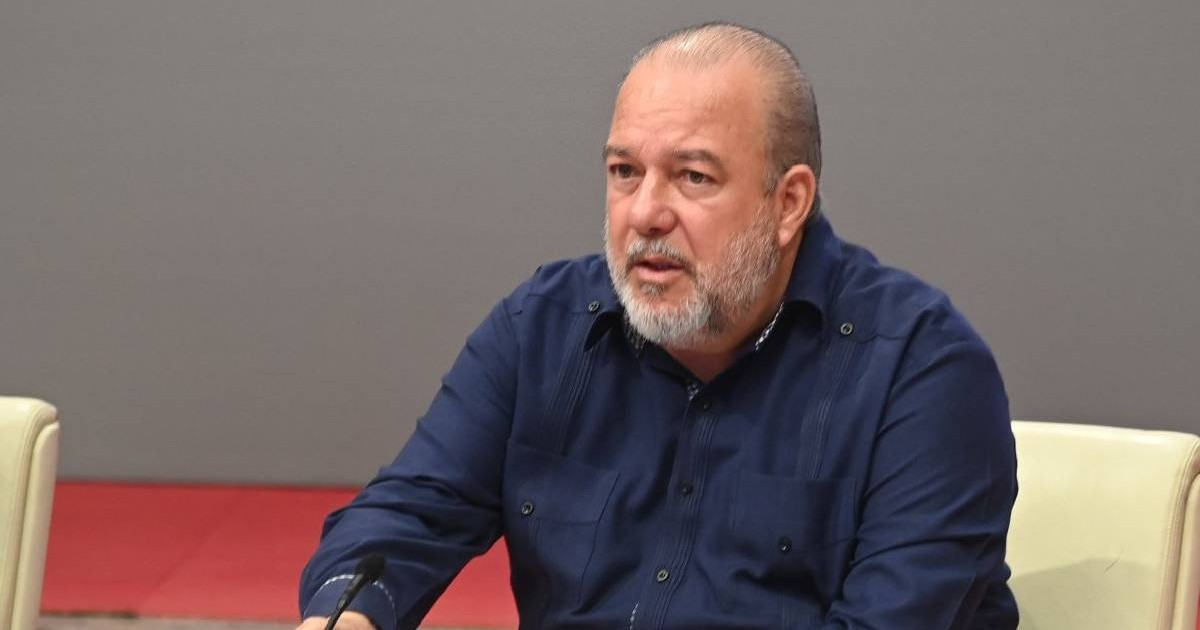
On Wednesday, Cuban Prime Minister Manuel Marrero Cruz took to Twitter to clarify the intention behind the recently approved package of 176 Economic and Social Transformations by the regime. According to Marrero, the goal is to "revive the economy and preserve the gains of the Revolution."
In a series of tweets, Marrero outlined the scope of these reforms and indicated that the initial steps would begin shortly. "We will keep our people informed about the implementation process of each transformation, confident that their participation is crucial to achieving the proposed goals," he stated.
Immediate Reforms and Economic Adjustments
The prime minister highlighted several immediate actions, such as granting new powers to state enterprises, reducing the list of prohibited activities for the non-state sector, and increasing wages in the budgeted sector.
Marrero also mentioned that the reforms are organized into 23 priority thematic axes and involve all state agencies, requiring an update of work systems to focus as much time as possible on their implementation.
Historic Changes Ratified
Approved by the National Assembly of People's Power on June 19, 2026, the package includes reforms forbidden for decades: authorization of private banking and currency exchange houses, lifting the cap of 100 workers for micro, small, and medium enterprises (MSMEs), allowing individuals to own more than one private business, selective bankruptcy of unviable state enterprises, and the removal of mandatory state channels for imports and exports.
Labor Market Overhaul
In terms of labor, the minimum wage in the budgeted sector will rise from 2,100 to 3,210 pesos—a 53% increase—beginning in August 2026, benefiting 51% of the workforce. The government also approved measures for multiple employment and reduced work hours with union agreements.
The state structure will be streamlined from 27 to 21 ministries, and a new agency, the National Institute of State-Owned Enterprise Assets (INAEES), will be established to oversee the state enterprise system.
Internal Challenges and Public Skepticism
Marrero's statements came a day after he acknowledged that the primary barrier to implementing these reforms lies within the state apparatus itself, urging regime officials to shift their mindset. On the same day, President Miguel Díaz-Canel conceded that the 2026 Economic Plan is ineffective as a guide for the new measures, reiterating that the main aim is to "save the Revolution."
The official announcement starkly contrasts with the harsh realities faced by the Cuban population: power outages lasting up to 25 hours a day, severe shortages of food and medicine, and a projected GDP contraction of 6.5% for 2026, according to CEPAL. When the regime released the document outlining the 176 measures, social media reactions were overwhelmingly skeptical.
"Download them, and then use the paper measures to eat and light your homes," summarized a viral comment among Cubans.
FAQs about Cuba's New Economic Reforms
What are the key objectives of the 176 Economic and Social Transformations?
The primary objectives are to revitalize the Cuban economy and preserve the achievements of the Revolution.
What immediate measures have been announced by the Cuban government?
Immediate measures include granting new powers to state enterprises, reducing restrictions on non-state activities, and increasing wages in the budgeted sector.
How will the labor market be affected by the new reforms?
Reforms in the labor market include a 53% increase in the minimum wage for the budgeted sector, the introduction of multiple employment, and reduced work hours with union agreements.