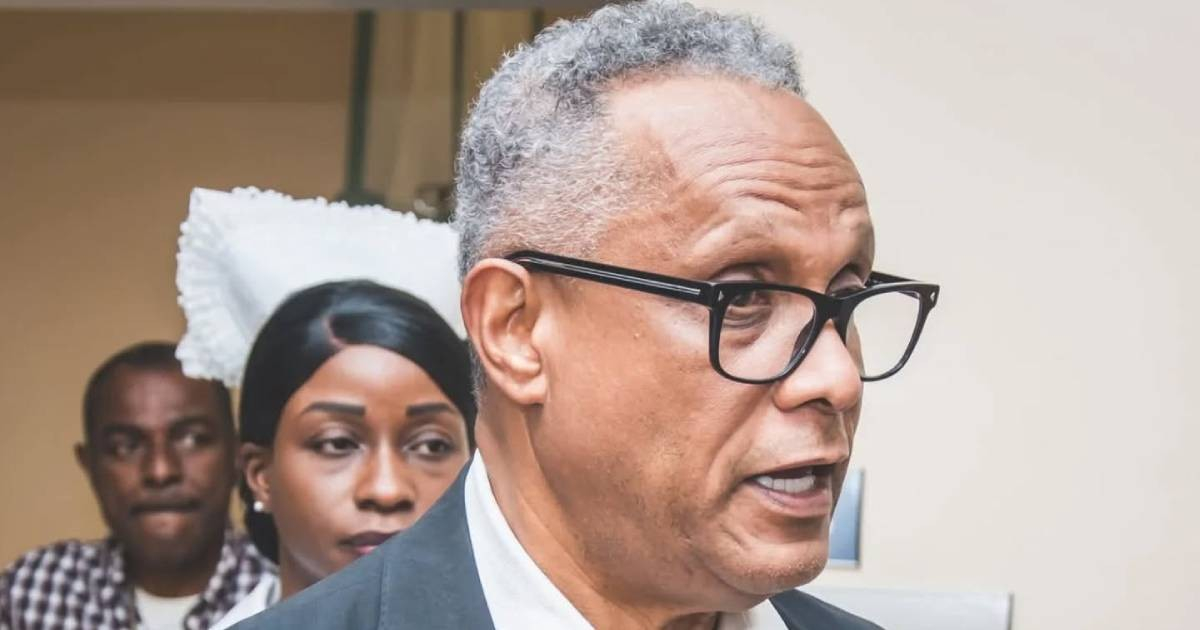
The Bahamian Minister of Health, Michael Darville, announced recently that discussions with the U.S. Embassy regarding Cuban healthcare professionals working in the Bahamas are nearing completion. This comes amid pressure from Washington for regional governments to terminate the Cuban medical missions' employment model.
“We are in the final discussions with the U.S. Embassy due to the presence of Cuban healthcare professionals in our country,” Darville stated, as reported by Eyewitness News Bahamas.
Minister Darville clarified the extent of Cuba's involvement in the Bahamian healthcare system. “I want to emphasize that there are only three Cuban doctors in the Commonwealth of the Bahamas,” he noted.
He further explained that the remaining personnel consists of electrocardiography, laboratory, and radiology technicians, who have been brought in to enhance diagnostic and healthcare services in the Family Islands.
Shifting Employment Models
Negotiations with Washington began in February of this year after the Bahamian government halted the hiring of new Cuban professionals and initiated direct talks with the U.S. to reassess the program's operations. This followed accusations that Cuba's medical missions constituted a form of forced labor.
Since then, Nassau has advocated for a different model than that of other Caribbean nations: keeping Cuban professionals but hiring them directly, bypassing the Cuban government. This shift started to take shape in May 2025, when the Bahamas declared that salaries would no longer be funneled through the Cuban government. Previously, of the $12,000 paid monthly per specialist, the professionals received between $990 and $1,200, with the remainder being retained by Cuban authorities.
Direct Employment Option
Subsequently, the Bahamian government formally presented its proposal to Washington. In June of this year, Darville informed Parliament that the 35 Cuban professionals currently serving in the country—primarily specialized technicians rather than clinical doctors—would have the option to sign contracts directly with the Bahamas or return to Cuba.
This decision by Nassau comes amidst increasing diplomatic pressure from the United States. Secretary of State Marco Rubio has urged regional governments to terminate agreements with Cuban medical missions, describing them as “forced labor schemes” and a form of “modern slavery.”
These policies have already affected several Caribbean countries. Guyana and Saint Vincent and the Grenadines ended their agreements with Cuba in February 2026, followed by Jamaica in March, impacting 277 Cuban professionals.
According to the U.S. Department of State, the Cuban regime earns over $4.9 billion annually through the export of medical services, involving more than 26,000 workers in 55 countries.
Darville assured that the government will continue to coordinate the process with Washington before announcing a final decision. “We are working closely with our U.S. partners to ensure alignment with their policy, as they are our closest neighbors,” he concluded.
FAQs on Bahamas-U.S. Discussions Regarding Cuban Medical Personnel
What is the current status of negotiations between the Bahamas and the U.S. regarding Cuban medical professionals?
The discussions are in their final stages as the Bahamas coordinates with the U.S. Embassy to address the presence of Cuban healthcare workers in the country.
How many Cuban doctors are currently working in the Bahamas?
There are currently only three Cuban doctors working in the Commonwealth of the Bahamas.
What changes has the Bahamian government proposed regarding the employment of Cuban medical professionals?
The Bahamas has proposed hiring Cuban professionals directly, without the involvement of the Cuban government, allowing them to receive their full salaries directly.