This Wednesday, Vox escalated its campaign against the "Grandchildren Law" by requesting the full nullification and temporary suspension of the directive approved by the Ministry of Justice in October 2022. This directive governs the law's implementation, and the request was made to the Secretary of State for Justice.
If this request is granted, it would temporarily halt the administrative processes granting Spanish citizenship under this directive until the appeal is resolved.
Understanding the "Grandchildren Law"
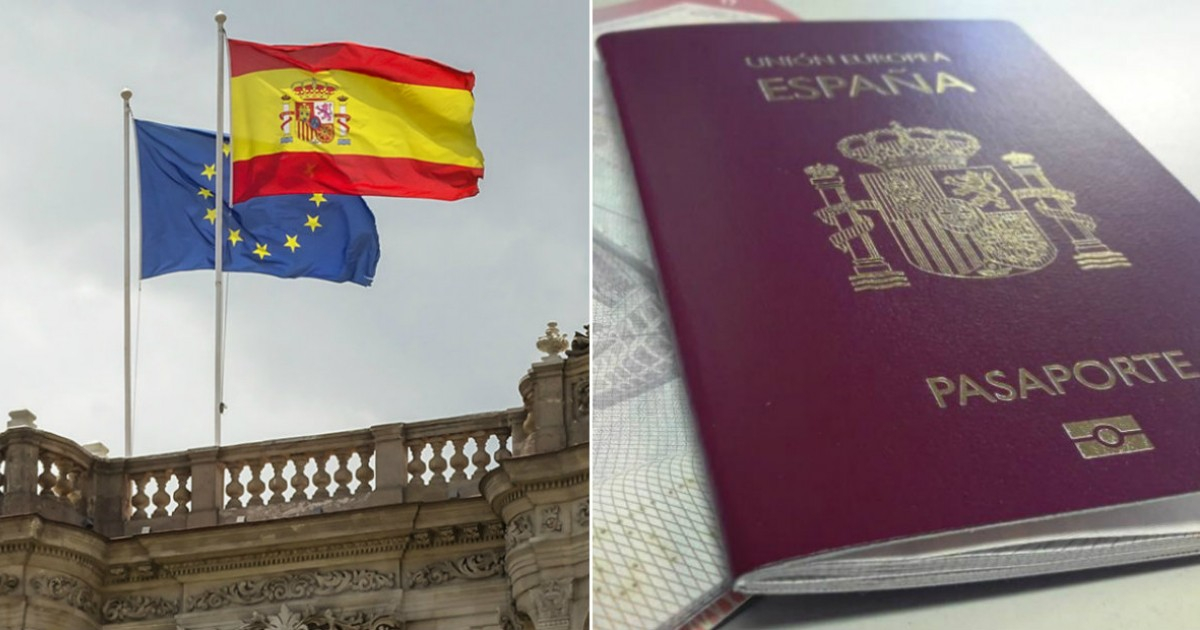
The "Grandchildren Law," included as an additional provision in the Democratic Memory Law, grants Spanish citizenship to the children and grandchildren of Spanish exiles. This applies even to those living abroad who have never resided in Spain.
According to La Vanguardia, Vox argues that the directive issued by the General Directorate of Legal Security and Public Faith extends the law's scope beyond what was approved by the Spanish legislative body by including cases not explicitly outlined in the legal text.
Vox's Legal Strategies and Concerns
"The General Directorate of Legal Security and Public Faith—headed by the sister of Minister Óscar Puente—has issued a directive that expands access to nationality well beyond the legal text," stated Vox, led by Santiago Abascal.
This is not Vox's first legal challenge against this regulation. The party previously contested the Democratic Memory Law in the Constitutional Court, which accepted the appeal on February 7, 2023. The court has yet to issue a ruling.
Vox's latest legal actions include submissions to the Central Electoral Board. In one document, Vox demanded an audit of the Electoral Census of Absent Residents (CERA), the suspension of new additions, and a review of outsourced contracts, specifically mentioning the tech firm NEORIS and the Cuban state entity Grupo Palco, linked to the military conglomerate GAESA.
In another document, the party called for a ban on overseas mail voting, citing insufficient safeguards for voter identity and ballot security.
Focus on Cuba and Criticisms
Cuba plays a significant role in Vox's arguments. Official data indicates that over 350,000 Cuban citizens have begun processes to acquire Spanish nationality under the Democratic Memory Law. The Spanish Consulate General in Havana reportedly has over 137,700 files pending.
To manage the surge in applications, the Spanish government awarded contracts worth between €1.1 and €1.6 million to Grupo Palco to enhance consular services with 88 to 107 additional staff. Vox criticizes this decision, highlighting that the company is part of GAESA, sanctioned by the United States since May 2026.
Vox also argues that Cuba's exclusion from the Hague Convention complicates the independent verification of documents used in nationality applications.
Political Tensions and Government Response
The issue has also sparked political tension. Santiago Abascal accused Prime Minister Pedro Sánchez of attempting to "manufacture voters" through the law's implementation.
"Sánchez rigged his party's primaries and is trying to do the same to remain in power. Who knows what tricks he's pulled over the years... We can't allow it!" Abascal declared on social media.
These criticisms are echoed by Popular Party leaders. On Monday, Alberto Núñez Feijóo remarked on EsRadio, "With the current voters, he can't make the numbers add up, so let's see if manufacturing voters will help." Madrid's Community President, Isabel Díaz Ayuso, warned that granting nationality to those not meeting legal requirements "would also be illegal."
The government dismissed these claims. Minister and spokesperson Elma Saiz called the opposition's statements a "major irresponsibility" and defended the Democratic Memory Law as being founded on principles of "reparation and justice."
With this new legal move, Vox continues its legal and political strategy against the "Grandchildren Law," a debate likely to influence public discourse in the lead-up to the general elections set for 2027.
Key Questions About the "Grandchildren Law" and Vox's Actions
What is the "Grandchildren Law"?
The "Grandchildren Law" allows children and grandchildren of Spanish exiles to obtain Spanish nationality, even if they have never lived in Spain, as part of the Democratic Memory Law.
Why is Vox opposing the "Grandchildren Law"?
Vox opposes the law, arguing that the directive extends its scope beyond what was legislatively approved and raises concerns about the integrity and implications of granting citizenship to a large number of foreign descendants.
How does Cuba factor into this issue?
Cuba is central to the debate as a significant number of Cuban citizens are applying for Spanish nationality under the law. Vox criticizes the involvement of Cuban companies in processing these applications due to concerns over document verification and political affiliations.