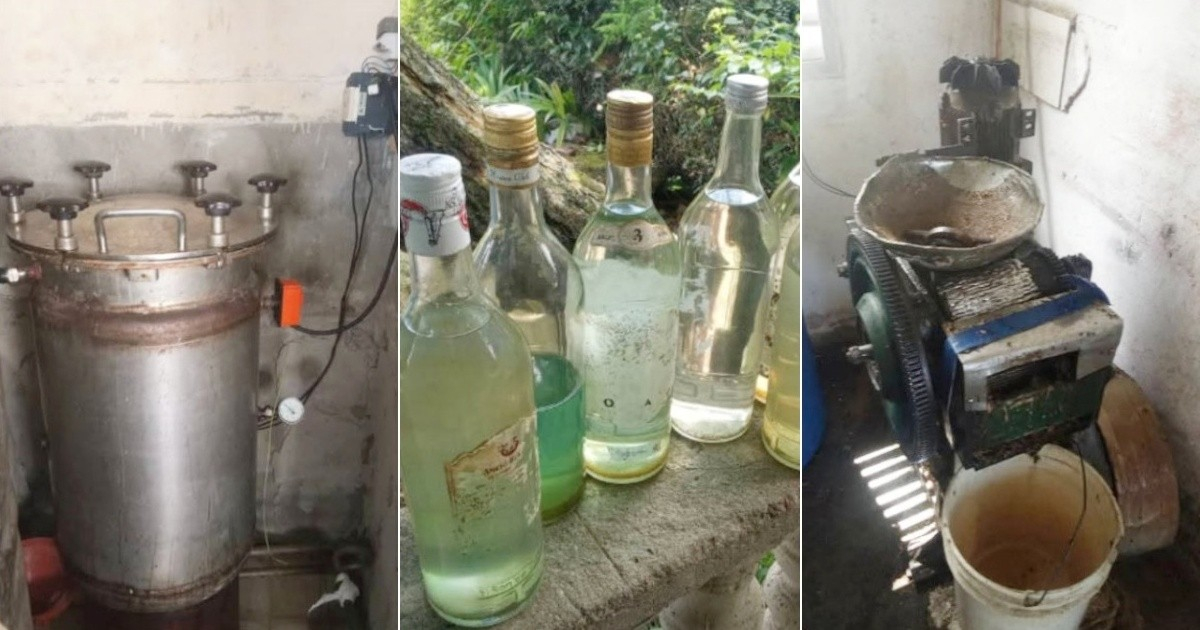
In Santa Clara, police have dismantled an illicit home-based rum production facility, according to a report by the pro-government Facebook page "Fuerza Pueblo."
During the raid, law enforcement confiscated the entire batch of illegal rum and imposed a fine on those involved. However, the report was criticized for lacking details, such as the amount of the fine, the value of the seized goods, and the number of individuals implicated.
The government touted the operation as a policing success, reiterating that unauthorized production and sale of alcoholic beverages are illegal and subject to legal penalties. Yet, the announcement triggered a storm of online criticism reflecting widespread discontent with the selective nature of these operations.
Public Backlash: Addressing Minor Issues While Ignoring Major Ones
The Ministry of the Interior's post on "Fuerza del Pueblo" elicited a flood of responses, highlighting a perceived double standard: strict enforcement for ordinary citizens, while those in power remain untouched. One commenter questioned, "When will they raid the homes of officials who steal more every day?" Another bluntly stated, "They only target those struggling to get by while the real thieves remain free."
Many questioned the focus of these operations given more pressing issues: "With so many muggers on the streets, why aren't they caught?" and "Where are the drug raids?" were recurring questions. One comment summed up the sentiment: "They go for the low-hanging fruit instead of tackling real issues."
Some resorted to irony or resignation: "They should be given a license to continue producing," suggested one user, while another declared, "In a free country, they'd run their own business." Economic predictions also surfaced: "Now the price of homemade liquor will rise; everything is wrong."
The majority of reactions conveyed frustration and distrust towards the authorities. Statements like "All they do is fine and repress; that's why we're in this situation" and "Everything here is illegal; that's why we are where we are" encapsulate a widespread perception dominating public discourse around these operations.
Legal Framework and Recent Operations
The confiscation is part of the Fifth National Exercise of Crime Prevention and Control, initiated on May 18, 2026, by Miguel Díaz-Canel via videoconference with provincial authorities. This marks the fifth operation of its kind in less than two years, focusing on controlling food, fuel, prices, and informal economic activities.
As part of this exercise, police in Placetas have already seized 25 gas cylinders intended for illegal economic activities. Decree-Law 91/2024, effective since September 2024, has tightened sanctions for informal activities, imposing fines of up to 72,000 pesos.
Since January 2025, state inspectors' earnings have been tied to the number and size of fines they impose, leading to allegations of arbitrary sanctions. In the first quarter of 2025, over 425,000 fines were imposed nationwide, collecting more than a million pesos. In just the third week of February 2026, 17,000 fines were recorded, totaling 65 million pesos across the country.
The Crisis Driving Illegal Rum Production
The rise of informal alcohol production is no coincidence. The state rum industry is in deep crisis, with liquor production down 41% in 2025 compared to 2024, and shortages of sugar and raw materials threatening iconic brands' survival.
Amid widespread scarcity, the artisanal production of homemade liquor—known locally as "chispa e' tren"—has become a means of survival and an informal income source. Authorities cite health concerns to justify these operations: in 2013, illegal methanol consumption resulted in 11 deaths and 46 poisonings in Havana. However, many Cubans feel this rationale falls short of explaining why those struggling to survive are repeatedly targeted.
Key Questions About the Villa Clara Rum Operation
Why did the police target the illegal rum factory in Villa Clara?
The police targeted the illegal rum factory as part of a broader crime prevention initiative prioritizing control over informal economic activities, including unauthorized alcohol production.
What were the public reactions to the rum factory shutdown?
The shutdown prompted widespread criticism on social media, with many condemning the selective enforcement of laws and questioning why more severe societal issues aren't addressed.
How has the economic crisis influenced illegal rum production in Cuba?
The economic crisis, marked by a dramatic decline in state-run liquor production and raw material shortages, has driven many to turn to illegal rum production as a means of survival and income.