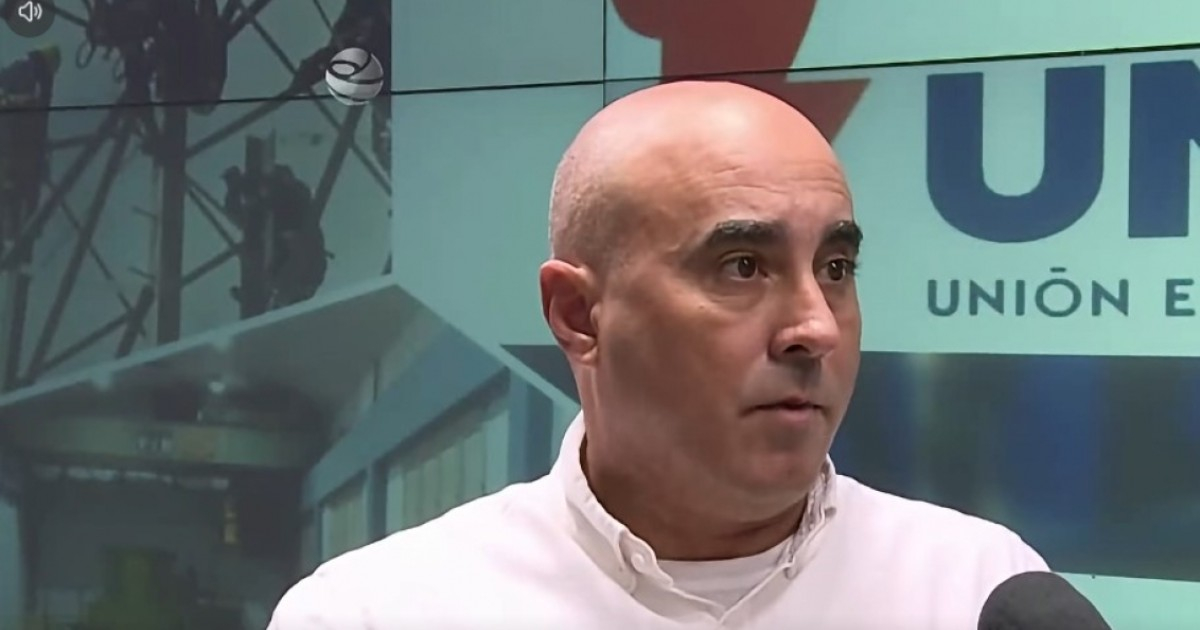
The Electric Union (UNE) announced on Tuesday that by completing planned maintenance on several thermoelectric plants, approximately 400 MW could be added to Cuba's base power generation in July. However, the organization itself acknowledged that this increase would still fall short of meeting national demand, as reported by Canal Caribe.
Initially, the plan set earlier this year aimed for four key units—Guiteras, Céspedes 3 and 4 in Cienfuegos, and Felton 1—to collectively contribute 600 MW during July and August.
Unexpected breakdowns at the Guiteras and Céspedes 4 plants have delayed the schedule, slashing the expected output by half.
Challenges Beyond Maintenance
According to Edier Guzmán Pacheco, Director of Thermal Generation at the UNE, the lack of fuel for distributed generation has further complicated the situation, forcing delays in block maintenance.
Forecasts indicate that by July, six units should be ready to synchronize with the National Electric System (SEN): Mariel 6 and Nuevitas 6 (each with 90 MW), as well as Santa Cruz 3, Renté 5, Renté 6, and Mariel 5 (each with 60 MW).
"Collectively, the six units scheduled for July should restore around 400 megawatts to the nation," journalist Bernardo Espinoza stated optimistically.
Critical Failures at Guiteras
The Guiteras plant remains a critical concern. As the country's most significant plant with a 330 MW capacity, it has failed 16 times this year. Its economizer has been in operation for 38 years, leading to frequent malfunctions.
The UNE official admitted to the severity of the problem but did not offer a definitive solution: "Why not make it new? Why not replace it entirely? Replacing it takes time and we're on the verge of summer. It's true that this component is 38 years old, but we can't just say we'll make it new or replace it, even if we have the resources."
"We've replaced half; a temporary solution was implemented. That other half hasn't failed yet but could start failing. Even in areas we've worked on, issues are arising," he conceded.
Impact of the Energy Crisis
This announcement arrives during one of the worst energy crises in Cuba's recent history. On June 25, the electrical deficit exceeded 2,208 MW, a record high that left nearly 70% of the nation without simultaneous electricity.
For this Wednesday, the projected peak deficit stood at 2,075 MW, with only 1,148 MW available against a demand of 3,200 MW.
The effect on the population is severe. In Matanzas, some communities experienced up to 85-87 consecutive hours without electricity in June.
In Havana, outages average between 20 and 24 hours daily. On Monday, residents of Salud Street in Centro Habana staged pot-banging protests after enduring more than 28 hours without electricity, gas, or water.
The government blames the crisis on the "energy blockade" imposed by Washington, referencing Executive Order 14380 signed by Donald Trump on January 29, 2026, which imposes secondary sanctions on countries supplying fuel to Cuba.
The Cuban Observatory of Conflicts recorded 1,311 protests last May, the highest number since July 11, 2021, amid growing social unrest exacerbated by prolonged blackouts.
Understanding Cuba's Electricity Crisis
What are the main causes of Cuba's electricity shortages?
Cuba's electricity shortages are mainly caused by maintenance issues, unexpected breakdowns in critical power plants, and a lack of fuel for distributed generation.
How is the Cuban government responding to the energy crisis?
The Cuban government is attempting to complete maintenance on key power plants and restore some generation capacity. However, they acknowledge these efforts will not fully meet the country's demand.
What impact does the energy crisis have on Cuban citizens?
The energy crisis results in prolonged blackouts, severely affecting daily life. Some areas experience outages lasting over 80 hours, and residents have staged protests due to the lack of electricity, gas, and water.