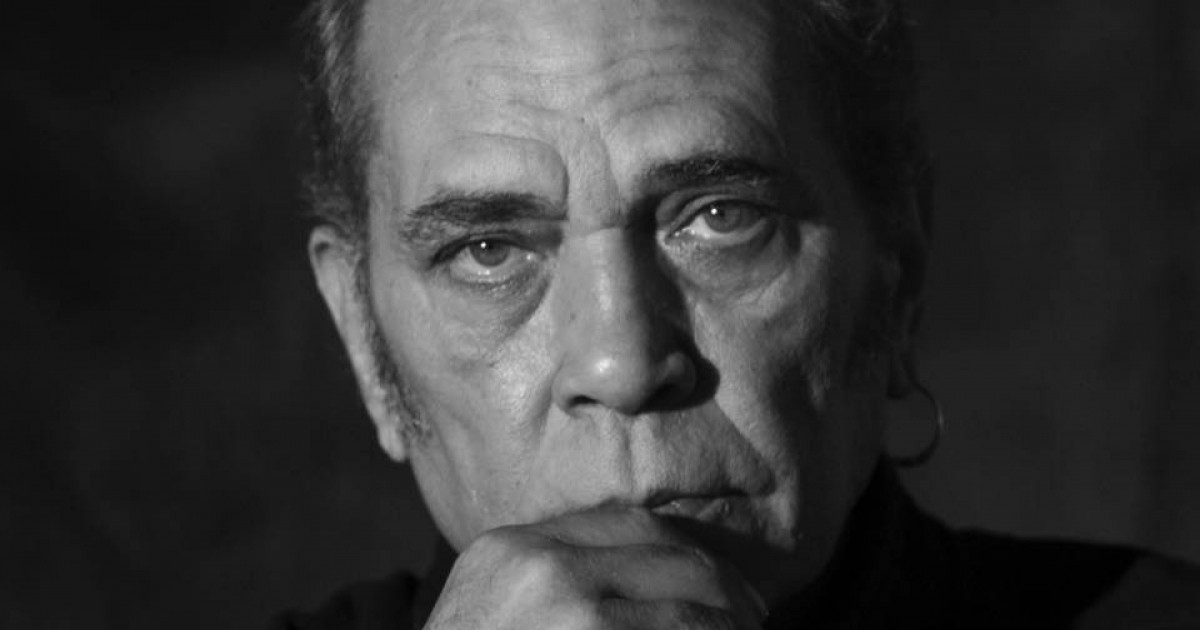
Cuban actor Luis Alberto García Novoa shared an in-depth analysis on Facebook this Wednesday, critiquing the extensive damage the regime's prolonged blackouts are inflicting on Cuba's electrical transformers. He encapsulated his insights with a striking phrase: "Common sense overcomes wishful thinking."
García began his post with a personal anecdote from the 1990s. During that era, eight-hour power outages alternated with eight hours of electricity. Someone decided to frequently turn the air conditioning on and off in the ICAIC vaults, which were crucial for preserving film reels. The outcome was disastrous. "Many reels turned into highly flammable alcohol," he recounted. He also mentioned, "The same thing happened with refrigerators storing various foods. I saw entire pigs, after undergoing this freeze-thaw regime, that had to be buried."
Widespread Electrical Issues
The actor emphasized that this issue extends beyond Old Havana's underground circuits: "What I am sharing is not limited to the underground; it happens in any circuit."
García's technical breakdown highlights five mechanisms by which cycles of 48-hour blackouts followed by only two or three hours of electricity damage the transformers.
Technical Breakdown of Transformer Damage
First is thermal shock: the equipment quickly transitions from ambient temperature to full operation, causing mechanical expansion and contraction in copper windings and core laminations, loosening hardware and cracking insulation.
Second, the "breathing" effect leads to moisture absorption: as the transformer cools, it draws in ambient air, introducing humidity that degrades insulating paper and contaminates dielectric oil.
The third issue involves inrush current peaks at every start-up, reaching eight to fifteen times the transformer's nominal current, repeatedly stressing switches and fuses.
Fourth is simultaneous demand: when power returns, fridges, air conditioners, and water pumps start simultaneously, causing severe voltage drops that damage motors.
Finally, there's thermal overload: during limited service hours, users rush to pump water, cool food, and charge batteries, pushing the transformer to operate at full capacity without rest. The conclusion is clear: "Even if the transformer 'rests' for 48 hours, short operation cycles are not optimal. The system suffers more from cyclic thermal stress, moisture absorption during outages, and the impact of simultaneous load start-up than from continuous operation."
Reactions and Historical Context
The post ignited a flood of reactions. Individuals with electrical and engineering backgrounds described the message as a "master class," noting that the Ministry of Energy and Mines might lack the capability to understand the complexities discussed. Several commentators recalled similar past incidents: lost film reels in the 1990s at 23rd and P, Spanish hams buried in Varadero's tourist warehouses, and the deterioration of boilers in thermoelectric plants during the Special Period. A widely shared comment summed up the general sentiment: "The on-and-off routine has become a dangerous habit."
This post emerges during the worst energy crisis Cuba has faced in decades. On June 25, the deficit reached 2,208 MW, with only 1,015 MW available against a demand of 3,150 MW. Blackouts exceeded 85 consecutive hours in Matanzas and 50 hours in Havana, with the Electric Union admitting that in Guantánamo, eight transformers are damaged without available replacements.
García, who reported on June 25 that his building in Playa had been without electricity or water for 48 hours, has become one of the most active critical voices in Cuba's cultural sphere regarding the energy crisis. Experts estimate that restoring the country's electrical system would require between $8 billion and $10 billion and a minimum of three to five years.
Understanding the Cuban Energy Crisis
What are the main causes of transformer damage during blackouts in Cuba?
The main causes include thermal shock, moisture absorption due to the "breathing" effect, inrush current peaks, simultaneous demand causing voltage drops, and thermal overload when power returns.
How severe is the current energy crisis in Cuba?
The crisis is severe, with a recent power deficit of 2,208 MW against a demand of 3,150 MW, resulting in prolonged blackouts, including over 85 consecutive hours in some areas.
What are the estimated costs and time needed to restore Cuba's electrical system?
Experts suggest that restoring the electrical system could cost between $8 billion and $10 billion and take a minimum of three to five years.