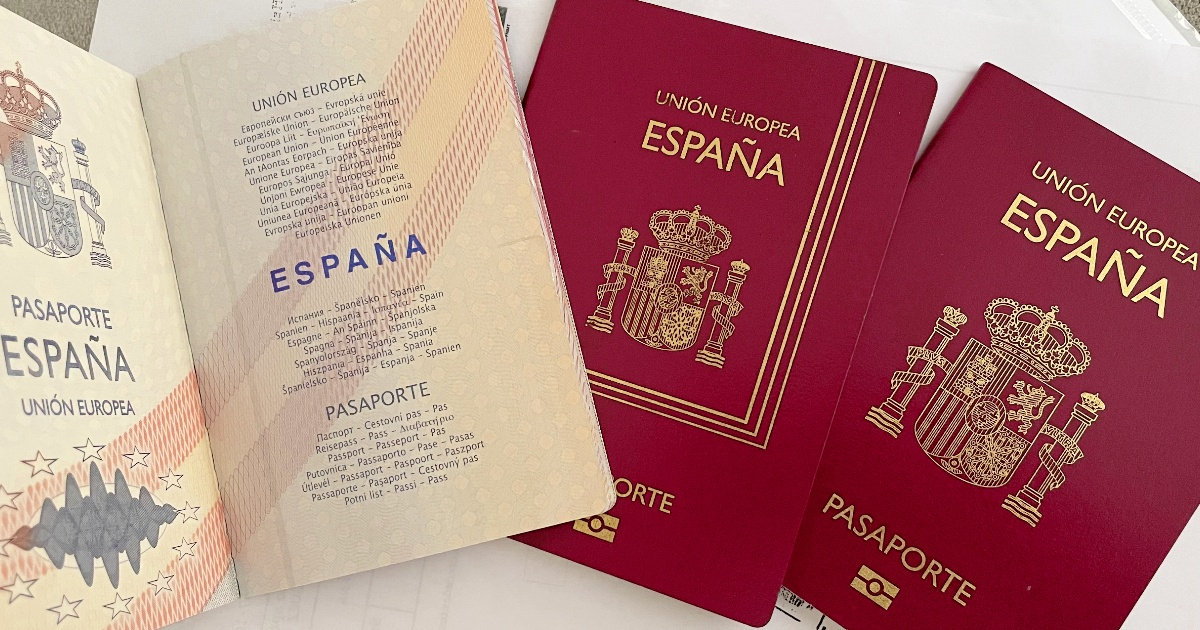
The controversial "Grandchildren Law," officially the eighth additional provision of the Law of Democratic Memory, has sparked a fierce political confrontation in Spain. The ruling party, led by Prime Minister Pedro Sánchez, is being accused of using mass naturalizations to potentially sway the voter registry in anticipation of upcoming general elections.
Alberto Núñez Feijóo, the head of the Popular Party (PP), made the most direct accusation during an interview on EsRadio: "There's a clear intention to gain new voters. Since the current numbers don't favor them, they're trying to manufacture voters to change that." This bold stance, highlighted by ABC and EFE, represents an escalation from the main opposition party, which had previously been more reserved.
Isabel Díaz Ayuso, the President of the Community of Madrid, took it a step further by issuing a stark warning to consular officials: "Any consul or official granting nationality to undeserving individuals must know they are acting illegally. Consider this a warning." She also noted that Buenos Aires could potentially become Spain's third-largest voting district, as Argentine consulates have received 462,815 nationality requests.
Government's Defense and Opposition's Criticism
Responding to these allegations, government spokesperson Elma Saiz labeled Feijóo's statements as "grossly irresponsible," asserting that the law is rooted in principles of "reparation and justice" for Spaniards who fled Franco's dictatorship.
Alma Ezcurra, a PP Member of the European Parliament responsible for immigration, expanded on these claims via social media: "When assessing election manipulation, we focus on ballots, boxes, or counting. But a quieter way exists: deciding who enters the electoral roll." Ezcurra also alleged that the government outsourced the process to Ineco, a company linked to the ex-partner of a former minister, aiming to grant one million nationalities by 2027.
Impact on Cuba and Broader Implications
Vox, a far-right party, has voiced the most extreme accusations, calling for the suspension of a Justice Ministry order granting nationality to descendants of 19th-century emigrants. They argue that an administrative order cannot alter a law passed by the Spanish Parliament. Vox has already challenged the 2022 Law of Democratic Memory in the Constitutional Court.
This controversy has significant implications for Cuba. ABC revealed that the Spanish government awarded contracts worth 1.6 million euros to Grupo Palco, a Cuban company associated with the military conglomerate GAESA, to employ 107 support staff at the Spanish consulate in Havana. Santiago Abascal, the Vox leader, summed up the situation on June 22 in a social media post: "Paying the Cuban dictatorship to assist in their electoral fraud."
The situation is further complicated by Cuba's non-adherence to the Hague Convention, making it challenging to independently authenticate documents needed to prove Spanish ancestry. The Havana consulate is overwhelmed with over 137,700 official files, with estimates suggesting up to 350,000 initiated applications. Applicants are often told, "Due to the volume of cases, this process might take several months."
Globally, around 2.5 million people have applied for nationality through this law since it took effect in October 2022. Although the deadline for new applications was October 22, 2025, the ongoing resolution process—34,000 in the first quarter of 2026 alone—keeps the debate alive. With a rejection rate of just 1.3%, Iustitia Europa has filed a complaint with the Central Electoral Board questioning the voting province assignment criteria for new citizens, noting the external Spanish voter registry now exceeds 3.2 million.
Key Questions About Spain's Grandchildren Law
What is the Grandchildren Law in Spain?
The Grandchildren Law is a provision in Spain's Law of Democratic Memory that allows descendants of Spanish emigrants to apply for Spanish nationality.
Why is the Grandchildren Law controversial?
Critics claim the law is being used to manipulate voter demographics ahead of elections, while supporters argue it seeks to rectify historical injustices.
How does the Grandchildren Law affect Cuba?
The law significantly impacts Cuba, where a high volume of nationality applications has led to logistical challenges and political controversy.