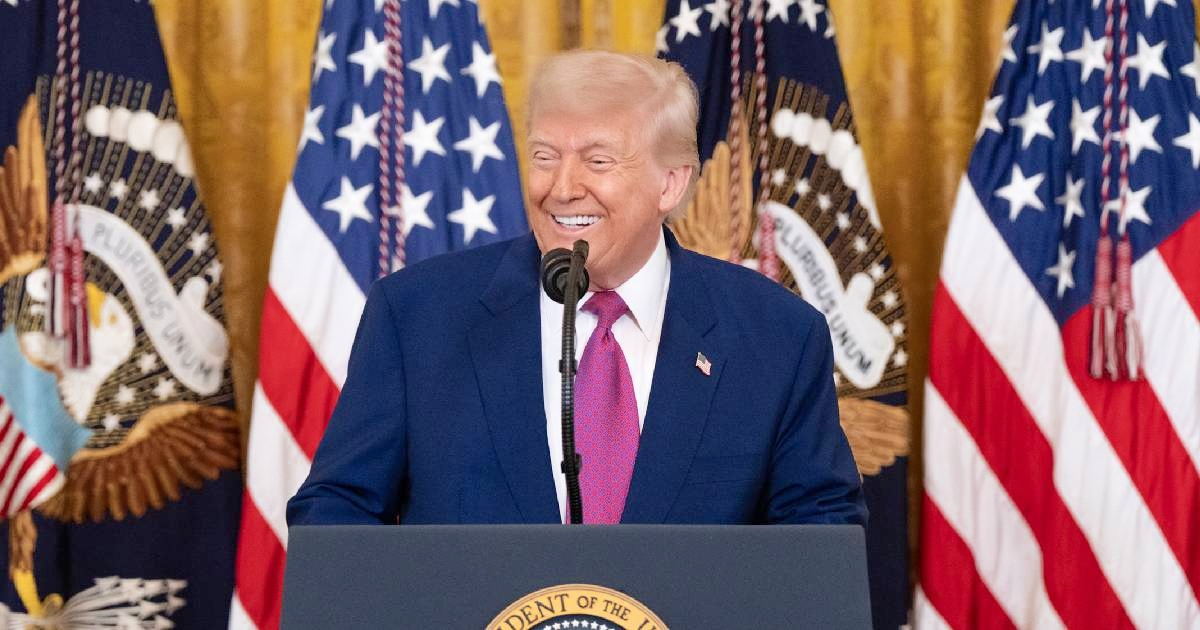
The U.S. Supreme Court delivered two landmark rulings on Monday that reshape the balance of power between President Donald Trump and independent federal institutions. While Trump's authority to dismiss heads of regulatory agencies was significantly broadened, the court simultaneously thwarted his attempt to remove a Federal Reserve governor.
In the case of Trump v. Slaughter, the court overturned a 91-year-old precedent set by Humphrey's Executor v. United States in 1935, which allowed Congress to shield certain executive officials from arbitrary dismissal. This ruling determined that job protection for commissioners of agencies like the Federal Trade Commission (FTC) and the National Labor Relations Board (NLRB) violates the separation of powers, as it contradicts Article II of the Constitution, which grants the president full executive power.
The court acknowledged that this decision dismantles decades of institutional practice, concluding that all three branches of government had been in "open defiance of the Constitution" by permitting such protections for nearly a century. Senator Chuck Schumer harshly criticized the decision, describing it as a "green light" for Trump to transform independent agencies into "private clubs for his friends and allies."
Federal Reserve Independence Upheld
However, in a second ruling, the court restrained the president with a close five-to-four decision, determining that Trump cannot dismiss Lisa Cook, a Federal Reserve governor and the first African American woman to serve on its board. The court ruled that announcing Cook's dismissal via the social media platform Truth Social does not constitute proper legal notice nor provide her the opportunity to contest the charges against her, violating due process.
Trump had sought Cook's removal since August 2025, citing mortgage fraud following a criminal referral by Bill Pulte, director of the Federal Housing Finance Agency. Pulte alleged that Cook had concurrently listed two primary residences on mortgage documents. Cook's legal team dismissed the accusations, labeling them as stemming from an "errant reference" in a 2021 document that was "clearly innocuous," with no fraud or intent to deceive.
Implications for Federal Agency Oversight
The Federal Reserve Act stipulates that governors can only be removed "for cause," providing a layer of protection meant to insulate the central bank from political influence. This legal distinction sets the Fed apart from other independent agencies whose protections relied on the now-overturned precedent. This attempt marks the first in the Federal Reserve's 112-year history where a president has sought to remove one of its governors.
This dual ruling comes as part of a broader effort by the Trump administration to challenge institutional independence. In February 2025, Trump signed an executive order requiring independent regulatory agencies, including the SEC, FTC, FCC, and NLRB, to submit their regulatory proposals for White House review and approval.
Additionally, in January 2026, the administration launched a criminal investigation into then-Fed Chair Jerome Powell over alleged irregularities in the central bank's building renovations. The investigation concluded in April 2026 with no charges filed.
The new Federal Reserve Chair, Kevin Warsh, took office on May 22, 2026, confirmed by the Senate with a 54-45 vote. Despite Trump's public declaration for Warsh to operate with "full autonomy," it seemingly contradicts his history of exerting pressure on the central bank.
As Cook continues in her role while the case proceeds in lower courts, it represents the clearest boundary the judicial system has set against the expansion of Trump's executive power.
Exploring the Impact of Supreme Court Rulings on Federal Agencies
What was the significance of the Trump v. Slaughter ruling?
The Trump v. Slaughter ruling overturned a long-standing precedent, expanding presidential power to dismiss heads of regulatory agencies, and challenged the constitutionality of protections for certain executive officials.
Why was Trump's attempt to remove Lisa Cook blocked?
The Supreme Court blocked Trump's attempt because the method of announcing Cook's dismissal violated due process, as it did not provide her with a proper legal notice or chance to contest the charges.
How does the Federal Reserve Act protect governors from removal?
The Federal Reserve Act stipulates that governors can only be removed "for cause," ensuring protection from political influence and distinguishing the Fed from other independent agencies.
What broader actions has the Trump administration taken against agency independence?
The administration has taken actions such as signing an executive order for regulatory proposals to undergo White House review and launching investigations into agency officials, including the former Fed Chair.