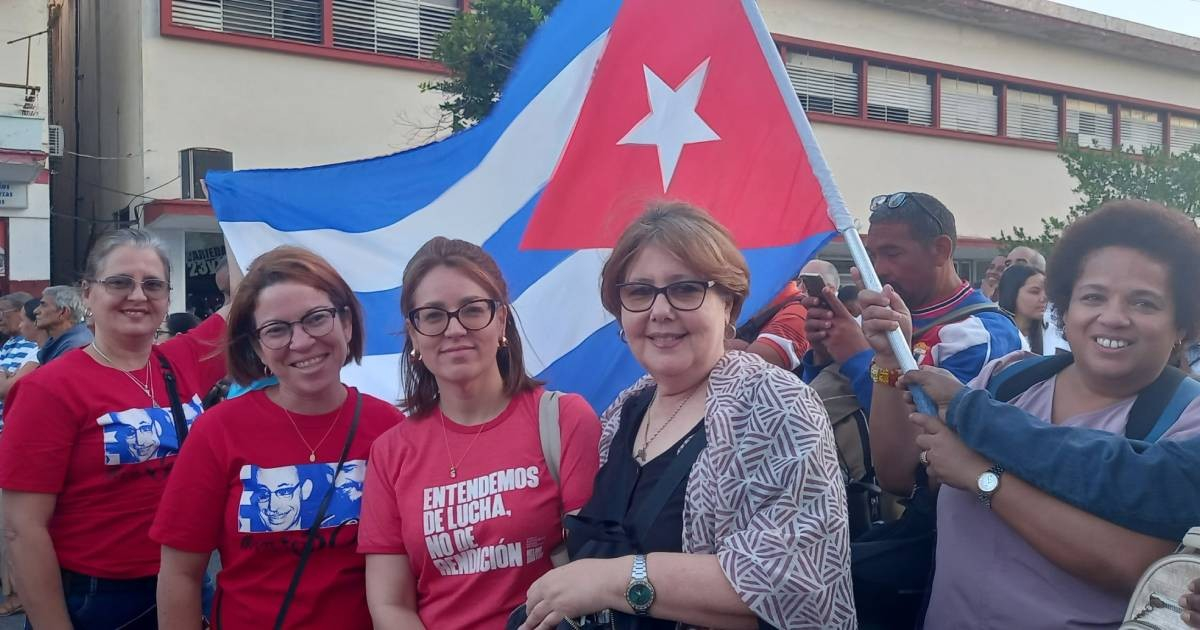
During the VIII Extraordinary Regional Meeting of Resident Cubans held in Montevideo, Cuba's ambassador to Uruguay, Lissett Pérez, called on the Cuban diaspora to become advocates for the island's global image. With delegates from nine countries attending, the diplomat expressed optimism, stating, "We need to make the world fall in love with Cuba again," as reported by the Comunas agency.
The event, orchestrated by the Network of Cuban Residents in Latin America and the Caribbean with support from the Uruguayan Anti-Imperialist Committee of Solidarity with Cuba, took place from June 27 to June 29 in Uruguay's capital. It concluded with the adoption of the "Montevideo Declaration," which demands Cuba's removal from the U.S. list of "State Sponsors of Terrorism" and asserts that "Cuba is not alone."
In her speech, Pérez tapped into what she described as the "collective intelligence" of Cuban emigrants to drive investments in key sectors like food production and renewable energy on the island.
"The Cuban diaspora holds significant potential. With creativity and dedication, they can engage with local partners and bring projects to the Island's territories. This is a path we must expedite," she emphasized.
This appeal comes amidst Cuba's most severe economic crisis in decades. From 2020 to 2025, the nation's GDP shrank by 11%, while extended power outages plagued some provinces for up to 20 hours daily. Tourism also plummeted from 4.7 million visitors in 2018 to just 1.8 million in 2025.
In light of these challenges, the regime, which for years branded those who left as "worms" and "traitors," has ramped up efforts to attract investment from emigrants.
New Incentives for Cuban Expatriates
On May 5, the government implemented Decree-Law 117/2026, establishing a special migration status for "Investors and Businesspersons" among Cubans living abroad. This process, managed through Cuban consulates, costs 3,500 Cuban pesos.
Subsequently, on June 12, Miguel Díaz-Canel unveiled a package of 176 economic measures, including the introduction of private banking, currency exchanges, and expanded foreign investment, especially from the diaspora.
Nevertheless, many in the exile community have reacted with skepticism. The formation of the Cuban American National Chamber of Commerce in Miami on June 6 reflects this cautious stance, with members stating they will only invest in a free and democratic Cuba. Exile entrepreneurs have signaled their willingness to mobilize up to $35 billion, contingent on political transition with free elections and legal assurances.
Tensions and Skepticism Among the Exile Community
The Montevideo gathering also occurred against a backdrop of strained relations with certain exile factions. Just a month prior, a group protested outside the Cuban embassy in Uruguay, demanding the release of over 1,260 documented political prisoners in Cuba. In response, Pérez labeled this exile sector as "heirs of those who promoted the exodus of talent and resources from the country," accusing them of waging a "cognitive war based on discrediting and demonizing Cuba."
Having presented her credentials to Uruguayan President Yamandú Orsi on June 10, the diplomat concluded her speech by referencing historian Eusebio Leal and the restoration of Old Havana as an example of the country's potential.
"We must showcase to the world that it is possible, that Cuba has a future, and that its creativity is its greatest strength," she declared.
Exploring the Cuban Diaspora's Role in Economic Recovery
What is the Cuban government's strategy to attract investment from the diaspora?
The Cuban government has introduced measures such as Decree-Law 117/2026, which offers a special migration status for "Investors and Businesspersons" among expatriates. They have also announced economic reforms to encourage foreign investments, including from the diaspora.
How has the Cuban exile community responded to these initiatives?
The response has been mixed, with some expressing skepticism and caution. While some organizations are open to investment, they condition their participation on political reforms, such as free elections and legal guarantees.