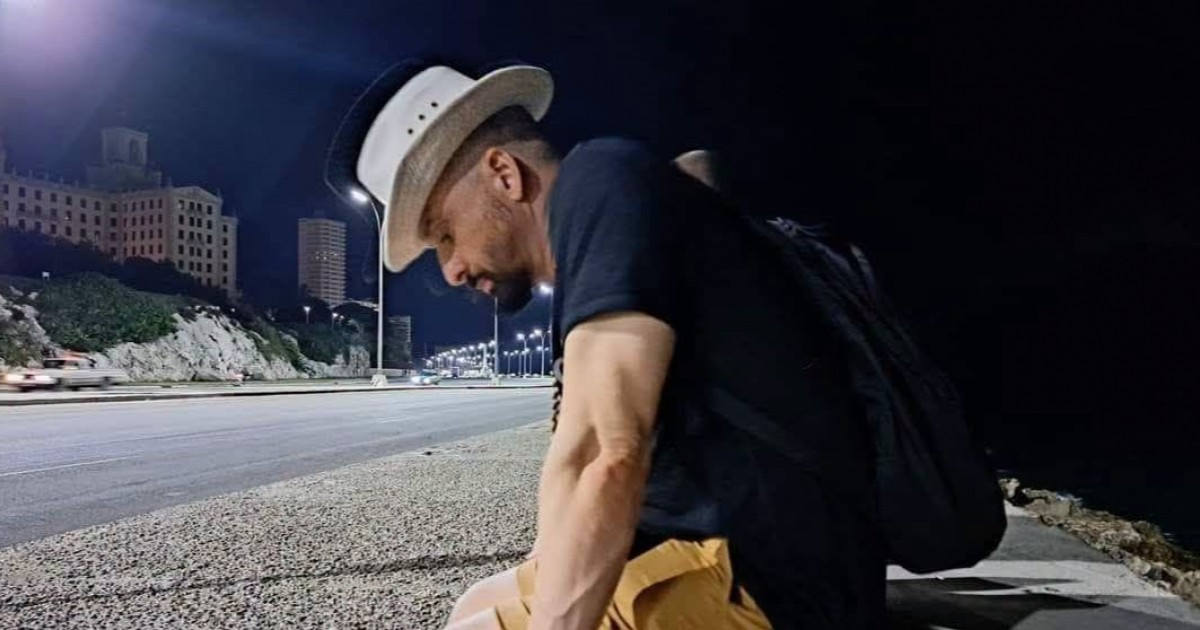
A thought-provoking post on Facebook by user Roy Perez, attributed to José Luís Pérez Parra, has sparked widespread reflection among Cubans both on and off the island. It poses a question the communist regime struggles to answer: "If this was the right thing to do, why did we have to wait a lifetime for it to be acknowledged?"
The catalyst for this reflection is the introduction of 176 economic reforms unveiled by the government on June 18 and 19 before the National Assembly. Presented by Prime Minister Manuel Marrero Cruz, these reforms are touted as the most significant attempt at structural change since the Special Period of the 1990s.
These measures now permit what was previously banned or heavily restricted for decades: operating large-scale businesses, forming partnerships, investing, hiring an unlimited number of workers, owning multiple companies, engaging in foreign trade, establishing private currency exchanges, and even purchasing shares in state-owned enterprises.
The Loss of Opportunities
"We recall that when we were young, strong, talented, disciplined, and eager to progress, many of these opportunities were prohibited or severely limited," the author reflects.
"We think about the projects that never came to fruition, the chances we missed, the years spent waiting for permissions, changes, or openings that never materialized," the text laments.
The post doesn't merely highlight economic missteps but underscores something irrevocable.
Irreparable Damage to Generations
"We are talking about lives. Entire generations were told it wasn't possible, only to be told decades later that it was. Men and women didn't fail due to a lack of talent or will; their potential was curtailed by external decisions," the post asserts.
This is the wound that the 176 reforms cannot heal: time. "No one can give back the years a nation was forced to lose. No one can return youth to a generation," it concludes.
A Pattern of Missed Opportunities
The historical pattern highlighted by this reflection is well-documented. During the Special Period of the 1990s, Cuba's GDP plummeted by 35%, prompting the regime to legalize self-employment in 1993 as an emergency measure—only to restrict it once Venezuelan subsidies stabilized the economy.
In 2010, Raúl Castro loosened certain restrictions but imposed strict limits: a cap of 100 workers, only one business per person, and several prohibited sectors. Fast forward to 2026, amid the worst crisis in decades, the regime is abruptly lifting nearly all these constraints.
The Dire Economic Crisis
The crisis prompting this opening is severe. A staggering 89% of the population lives in extreme poverty, food production has declined by 67% over five years, and over 850,000 Cubans have left the island since 2022, with 77% of them being young people aged 15 to 49. The basic cost of living exceeds 96,000 pesos monthly, while the official minimum wage is just 3,210 pesos.
Miguel Díaz-Canel has defended the reforms, insisting they are not a response to external pressures. "Trump doesn't dictate terms in Cuba, nor does the U.S. government. Cuba is sovereign," he declared.
Speaking at the XXII Congress of the Cuban Workers' Central last Friday, he added, "This had to be done to save the Revolution, to continue building socialism."
Criticism of the Reforms
Critics who are not dependent on the regime have a unanimous reading. Economist Pedro Monreal describes the reforms as "belated pragmatism" and warns that the GDP contraction could reach 15% by 2026. Opponent Manuel Cuesta Morúa summed them up as "belated Chinese reforms." The U.S. State Department called them "superficial smoke signals."
Díaz-Canel promised that the reforms would allow young Cubans to "pursue their life projects in Cuba without needing to emigrate." This is the same promise the regime has failed to fulfill for decades, now addressed to a generation that, for the most part, has already chosen to leave.
Understanding Cuba's Economic Reforms
What sparked the recent economic reforms in Cuba?
The Cuban government introduced 176 economic reforms in June 2026, aiming to address the severe economic crisis and introduce structural changes not seen since the 1990s.
How do the current reforms differ from past economic measures in Cuba?
Unlike previous measures that came with strict limitations, the current reforms lift many restrictions, allowing greater business freedom, foreign trade, and private investment.
What are the criticisms of these economic reforms?
Critics argue that the reforms are too late and may not sufficiently address the deep-rooted economic issues. Some see them as superficial changes without substantial impact.