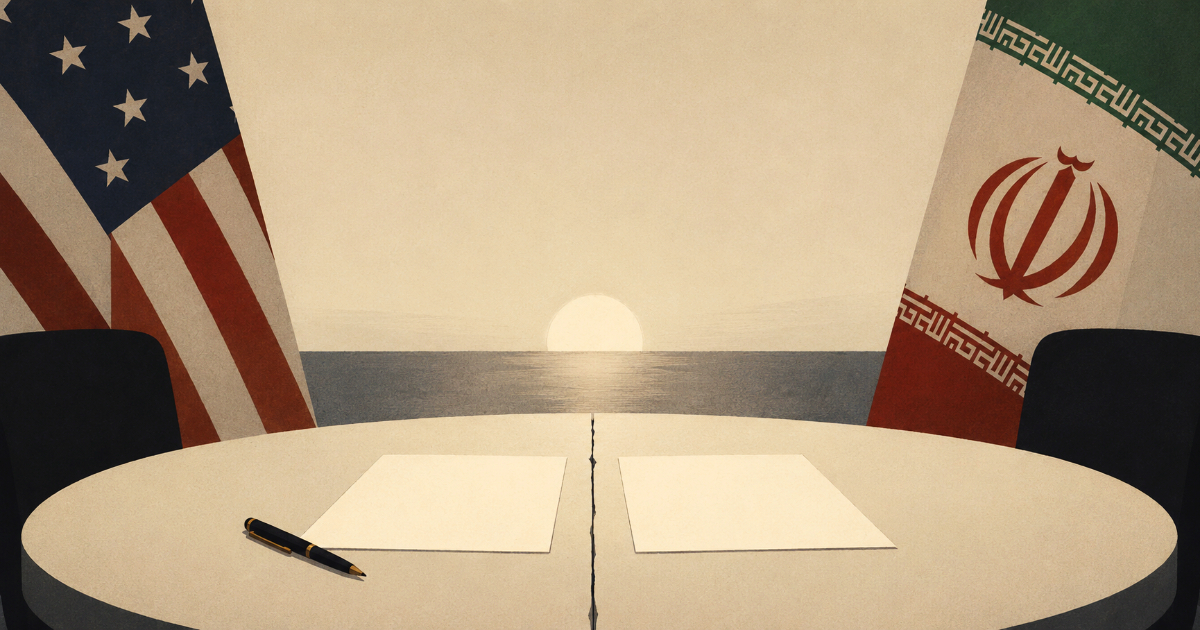
On Sunday, the United States and Iran reached a new understanding to halt the recent mutual bombings and agreed to engage in diplomatic talks in Qatar later this week, according to a report by the American news outlet Axios.
This agreement comes just two days after both nations accused each other of breaching the memorandum of understanding signed on June 17, which had brought an end to over 100 days of open conflict.
As reported by Axios, the understanding not only involves a cessation of attacks but also includes assurances that ships will be allowed to pass "freely" through the Strait of Hormuz as diplomatic discussions resume.
Rising Tensions Leading to Agreement
The escalation that prompted this accord began on Friday when former President Donald Trump accused Iran of launching "at least four one-way attack drones against ships transiting the Strait of Hormuz," describing it as a "reckless" breach of the ceasefire.
Among the targets of these Iranian attacks was the Panama-flagged oil tanker M/T Kiku, which was carrying over 2 million barrels of crude when it was hit by a suicide drone.
In retaliation, the United States Central Command (CENTCOM) conducted precision strikes on Iranian military facilities, targeting surveillance infrastructure, communication systems, air defenses, drone storage, and naval mining capabilities.
Accusations and Diplomatic Challenges
Iran, in response, accused Washington of violating the memorandum and justified its attacks on American targets in Kuwait and Bahrain as acts of "legitimate defense."
On Saturday, Trump sharply escalated his warnings, posting on Truth Social: "There may come a time when we can no longer be reasonable and are forced to finish militarily the job we started so successfully. If that happens, the Islamic Republic of Iran will cease to exist!"
The Fragile Peace Process
The June 17 memorandum of understanding, ratified in person on June 19 in Switzerland by Vice President JD Vance and Iranian Foreign Minister Abbas Araghchi, had established a 60-day ceasefire, the reopening of the Strait of Hormuz, and Iran's commitment not to pursue nuclear weapons.
Nevertheless, the agreement left unresolved eight critical issues, including the duration of the uranium enrichment moratorium: Washington demands 20 years, while Tehran proposes a period of five to 15 years.
CIA Director John Ratcliffe had forewarned Trump that Iran might not adhere to its nuclear commitments, highlighting the frailty of the process from its inception.
The Strait of Hormuz, through which roughly 20% of the world's oil supply passes, has become the main battleground of this crisis, and the upcoming meeting in Qatar will test whether this fragile peace process can endure.
Key Questions About the U.S.-Iran Agreement
What is the significance of the agreement between the U.S. and Iran?
The agreement marks a crucial step towards de-escalating tensions and halting the recent mutual bombings, while also committing both parties to resume diplomatic talks in Qatar.
What are the unresolved issues in the memorandum of understanding?
The memorandum left unresolved eight critical issues, including the length of the uranium enrichment moratorium, with the U.S. seeking a 20-year term and Iran proposing a span of five to 15 years.
How did the recent escalation of tensions between the U.S. and Iran begin?
The escalation began when former President Trump accused Iran of launching multiple attack drones against ships in the Strait of Hormuz, which was perceived as a violation of the ceasefire.