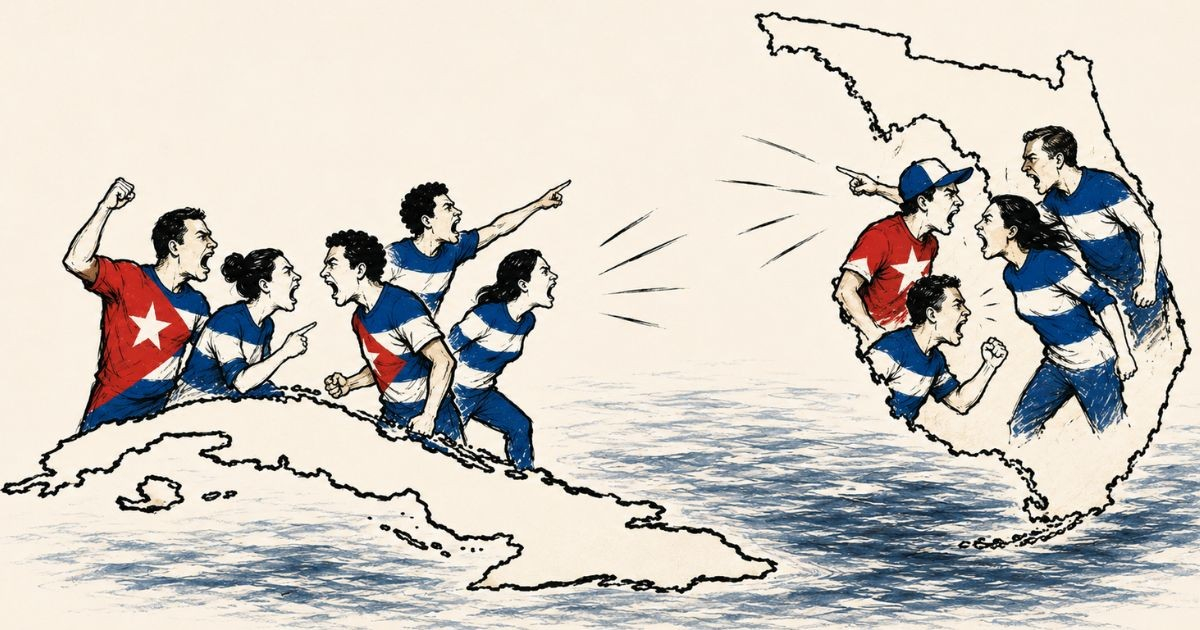
Freddys Núñez Estenoz, a prominent Cuban playwright and theater director, recently shared a profound reflection on Facebook, depicting Cuba as a nation deeply fractured by decades of animosity. He describes a society where internal conflicts among Cubans have gradually eroded their collective humanity.
"Cuba is a battlefield. We fight against everyone and amongst ourselves. We strive to validate our ideas, predict the future, lament the past, and seek out those to blame. In this vast battle, we slowly lose our humanity and sensitivity without even realizing it," wrote the founder of Teatro del Viento in Camagüey.
Accompanying his message with a photo taken in front of the altar of the Virgin of Charity of El Cobre, Núñez Estenoz advocates for forgiveness and reconciliation as the only viable paths to healing these deep-seated divides.
"When I think of Cuba, the first words that come to mind are FORGIVENESS and RECONCILIATION... Without these, there can be no path to the Cuba we dream of," he stated, acknowledging that not everyone is ready for such a step: "We may not be able to embrace each other yet, I know and understand that... Not everyone is prepared to move past decades of accumulated hatred and resentment... but I do believe that forgiveness is possible."
With several decades of artistic experience, Núñez Estenoz highlighted how he has managed to bring together individuals with radically opposing views through his work on stage. These include independent journalists like Henry Constantin Ferreiro, cultural officials, the president of the Union of Writers and Artists of Cuba (UNEAC) Armando Pérez Padrón, artist and National Assembly deputy Regina Balaguer, clergy, entrepreneurs, and everyday citizens.
"For over 25 years, I've tried to build bridges through art, to create spaces where diverse people can coexist... Some are positioned at vastly different political extremes, yet during the time of the performance, we've been together in respect," he noted.
The playwright firmly rejected any violent means to achieve change: "I refuse to accept or support a path involving military intervention or a bloodbath staining the streets of our island... In such circumstances, we would all lose, and the chasm of hatred would only widen."
He also shared a personal confession that underscores the sincerity of his message: "I have hated too, and I admit it without shame; I have felt disappointed, betrayed; I have written from anger, anguish, and despair... but those feelings fade quickly, very quickly, and I am proud, very proud... of not letting hatred grow within me."
This text adds to a series of public interventions by the artist that have grown more frequent in the past year.
In December 2025, he released a poignant message titled "The Country We Dream of Crawls," and in November of the same year, he criticized the healthcare crisis in Cuba on social media, highlighting the unchecked spread of dengue and chikungunya due to state neglect.
In June 2026, his piece "They Should Leave," performed as a monologue by actress Yia Caamaño, garnered over 100,000 views in less than 24 hours, demonstrating the growing influence of his voice in Cuban public discourse.
"When I look from the stage, I don't just see an audience; I see Cuba... Diverse people who are Cuba in a silent, calm gathering, that diverse Cuba almost on the verge of an embrace; an embrace possible through art, through forgiveness, through love and faith," Núñez Estenoz concluded.
Understanding the Challenges Facing Cuba
What does Freddys Núñez Estenoz mean by calling Cuba a "battlefield"?
He refers to the deep divisions and conflicts within Cuban society, where internal struggles have eroded collective humanity and sensitivity among its people.
Why does Núñez Estenoz emphasize forgiveness and reconciliation?
He believes these are the only viable solutions to heal the fractures within Cuba and to pave the way for a hopeful future.
How has Núñez Estenoz used art to bridge divides in Cuba?
Through his theatrical work, he has brought together people with opposing views, creating a space for respectful coexistence despite their political differences.