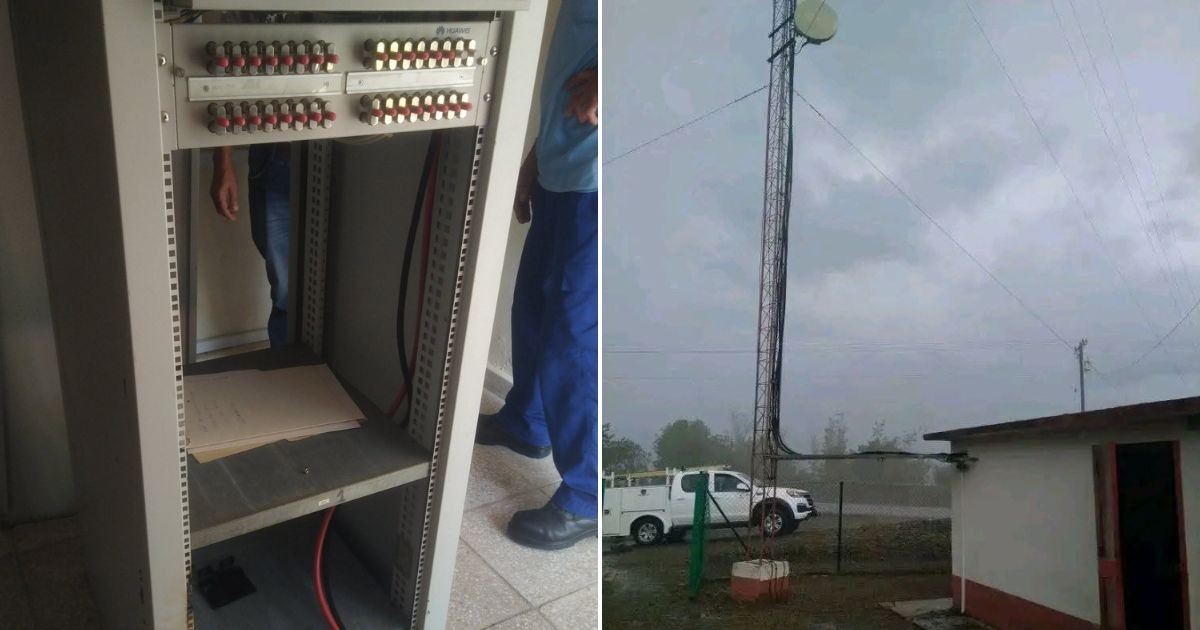
The recent theft of four solar panels from the La Alcaraza site, a key location for television and cellular communications in the Popular Council of Calabaza, Sagua de Tánamo municipality, Holguín province, has left four local communities without TV signals in the mountainous region of the Plan Turquino.
Pablo Céspedes Molina, who brought attention to the theft on Facebook, sarcastically referred to the thieves as "honorable criminals" and highlighted the significant impact this incident has on the remote communities affected.
The compromised site was part of an initial phase by Radio Cuba aimed at ensuring television and cellular phone signals in the Plan Turquino areas, with plans to expand the installations to other parts of the region.
"This initial setup was crucial to maintain TV and cellphone signals in the Plan Turquino areas and to proceed with further installations at other sites," Céspedes Molina noted.
The theft not only disrupted service for already connected communities but also jeopardized future phases of the project in other Plan Turquino and Sagua de Tánamo sites, where cellular towers operate without permanent personnel.
"These criminals put other communication sites in the Plan Turquino and Sagua de Tánamo areas, where there are unmanned cellular towers, in a difficult position," warned the complainant.
With 85% of Sagua de Tánamo's territory included in the Plan Turquino and 87.5% being mountainous, the area's roughly 45,522 residents are particularly vulnerable to interruptions in telecommunications.
This incident is part of a growing trend of solar panel thefts in Holguín, exacerbated in 2026 by an intense energy crisis causing power outages lasting over twenty hours daily in some provinces, thereby increasing the black market value of these panels.
On May 12, a similar crime occurred when four individuals assaulted and restrained a guard at the Oscar Lucero pumping station, also in Holguín, to steal 32 solar panels.
In Santiago de Cuba, similar thefts in May and June 2026 left thousands without phone and internet service, with three nodes down on June 13 alone.
In response to this surge in thefts, the Cuban regime has categorized such acts as sabotage under the Supreme People's Court's Decree 475, issued in May 2025, with punishments ranging from seven to thirty years in prison, life imprisonment, or even the death penalty in severe cases.
Nonetheless, thefts persist, especially at remote sites lacking constant surveillance, such as La Alcaraza.
The Cuban government redirected 240 units from a Chinese donation of 5,000 photovoltaic systems to ETECSA to ensure services in 168 municipalities, underscoring the strategic importance placed on maintaining telecommunications through solar energy amid the ongoing electrical collapse.
Céspedes Molina concluded his report by urging collective vigilance, stating, "Once photovoltaic systems are installed at technological sites to continue service, it is also important to care for and protect them. The community is our best ally."
Impact of Solar Panel Thefts on Cuban Communities
Why are solar panels being stolen in Holguín?
The theft of solar panels in Holguín is primarily driven by a severe energy crisis, leading to lengthy power outages. This has increased the value of solar panels on the black market, making them a target for theft.
What is the Cuban government's response to the thefts?
The Cuban government has classified these thefts as acts of sabotage, subject to severe penalties, including long prison sentences, life imprisonment, or even the death penalty for grave offenses.
How does the theft of solar panels affect local communities?
The thefts disrupt crucial television and cellular services in remote areas, making already vulnerable communities even more susceptible to isolation and communication difficulties.