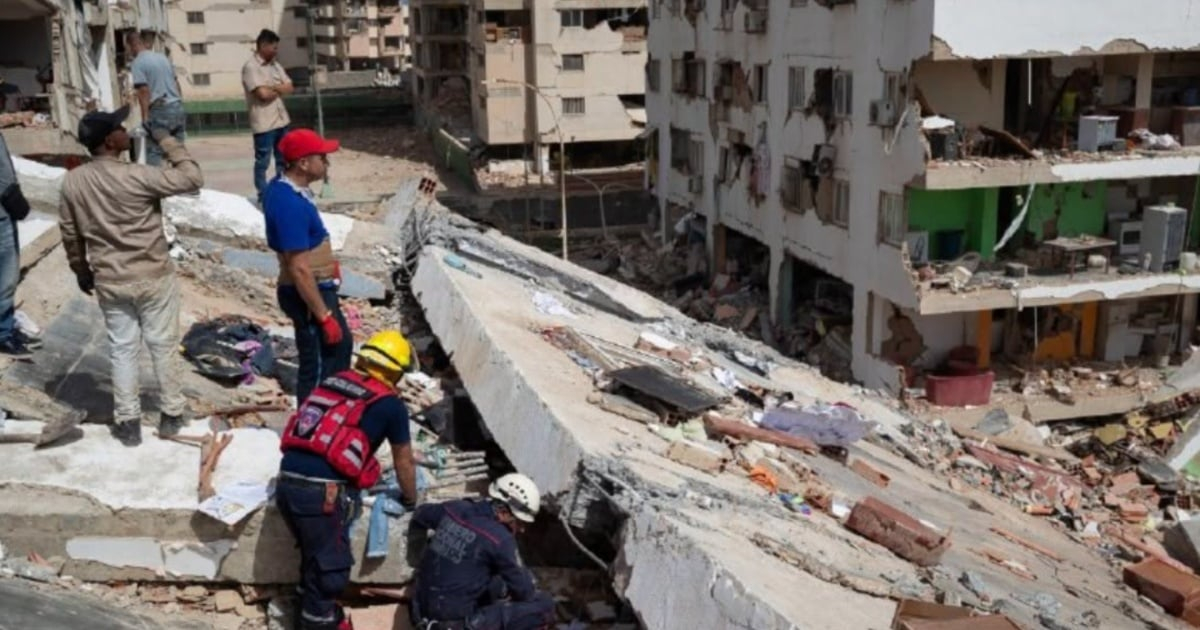
The death toll from the twin earthquakes that ravaged Venezuela on Wednesday, June 24, continues to climb. On Sunday, the government raised the official count to 1,450 casualties, with 3,238 individuals injured and thousands still unaccounted for.
The two tremors, measuring 7.2 and 7.5 magnitudes respectively, struck just 39 seconds apart, marking them as the most powerful to hit the nation since 1900, according to AP.
The number of fatalities has surged rapidly: from 164 on Thursday, June 25, to 920 on Friday, June 26, and reaching 1,430 on Saturday, June 27, before the latest update.
By Saturday noon, the citizen platform Encuéntralos recorded nearly 55,000 missing persons, while the UN estimated up to 50,000 missing and quantified 6.76 million people affected by the catastrophe.
The government also reported on Sunday that over 770 buildings had collapsed entirely or partially, doubling the figures reported just two days earlier.
Devastation in La Guaira
The coastal state of La Guaira, the hardest-hit area, remains inaccessible without special permits, with more than 14,000 military and police personnel deployed there.
Rescue operations continued into Sunday, with both local and international teams racing against time. Rescuers from the United States and France successfully saved a father and son from the debris in the morning. Additionally, a 10-month-old baby and an 11-year-old child were rescued, according to AP.
International Aid and Criticism
By Saturday, over 2,200 rescuers from 17 countries, including Mexico, Brazil, El Salvador, France, and Spain, had arrived in Venezuela, as reported by the UN. Washington announced a $150 million aid package and is assisting in the restoration of the severely damaged Simón Bolívar International Airport, which currently has only one operational runway.
However, the administration of interim president Delcy Rodríguez faced mounting criticism for its response. Frustrated citizens blocked an excavator from leaving a collapse site and removed its operator after ruling party officials were seen taking photos in front of the ruins without offering assistance.
Many locals in the affected regions reported a lack of governmental presence. "It doesn't matter who they are, family or not. If someone is alive, they need to be rescued," said Yonahí Regalado, who was searching for her sister and her one-year-old nephew amid the wreckage, while helicopters hovered above.
Economic Impact and Future Challenges
The disaster strikes Venezuela at a time of severe vulnerability. The United Nations Development Program (UNDP) estimated direct damages at $6.7 billion, equating to 6% of Venezuela's GDP, with total impacts potentially reaching between $10.05 and $20.1 billion.
Among the missing are at least 32 Cuban nationals, mainly in the areas of Caraballeda, Catia La Mar, and Los Corales in La Guaira. The death of a Cuban girl and her cousin was confirmed.
The United States Geological Survey issued a Red Alert following the earthquakes, estimating a 42% probability that the total deaths could range between 10,000 and 100,000. This projection starkly contrasts with the ongoing official tally and foreshadow weeks of hardship for a country already grappling with eight million people in need of humanitarian aid, as reported by the UN.
Frequently Asked Questions About the Venezuela Earthquakes
What were the magnitudes of the earthquakes in Venezuela?
The earthquakes measured 7.2 and 7.5 magnitudes, striking with just 39 seconds apart.
How many people are reported missing after the earthquakes?
Estimates suggest up to 50,000 people are missing, with citizen platforms and the UN offering figures close to this number.
What international assistance is being provided to Venezuela?
Over 2,200 international rescuers from 17 countries have arrived to help, and the United States has announced $150 million in aid.