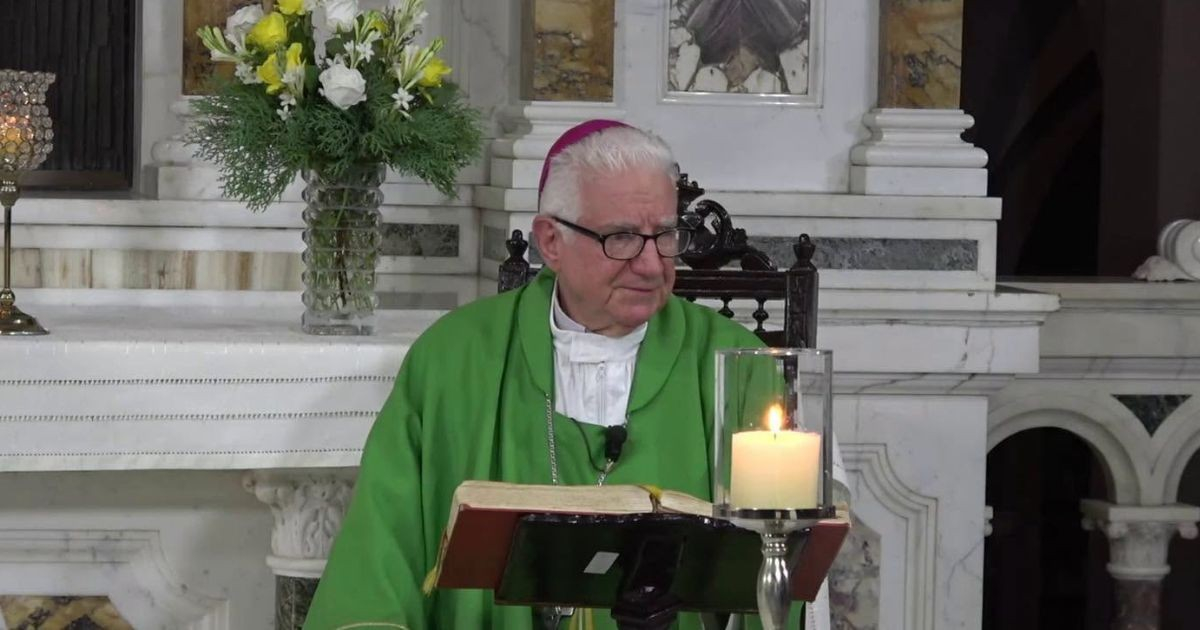
Archbishop Dionisio García Ibáñez of Santiago de Cuba delivered a sermon on Sunday with significant political implications at the Basilica Shrine of Our Lady of Charity of El Cobre. He warned, "There are those who place their trust in power, and they cause great harm when they believe that power grants them the right to do anything."
His homily was delivered during the 13th Sunday in Ordinary Time, drawing from Matthew 10:39: "Whoever loses their life for my sake will find it."
In his address, García Ibáñez juxtaposed earthly treasures—such as wealth, power, and prestige—with spiritual values that, according to the Gospel, endure beyond our temporal existence.
The Pitfalls of Earthly Ambitions
"It is a sad reality for those who solely aspire to achieve everything here on earth, be it wealth, power, wisdom, or prestige," the archbishop declared to the faithful gathered at El Cobre.
A particularly poignant moment in his sermon, given Cuba's context, was his rejection of promises of earthly utopias: "Such a paradise on earth has never been seen. We may achieve more or less justice, but to fully live the love of God, which is the highest good, is only possible in the Lord Jesus."
Faith as a Means to an End
The archbishop also criticized the manipulation of faith as a bargaining tool: "There are times when abandoning one's love for God has been almost a condition to achieve a paradise on earth," a statement that resonates with the official rhetoric of the Cuban revolutionary regime.
García Ibáñez urged believers to shed selfishness, arrogance, and pride, cautioning them against being swayed by hollow promises: "Let us not be carried away by the wonders often presented to us or by the promises made."
A Growing Chorus of Ecclesiastical Dissent
This homily is part of a growing wave of critical statements from the archbishop. On May 17, from the same sanctuary, he declared that "Cuba must change" and called for concrete actions.
A week later, on Pentecost, he urged leaders not to consider themselves "masters of the world" and to prioritize truth, justice, and the common good.
In November 2025, he had already advocated for building a society where individual work was foundational and where no one relied on handouts.
Other Cuban priests have also intensified their criticisms in recent months. Father Alberto Reyes Pías of Camagüey likened the country's situation to a "merciless concentration camp" and was summoned by State Security in January 2026 following his criticisms of the regime.
The rector of the Shrine of El Cobre also called for a "new society" for Cuba in June, marking a chorus of ecclesiastical voices openly challenging political power from the island's pulpits.
The Sunday homily concluded with a call for Christian coherence: "You must die to selfishness. You must die to arrogance. You must die to pride."
Understanding the Archbishop's Message
What are the main themes of Archbishop García Ibáñez's homily?
The homily primarily focused on the dangers of trusting in power, the futility of earthly ambitions, and the manipulation of faith for political ends. It called for a rejection of selfishness and pride and emphasized enduring spiritual values.
How has the archbishop's stance evolved over recent months?
Archbishop García Ibáñez has increasingly criticized the Cuban regime, calling for societal change, truth, and justice. His statements have grown progressively more direct, urging for a society built on individual work rather than dependency on state provisions.