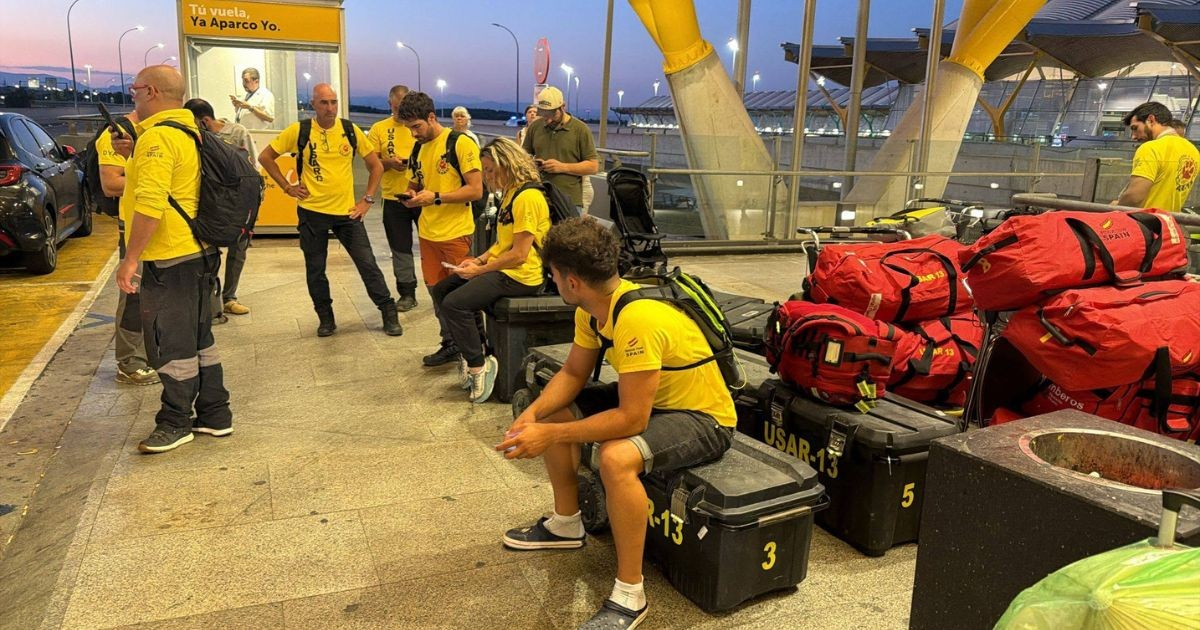
The Spanish search and rescue team Usar13 announced on Saturday their inability to travel to Venezuela to assist in relief efforts following the catastrophic earthquakes on June 24. Facing persistent bureaucratic barriers, they have opted to return home.
Through their social media platforms, the team expressed: "Due to various reasons, Usar13 cannot fly, similar to many other teams, and seeing that this situation will continue, we have decided to head back home."
The statement, filled with disappointment, continued: "We leave with heavy hearts, unable to provide our support and contribute to the Venezuelan people. Thank you to everyone who supported us on this journey."
Usar13's Expertise and History
Usar13, an independent, non-profit humanitarian organization based in La Nucía (Alicante), was established in 2013. Specializing in urban search and rescue with dogs, they have previously participated in international missions, including the Turkey earthquake in 2023 and the DANA in Valencia in 2024.
Unspecified Obstacles and Systemic Issues
While the organization did not detail the specific nature of the impediments—whether visa issues, entry permits, coordination challenges with Venezuelan authorities, or other logistical hurdles—they emphasized that they were not alone in this predicament. This suggests systemic challenges affecting multiple volunteer rescue groups.
According to Esnoticiaglobal, the rescuers had a flight scheduled for 5:00 PM on Saturday, with luggage already weighed. However, bureaucratic issues between the Venezuelan Embassy in Spain and the airline prevented their departure.
The Larger Context and Historical Patterns
This situation highlights a recurring pattern under Nicolás Maduro's regime of tightly controlling the entry of foreign non-governmental organizations into the country. This practice has historically strained relations with the international community, and amid a disaster of historic proportions, it once again excludes willing independent civilian teams.
The earthquakes that struck Venezuela on June 24 recorded magnitudes of 7.2 and 7.5, separated by just 39 seconds, with epicenters in San Felipe and Yumare in the state of Yaracuy. La Guaira, the coastal area closest to Caracas, was declared a disaster zone.
By June 27, the death toll reached 1,430, with over 3,238 injured and 346 buildings collapsed. The UN estimated that up to 50,000 people could be missing, with more than six million affected.
International Response and Challenges for Civil Teams
While civilian teams like Usar13 were blocked, the international community rallied around Venezuela, with 17 countries sending 25 teams and approximately 1,600 international rescuers. Spain officially deployed 63 members of the Military Emergency Unit (UME), nine rescue dogs, and healthcare personnel aboard an Air Force plane; the UME was already active in La Guaira and had rescued two people alive in the Vistamar residential area.
The disparity in treatment between state teams and independent civilian organizations is stark: governmental operations proceed with relative ease, while NGOs like Usar13 face bureaucratic barriers that strand them.
Ideological Alliances and Humanitarian Needs
In this context, Cuban doctors in Venezuela—around 12,930 collaborators as of July 2025—immediately mobilized in La Guaira following the earthquakes, under cooperation agreements between the Havana and Caracas regimes. Acting President Delcy Rodríguez publicly thanked Cuban support, contrasting with how the Venezuelan government facilitates the presence of ideological allies while hindering independent civilian organizations.
At least nine Spaniards lost their lives in the earthquakes, with 131 citizens still missing, escalating this tragedy to a top-tier consular emergency for Madrid, alongside a continuing humanitarian catastrophe demanding every available rescuer.
Understanding the Bureaucratic Challenges in Venezuela
What prevented Usar13 from traveling to Venezuela?
Usar13 faced unspecified bureaucratic hurdles that could include visa issues, entry permits, or coordination challenges with Venezuelan authorities, preventing their travel to assist in the relief efforts.
How severe were the earthquakes in Venezuela?
The earthquakes on June 24 were of magnitudes 7.2 and 7.5, causing significant destruction, with a death toll of 1,430 and over 3,238 injuries by June 27, alongside many missing and affected individuals.
How did international teams respond to Venezuela's disaster?
In response, 17 countries sent 25 teams and around 1,600 international rescuers. Spain dispatched 63 members of its Military Emergency Unit, including rescue dogs and medical staff, to assist in the affected areas.