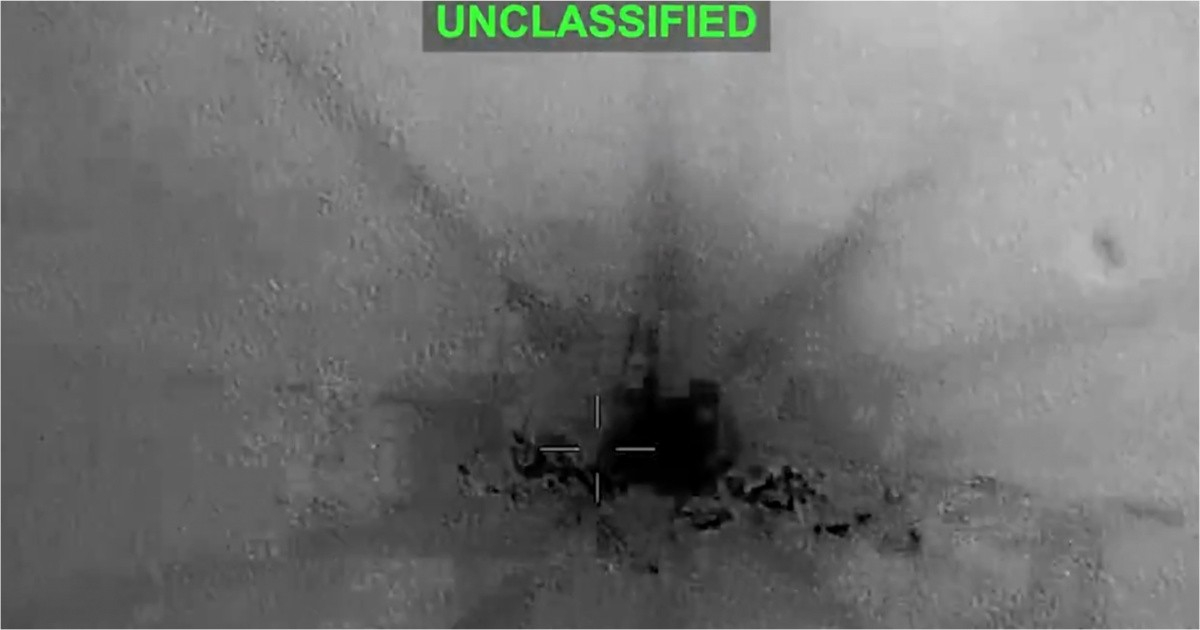
On Saturday, U.S. forces carried out a series of airstrikes targeting Iranian missile and drone storage sites, coastal radar systems, and air defense facilities near the Strait of Hormuz. This action was a direct response to a drone attack by Iran on merchant vessels in the same region last Thursday.
The United States Central Command (CENTCOM) described the military action as "a strong countermeasure to yesterday's assault on a commercial ship transiting the Strait of Hormuz." CENTCOM emphasized that Iranian forces' unwarranted aggression against maritime trade clearly violated the ceasefire agreement.
President Donald Trump accused Iran of launching "at least four one-way attack drones" against merchant ships in the Strait of Hormuz on Thursday, June 25. He asserted that this act constituted a blatant breach of the Islamabad Memorandum of Understanding, which was brokered by Pakistan and Qatar just days earlier, on June 17 and 19.
One of the drones hit the upper deck of the M/V Ever Lovely, a Singaporean-flagged vessel, causing structural damage to the bridge. The other three drones were successfully intercepted. Fortunately, the crew was unharmed, and the ship continued its voyage.
Iran's Swift Retaliation
Iran did not delay its response. The Islamic Revolutionary Guard Corps (IRGC) proclaimed their counteraction as "swift and decisive," claiming to have fired four missiles at U.S. military installations in the region, including Camp Arifjan in Kuwait, a key hub for American operations in the Middle East.
Bahrain also reported being targeted by Iranian drones, viewed as additional retaliation for the U.S. bombings. Meanwhile, Iran's Foreign Ministry labeled the U.S. military as "terrorist."
In a broader escalation, Iran declared it had attacked U.S. military positions in various regional hotspots, extending the conflict's geographical reach beyond the Persian Gulf.
Impact on Global Oil Trade
The Joint Maritime Information Center raised the regional threat level for navigation through the Strait of Hormuz, a crucial corridor for approximately 20% of the world's oil supply. Following the attack on the Ever Lovely, the International Maritime Organization temporarily suspended ship escort operations through the strait.
President Trump also disclosed that U.S. forces have destroyed Iranian vessels used for laying mines in the area. While the military confirmed the elimination of 16 such ships, Trump increased the count to 28 during a press briefing in Cincinnati, Ohio.
Continuing Conflict in Lebanon
Meanwhile, Israel persisted with its assaults on Hezbollah infrastructure in southern Beirut and other parts of Lebanon. This parallel conflict had resulted in over 4,230 Lebanese deaths and 12,179 injuries by June 26, along with the displacement of more than a million people.
Amid the mounting hostilities, the U.S., Lebanon, and Israel reached a new trilateral agreement in Washington to revise security measures along the Lebanese border, indicating that diplomatic efforts continue despite the violence.
The Islamabad Memorandum, which had called for a cessation of hostilities and a 60-day period for negotiating a comprehensive agreement on Iran's nuclear program—along with the release of approximately $12 billion in frozen assets—now faces its most challenging test, just a week after its signing.
Frequently Asked Questions on U.S.-Iran Tensions
Why did the United States launch airstrikes against Iran?
The U.S. conducted airstrikes in retaliation for Iran's drone attack on merchant vessels in the Strait of Hormuz, which violated a recent ceasefire agreement.
What was the Islamabad Memorandum?
The Islamabad Memorandum was an agreement aimed at halting hostilities and facilitating negotiations over Iran’s nuclear program, including the release of $12 billion in frozen assets.
How did Israel respond to the situation in the Middle East?
Israel continued its military operations against Hezbollah targets in Lebanon amid the escalating tensions in the region.