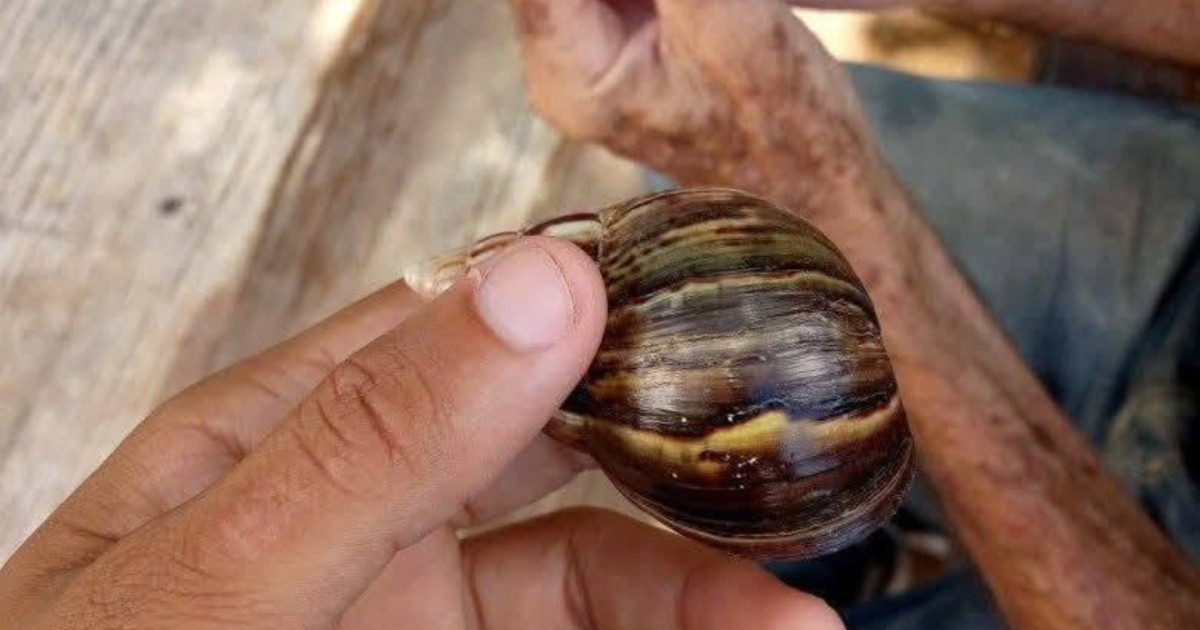
Experts from the Center for Environmental Research and Technology (CITMA) have confirmed the presence of the Giant African Snail (Achatina fulica) in multiple areas of Matanzas province this month. This species is ranked among the top 100 most invasive and hazardous in the world by the International Union for Conservation of Nature (IUCN).
Dr. Enrique Ramón Soto Ramírez, a biologist with CITMA's Provincial Delegation, alongside research professor Esteban Pérez Peña, made this discovery public following a report by journalist Fabio López Martínez.
These snails were systematically found in the Camilo Cienfuegos neighborhood and near the old bus terminal adjacent to the railway in Matanzas city.
The Threat of an Invasive Species
"This invasive exotic species poses a significant threat," stated Soto Ramírez. "We've observed these snails both on the ground and on vegetation. Immediate action is necessary to address this issue."
The danger of the snail lies in its ability to host parasitic flatworms, roundworms, bacteria, and other microorganisms. It can serve as a vector for the parasite Angiostrongylus cantonensis, which causes eosinophilic meningoencephalitis, a potentially fatal disease affecting the central nervous system.
Agricultural and Health Risks
Beyond health risks, the African snail can damage over 120 different crops, including bananas, cassava, citrus fruits, and rice. Its reproductive capacity—up to 1,800 eggs annually with a viability rate between 85% and 95%—makes controlling its population extremely challenging once it is established.
Though not officially confirmed, researchers have expressed concern about possible sightings in Cárdenas and areas near Varadero, indicating a risk of spreading to regions with significant tourism and agricultural value.
Urgent Measures and Public Warning
In response to this threat, CITMA is developing an action plan and has issued an urgent warning to the public against handling the snails without protection.
"Direct contact with these snails' skin, eyes, or nasal passages must be avoided. Handling them requires protective masks and gloves," cautioned Soto Ramírez.
The established removal protocol involves collecting the snails with gloves, subjecting them to intense heat or drowning them in water, as they are lung-breathing mollusks, and cannot survive submerged. They should then be buried at a minimum depth of 0.4 meters.
Ongoing Spread Across Cuba
The confirmation in Matanzas marks the latest chapter in a continually spreading plague throughout Cuba. Since its initial detection on the island in 2014, the species affected 14 out of 16 provinces by October 2020, with over 1,000 active sites in 59 municipalities.
New outbreaks were reported in Granma in April 2026, and previously in Camagüey and Artemisa.
"We must take decisive and swift actions to eliminate these snails and prevent their population from increasing," urged the biologist, warning that the threat "is becoming more frequent" in the Matanzas area.
Frequently Asked Questions about the Giant African Snail in Cuba
What are the main dangers of the Giant African Snail?
The Giant African Snail is dangerous due to its ability to carry parasites and microorganisms, including the parasite Angiostrongylus cantonensis, which can cause severe neurological diseases.
How does the Giant African Snail affect agriculture?
This invasive snail species can damage over 120 types of crops, such as bananas, cassava, citrus fruits, and rice, making it a significant agricultural threat.
What measures are being taken to control its spread?
Control measures include collecting the snails with gloves, subjecting them to high heat or drowning, and then burying them at least 0.4 meters deep to prevent their spread.