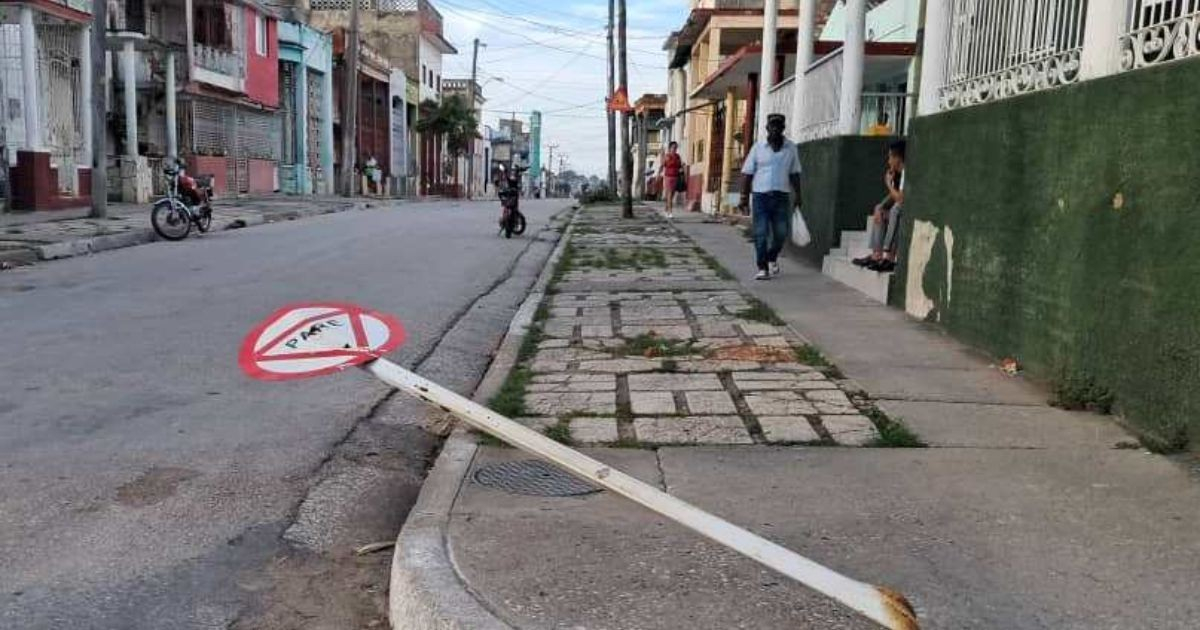
The Cuban News Agency (ACN) enthusiastically reported this Saturday that Guantanamo is launching its summer 2026 with a plethora of cultural and recreational activities across the province. This announcement, however, seems to overlook the harsh reality of the ongoing crisis affecting its residents.
The state-run media outlined that the provincial opening ceremony will take place in Baracoa, while the main city will commence its festivities at 5 PM on Pedro A. Pérez Street, in front of the Rubén López Sabariego Cultural Center.
Tiodelcy Frómeta Columbie, the Deputy Director of the Municipal Directorate of Culture, optimistically described the kickoff. It includes performances from cultural houses, sporting events in José Martí Park, and entertainment in Crombet Boulevard with the Carpandilla circus troupe, Danza Libre, the Provincial Concert Band, the Children's Playroom, a popular art fair, and a live performance by the Sabor y Ritmo orchestra.
Summer Events Amidst Power Outages
The schedule, as per ACN, extends over several weeks. On Sunday, activities will continue at Elpidio Valdés amusement park and La Edad de Oro park, featuring the Guaracheritos del Caribe dance troupes. Further attractions include a clown festival, a concert by Lidis Lamorú at the Guaso Theater for Children's Day, and a concentrated carnival from July 14 to 16. The Provincial Cinema Center is set to premiere "Michael," the biographical musical about the King of Pop, which, according to programming chief Juan Carlos Vallina, has become the top-grossing film in their history.
The lineup also features a Mountain Film Festival in San Antonio del Sur on July 17 and 19, workshops in free dance, folklore, and theater, a book fair, a photography club, and an ideologically charged documentary series celebrating Fidel Castro's 100th birthday.
Reality Check: Guantanamo's Struggles
What ACN's report carefully omits is the grim backdrop against which this celebration is set. On June 11, the sole 110 kV line connecting Guantanamo to the National Electroenergetic System automatically shut down, plunging the entire province into darkness.
Just days prior, on June 7, the Electric Union acknowledged that eight transformers are damaged in the province—three in Baracoa, two in Maisí, two in El Salvador, and one in Manuel Tames—without any available replacements nationwide.
In municipalities like Imías, San Antonio del Sur, and Maisí, power outages have lasted up to 20 and 30 hours straight. The situation has become so dire that Guantanamo resorted to using horse-drawn carts to distribute milk due to a fuel shortage for delivery trucks. Illegal electrical connections have further strained the grid, exacerbating transformer failures.
Adding to these woes is a massive sargassum invasion devastating Guantanamo's beaches, such as Baracoa, Baitiquirí, and El Guanal, leading to health warnings and a sharp decline in tourist visits.
The national electricity deficit exceeded 2,000 MW in June, with recent studies indicating that one in three Cuban households had someone going to bed hungry last month.
In late May, the "Summer 2K26 Kickoff" party in Varadero boasted 72 hours of music with guaranteed electricity and $600 VIP tables, while the rest of the country endured power cuts lasting up to 50 hours.
Guantanamo embarks on its summer "filled with activities" despite having eight broken transformers with no replacements, enduring up to 30-hour blackouts, and beaches plagued with sargassum. The state media, in its typical fashion, prefers to focus on Carpandilla and the King of Pop.
Understanding the Challenges in Guantanamo
What are the main issues affecting Guantanamo's summer activities?
Guantanamo faces significant challenges such as power outages due to damaged transformers with no available replacements, a shortage of fuel leading to alternative delivery methods, and environmental issues like sargassum affecting beaches and tourism.
How is the power situation impacting daily life in Guantanamo?
The power situation has resulted in prolonged blackouts, forcing residents to cope with up to 30-hour outages, disrupting daily activities and access to essential services.
Why is there a decline in tourism in Guantanamo?
Tourism has declined in Guantanamo due to the massive invasion of sargassum on its beaches, causing health risks and making the area less appealing to visitors.