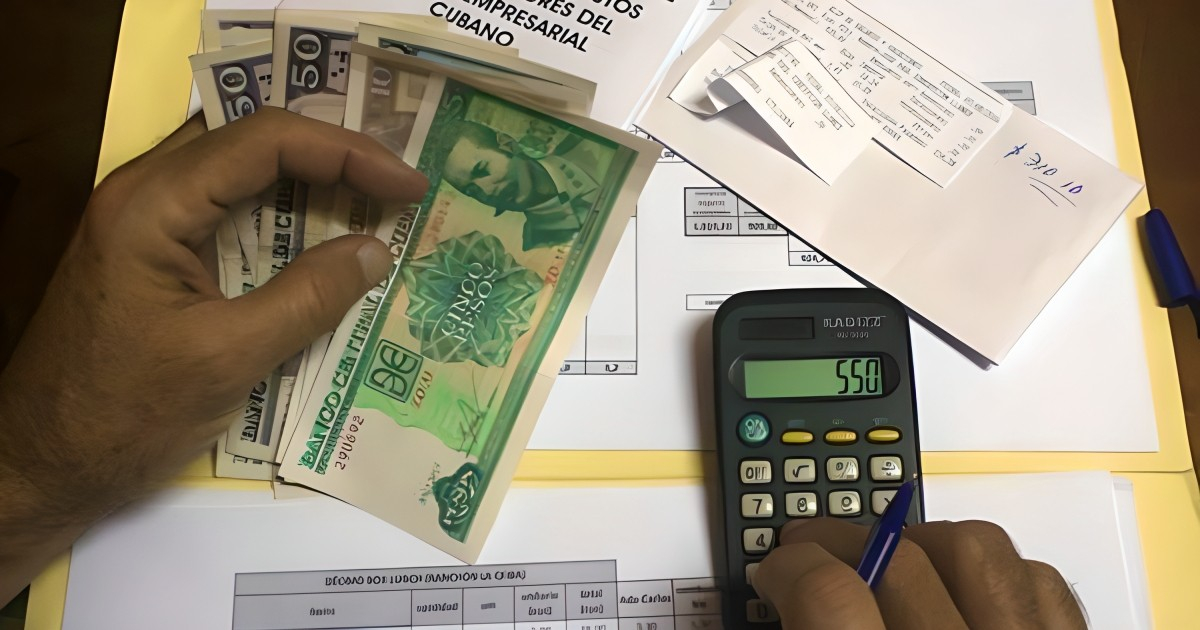
In the coming weeks, the Cuban government will implement a system allowing the National Office of Tax Administration (ONAT) to automatically withdraw funds from the bank accounts of delinquent taxpayers without requiring their authorization.
This policy, reported by the state-run Cubadebate on Saturday, is backed by Resolution 126/2026 from the Ministry of Finance and Prices. It is set to take effect around July 18, 2026, exactly thirty days after its announcement in the Official Gazette.
The procedure, named "collection order without acceptance," permits ONAT to instruct commercial banks to debit the accounts of individuals and entities with overdue and confirmed tax liabilities.
According to ONAT, this will only apply to debts that are "administratively determined, legally notified, and not paid, deferred, or contested through reform or appeal mechanisms."
The regulation affects both legal entities—state and non-state—and individuals, whether they engage in business activities or not, who have been duly notified of their tax debts.
For companies, the withdrawals will occur from their main checking accounts. For self-employed workers and other individual taxpayers, deductions will be made from their Fiscal Bank Accounts (CBF).
In instances of detected tax evasion or underreporting through fiscal control actions, ONAT may, after issuing a warning, extend the collection to other personal bank accounts of the debtor.
If the available balance is insufficient to cover the total owed, partial and progressive deductions will be made until the debt is fully paid.
The three banks involved in this process are the Banco Popular de Ahorro (BPA), the Banco de Crédito y Comercio (BANDEC), and the Banco Metropolitano (BANMET).
The government has presented this measure as a tool to "strengthen fiscal discipline and the culture of timely payment," aiming to lessen the risk of revenue shortfalls and modernize tax management.
ONAT also argued that automated collection is "an internationally recognized practice employed by other tax administrations."
The resolution was signed by the Minister of Finance and Prices, Vladimir Regueiro Ale, on May 25, 2026, and published in issue 53 of the Official Gazette on June 18.
Prior to its nationwide rollout, the system underwent a pilot test with over 200 taxpayers across the 15 provinces and 75 municipalities of the country, including the Isle of Youth, which the government deemed successful.
Legally, ONAT clarified that extending collection to personal accounts is "already provided for in Law 113/2012 of the Tax System and Decree 308/2012, making it not a legal novelty but an operational extension of collection."
This decree also includes enforcement measures such as asset embargoes and travel bans for debtors.
The new regulation is part of a continued increase in fiscal oversight of the non-state sector.
Since April 2025, the government has required self-employed workers to maintain a CBF to operate legally. In August of the same year, the Havana government began cracking down on private businesses that avoided using these accounts or refused transfer payments, imposing fines and temporary closures as consequences.
The automatic collection also addresses the severe fiscal crisis plaguing the Cuban state, which struggles to regularly fund the State Budget amid the economic collapse resulting from decades of centralized management.
Understanding Cuba's Automatic Tax Collection System
What is the new automatic tax collection system in Cuba?
Cuba's new automatic tax collection system enables the ONAT to directly debit funds from the bank accounts of taxpayers with overdue debts without their consent.
Who is affected by this policy?
The policy affects both state and non-state legal entities as well as individuals, including self-employed workers, who have been duly notified of their tax debts.
How will the tax collection be executed?
For companies, the debits will be made from their main checking accounts, while for individual taxpayers, the deductions will occur from their Fiscal Bank Accounts (CBF).
What happens if there aren't enough funds to cover the debt?
If the available balance is insufficient, the deductions will be made partially and progressively until the total debt is settled.