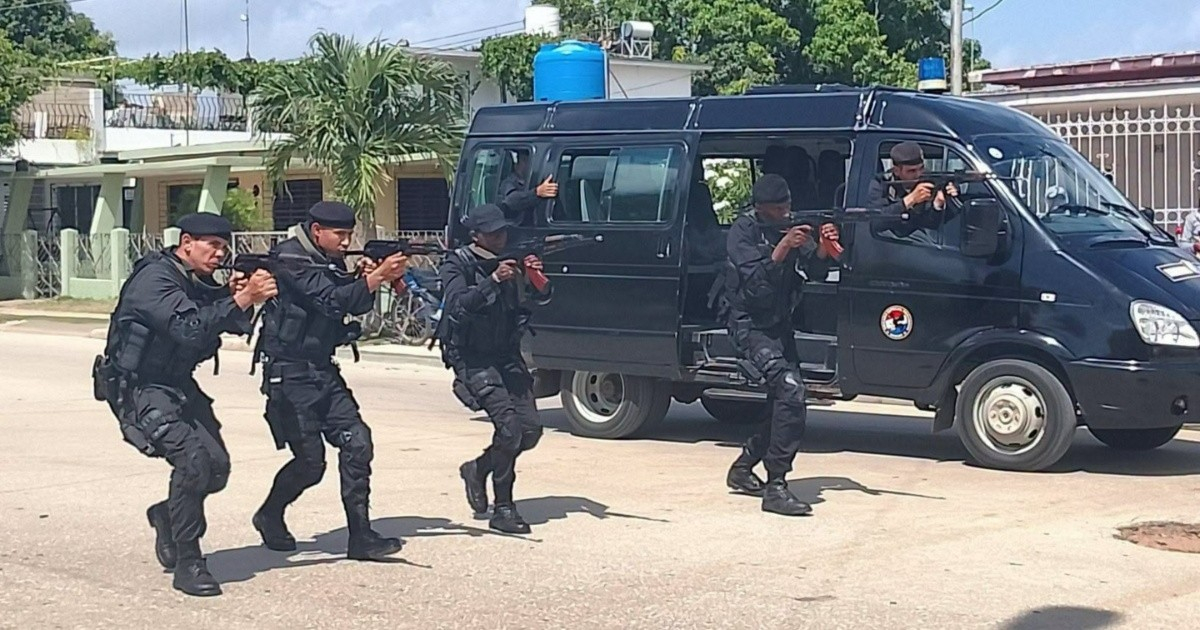
In an unmistakable display of military power, the Cuban regime orchestrated a large-scale operation in Morón, a town in Ciego de Ávila, on Saturday. This event, part of the National Defense Day, featured combat simulations, live-fire exercises with military-grade rifles, and evacuation drills in response to a hypothetical enemy airstrike.
Journalist José Raúl Gallego expressed his indignation on Facebook, writing, "This was today in Morón. Defense Day. They took to the streets with long rifles, the very agents responsible for suppressing those who peacefully demand their rights. These are the ones who retreated in shoe boxes from Venezuela when faced with opposition trained and armed to confront them, as they specialize in attacking the defenseless and unarmed populace. There’s no fuel for ambulances, but there’s always enough to repress."
Gallego shared images circulated by the state media depicting black beret squads wielding long rifles in action.
Morón: A Symbolic Choice for Military Display
The selection of Morón for this military spectacle was deliberate. Just three months prior, on March 13, this same city witnessed one of Cuba's most significant protests in recent memory. Dozens of citizens took to the streets banging pots and chanting “Liberty!” in protest against blackouts, food shortages, and the economic crisis.
On that night, demonstrators reached the Communist Party headquarters, which was set ablaze. A 16-year-old, Kevin Samuel Echeverría Rodríguez, was reportedly shot in the thigh by a police officer. The regime denied the shooting, claiming the teenager was injured while drunkenly trying to remove a Communist Party sign.
The March protests resulted in five arrests, with security forces using dogs and firing shots into the air to disperse the crowd, according to José Raúl Gallego.
Analyzing the Regime's Intimidation Tactics
Analysts and opposition members interpret Saturday's show of force in Morón as an attempt to intimidate the local population, which has endured heightened scrutiny since the crackdown.
This exercise is part of the "Year of Defense Preparation 2026," declared by the regime, which has turned National Defense Days into weekly military drills under the "War of All the People" doctrine. In January of that year, the National Defense Council approved plans for transitioning to a state of war.
A previous exercise in Turiguanó on June 13 was led by Army Corps General Joaquín Quintas Solá, Deputy Minister of the Revolutionary Armed Forces, alongside Julio Heriberto Gómez Casanova, President of the Provincial Defense Council.
On the same day, Prime Minister Manuel Marrero Cruz attended a similar event in Havana, stating, "Cuba desires peace but is prepared to defend its sovereignty."
The Broader Crisis and Military Escalation
These exercises occur amid a severe crisis: power outages lasting up to 20 hours a day, shortages of food, fuel, and medicines. Monitoring organizations reported over 1,300 protests in May 2026, a 42% increase from April, while the regime responds with increased militarization and a narrative of external threats.
March 2026 saw 31 instances of de facto militarization across the island, a 240% rise from February, with 61% involving direct repression against the population.
Understanding Cuba's Military Maneuvers and Public Response
Why did the Cuban regime choose Morón for this military display?
Morón was strategically chosen due to its recent history of significant protests against the regime, making it a symbolically charged location for demonstrating military strength and intimidating the local populace.
What is the "War of All the People" doctrine?
The "War of All the People" doctrine is a Cuban military strategy that involves mobilizing the entire population in defense efforts, emphasizing preparedness for any potential threats, both internal and external.
How has the regime responded to the increase in protests?
The regime has responded to the surge in protests with heightened militarization and a narrative framing external threats, aiming to exert control and suppress dissent through intimidation and force.