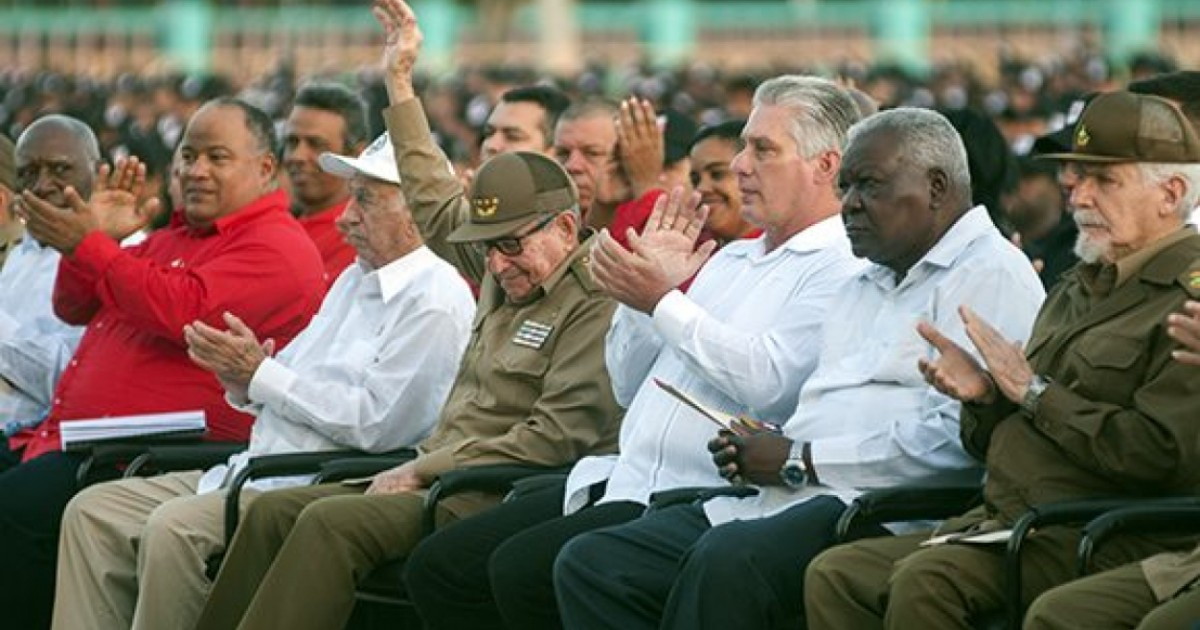
The recent announcement by Miguel Díaz-Canel that Pinar del Río will host the National Central Event for July 26th has ignited a storm of outrage across social media platforms.
On his X account, Díaz-Canel praised the "noble and hardworking people" of the province and commended Matanzas, Villa Clara, Guantánamo, and Sancti Spíritus as exemplary regions. However, the response from Cubans was a wave of anger and desperation.
The disparity between the festive tone of the leader and the harsh reality faced by Cubans was laid bare in the responses to his tweet.
Public Outcry Over Dire Conditions
While Díaz-Canel spoke of celebration, users online were quick to highlight the ongoing issues like power outages lasting up to 50 hours, food shortages, lack of medications, and streets overflowing with garbage.
"People have been without power, food, or sleep for 48 to 50 hours. You shouldn't talk about anything else until these issues are resolved. And by resolved, I mean you all should resign," one user expressed.
Another comment summed up the widespread frustration: "Pinar del Río is in ruins like the rest of the country—no electricity, no food, and no future."
Questioning the Regime's Legitimacy
Several netizens pointed to the limited engagement with the tweet as evidence of the regime's lack of legitimacy. "It's absurd that this Soviet-style propaganda yields less than 500 likes eight hours after such an 'important' post," one user remarked.
"The people are literally dying from hunger, disease, and unsanitary conditions, and you're talking about a communist celebration," another criticized.
"A country with a deficit of 2,200-plus MW, yet you all live well with electricity, food, everything... It's clear you're not suffering like the people are," another user reminded.
Persistent Housing and Energy Crises
Pinar del Río is hosting the July 26th event for the third time in history since 1959; the last time was in 2001. This year's slogan is "Mi Moncada es la patria."
The irony of the announcement was not lost on those who pointed out the stark contrast between official rhetoric and the actual situation in the province.
Pinar del Río still has over 40,000 families waiting for housing, and of the 102,288 damages caused by Hurricane Ian in September 2022, only 63% had been addressed by April 2026. Yamilé Ramos Cordero, the Communist Party's first secretary in the province, admitted in June that "there are families that have gone 30 years without a home, generation after generation."
The energy crisis exacerbates the already dire situation. Cuba's electrical system operates with a shortfall ranging from 1,780 to 2,215 MW, with power outages exceeding 26 hours daily in some areas, affecting more than 60% of the country at once.
On June 13, Pinar del Río experienced a record temperature of 37.6°C during power outages. A poignant image of a father showing his daughter sleeping on tile floors for coolness became symbolic of the crisis, questioning: "Is this humane? Is this communism?"
Skepticism Surrounding Economic Reforms
The announcement also comes amid widespread skepticism over the 176 economic reforms introduced by Díaz-Canel, which led to protests in Santiago de Cuba, Santa Clara, and Havana.
The Cuban economy has contracted between 15% and 23% since 2019. The informal market sees the dollar trading at over 600 pesos, and over a million Cubans have left the island since 2021.
Understanding Cuba's Current Struggles
What sparked the outrage among Cubans regarding Díaz-Canel's announcement?
The announcement that Pinar del Río would host the National Central Event for July 26th, despite ongoing crises such as power outages and shortages, triggered widespread anger among Cubans.
How are the current living conditions in Pinar del Río?
Pinar del Río is grappling with severe issues including a significant housing shortage, unresolved hurricane damage, and frequent power outages, exacerbating the hardships faced by its residents.
What is the response to the economic reforms proposed by Díaz-Canel?
The 176 economic reforms have been met with skepticism and discontent among Cubans, leading to protests in major cities like Santiago de Cuba, Santa Clara, and Havana.