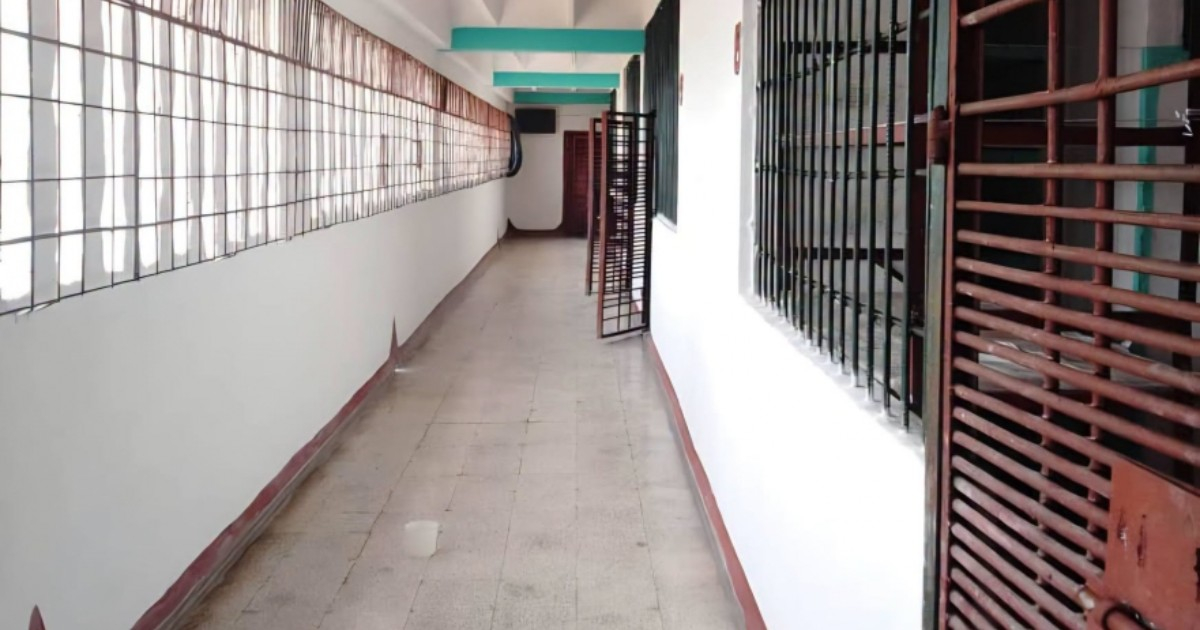
A human rights activist based in the United States has highlighted the dire conditions faced by inmates at the Canaleta disciplinary prison in Ciego de Ávila, Cuba. The severe water scarcity in this facility is reportedly being used as a tool of suppression against those who dare to speak out.
Yonimiler Del Río Polo, representing the Mario Manuel de la Peña Human Rights Movement from exile, shared on Facebook that prisoners who have protested internally are swiftly transferred to solitary confinement cells.
According to the report, in these punitive cells, prison authorities provide inmates with just one bucket of water every 24 hours to meet all their needs.
"The guards, acting with impunity, provide only a single bucket of water for prisoners to address all necessities within 24 hours, requiring them to wash clothes, drink, clean latrines, and bathe," Del Río Polo wrote.
The retaliation extends beyond isolation and water deprivation. Any further complaints can lead to additional charges of "public disorder" or "contempt," which might result in extended sentences imposed by the regime's courts.
Del Río Polo explicitly identified those responsible: Colonel Luis Ernesto Castellano Dobao, of the Ministry of the Interior (MININT) in Ciego de Ávila, and Lieutenant Colonel Juan Miguel Sánchez Duarte, head of the Prison and Jail System in the province.
"The administration of this facility, in response to internal protests by the inmates, once again shows that both the prison population and those outside are living under an open dictatorship, indifferent to international public opinion," the activist stated.
He concluded his report with an urgent appeal to the international community: "We urge human rights organizations to take this situation seriously and intervene on behalf of these prisoners."
Backdrop of Tension and Human Rights Violations
This report comes just four months after a violent uprising at Canaleta on February 18, when a young inmate was beaten by guards for protesting severe hunger. That rebellion was quelled by special forces using rubber bullets and pepper spray; Prisoners Defenders reported between seven and ten fatalities, a figure never confirmed by MININT.
The national context exacerbates the situation within the prison. Nearly 2.7 million Cubans—28% of the population—experience daily shortages of potable water, with the supply system operating at only 37% of the required fuel capacity to keep pumping stations running.
In prisons, this crisis becomes a tool of punishment.
Since January, at least 20 deaths in custody have been recorded in Cuban prisons, many attributed to severe malnutrition, as documented by human rights organizations.
The rise in deaths under custody coincides with a historic high of 1,260 political prisoners recorded by Prisoners Defenders in April.
Understanding the Water Crisis in Cuban Prisons
What are the main issues faced by inmates in Canaleta prison?
Inmates in Canaleta prison are facing severe water shortages, with only one bucket of water provided every 24 hours to meet all personal needs, alongside punitive isolation for those who protest.
Who is responsible for the conditions in Canaleta prison?
The conditions in Canaleta prison have been attributed to Colonel Luis Ernesto Castellano Dobao and Lieutenant Colonel Juan Miguel Sánchez Duarte, as per the activist Yonimiler Del Río Polo.
How does the national water crisis affect Cuban prisons?
The national water crisis, with a significant portion of the population lacking daily access to potable water, exacerbates conditions in prisons, where water scarcity is used as a form of punishment.