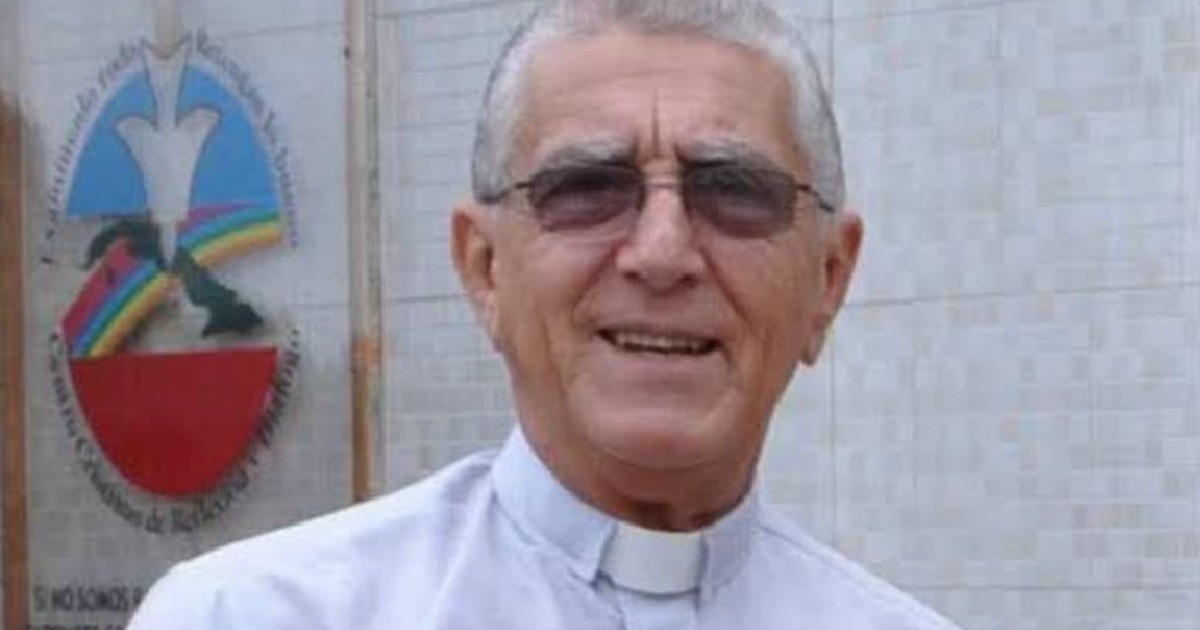
This past week, the Cuban Christian community bid farewell to Reverend Raimundo García Franco, a Presbyterian-Reformed pastor, historian, and the founding force behind the Christian Center for Reflection and Dialogue-Cuba (CCRD). He passed away at Finca Durañona in Marianao, Cuba, after battling an illness.
The CCRD made the announcement of his death via social media, lovingly describing him as a man of profound faith, a tireless sower of the Word, and a genuine builder of bridges for dialogue and understanding.
The Cuban Council of Churches also expressed its sorrow over the loss, acknowledging the significant impact of his contributions to Cuban ecumenism.
Born in El Cristo, Santiago de Cuba, in 1941, García Franco was ordained as a minister in 1964 with the Presbyterian-Reformed Church of Cuba, where he dedicated over sixty years of service.
Holding a degree in History and Social Sciences, he also pursued studies in Theology, Psychology, and Journalism.
A Legacy of Reconciliation and Human Rights
The CCRD, founded by García Franco in Cárdenas, Matanzas, focuses on interfaith dialogue, social reconciliation, pastoral care for women victims of gender violence, and the promotion of human rights.
One of his most profound legacies is the book "Llanura de Sombras. Diario de un pastor en las UMAP," an autobiographical account of his internment in the Military Units to Aid Production (UMAP), forced labor camps established by Fidel Castro's regime between 1965 and 1968.
García Franco endured these camps until November 1967, just months before their official closure in September 1968.
In these camps, 25,000 to 35,000 individuals deemed "undesirable" by the regime were detained, including religious figures from various denominations, homosexuals, and dissenting intellectuals.
Enduring Impact and Commitment to Forgiveness
At least 252 lives were lost in these camps due to torture and suicide, with another 500 individuals requiring psychiatric care.
Published by the CCRD in 2019, García Franco's book was also translated into English as "Plain of Darkness: A Pastor's Diary at UMAP."
The CCRD facilitated meetings between former oppressors and those oppressed in the UMAP to foster forgiveness and reconciliation, a testament to the spirit García Franco instilled in the institution from its inception.
He passed away a widower, preceded in death by his wife, Rita Morris Cabrero.
The CCRD concluded its farewell message with a commitment to uphold his legacy: "His works and legacy of faith will continue to live on in the hearts of his family, friends, the Christian community, and the people he so dearly loved. Rest now in the eternal peace of Christ, alongside your wife Rita Morris Cabrero."
Understanding Raimundo García Franco's Legacy
What was Reverend Raimundo García Franco's role in Cuban ecumenism?
Reverend Raimundo García Franco significantly contributed to Cuban ecumenism through his leadership and founding of the Christian Center for Reflection and Dialogue-Cuba (CCRD), promoting interfaith dialogue and social reconciliation.
How did García Franco's experiences in UMAP influence his work?
García Franco's internment in the UMAP camps deeply impacted his advocacy for human rights, reconciliation, and his literary work, particularly his autobiographical book "Plain of Darkness."
What initiatives did the CCRD undertake under García Franco's guidance?
Under García Franco's leadership, the CCRD focused on interfaith dialogue, support for victims of gender violence, and human rights promotion, organizing meetings aimed at forgiveness and reconciliation between former UMAP oppressors and oppressed.