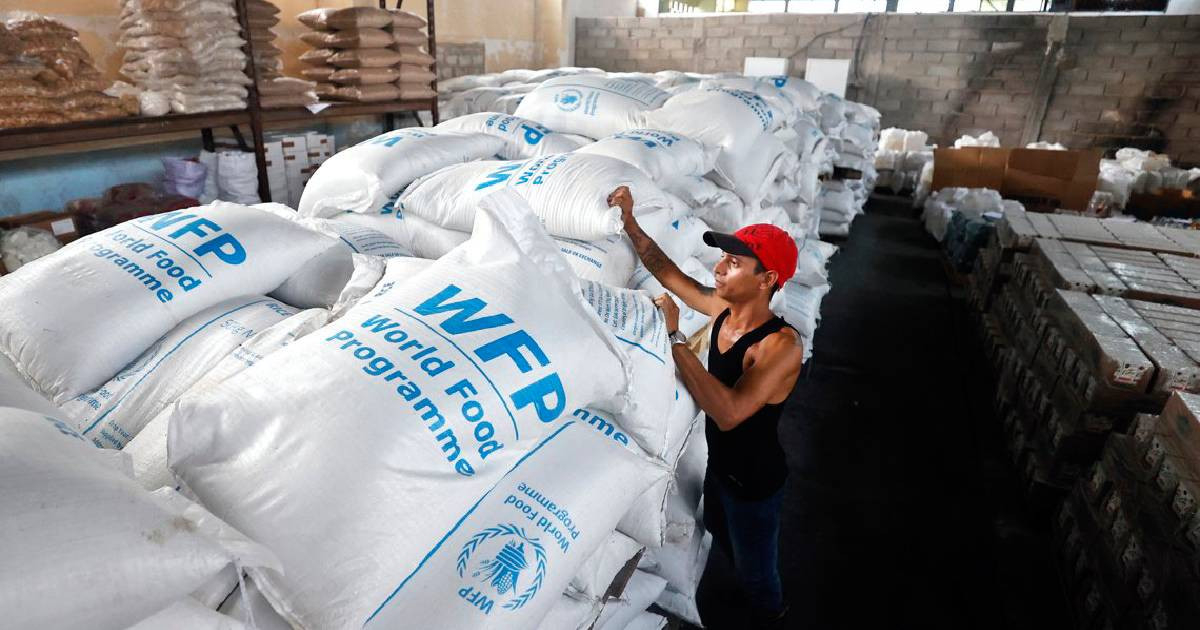
On Friday, Cuban Foreign Minister Bruno Rodríguez Parrilla heralded the approval of the World Food Program's (WFP) Strategic Plan for Cuba 2026-2030 as a "decisive victory." This plan allocates $116 million in food aid and received backing from 29 votes, with only two dissenters, at the Executive Board meeting of the organization.
The Cuban diplomat stated on his social media account that despite "massive and illegitimate pressures," the United States found itself isolated in the Executive Board of this United Nations body. The plan, which will sustain cooperation with Cuba from 2026 to 2030, secures $116 million for food security, he emphasized.
The vote occurred in Rome during the WFP Executive Board's annual session, spanning June 23 to 26. According to the Cuban government, the United States attempted to obstruct the program but was left isolated, with only Morocco joining them in opposition.
Alejandro González Beheramás, Director of International Organizations at Cuba's Ministry of Foreign Affairs, seized the opportunity to criticize Washington, asserting that "the U.S. government shows no concern whatsoever for the plight of the Cuban people."
Public Skepticism and Criticism
However, the public's reaction on social media was largely one of sarcasm and rejection of the regime's triumphant narrative. Many Cubans expressed doubts about whether this aid will genuinely reach those in need.
One user questioned, "What percentage of those food items will actually be served on Cuban family plates, donated and not sold? You are starving the Cuban people, preventing them from producing, fishing, or selling."
Another remarked, "A decisive victory for the Cuban dictatorship, begging for crumbs worldwide because they are a failed state incapable of producing even pumpkins."
Concerns Over Aid Distribution
Concerns about the real destination of donations are not unfounded. An investigation by the NGO Food Monitor Program found that beans donated by Mexico were being sold in state-run stores for up to $43 for a 30-kilogram sack.
In March, Díaz-Canel denied any diversion of aid, insisting that "what is provided to the population in food has never been charged."
Dire Food and Energy Crisis
The grim reality of Cuba's food situation contradicts the regime's celebratory stance. In June, the Minister of the Food Industry acknowledged that no oil, chicken, or yogurt had been distributed in the rationed basket so far this year.
Nearly 97% of the population lacks adequate food access, with around 34% of households reporting that a family member went to bed hungry in the past 30 days.
The crisis is exacerbated by an energy collapse. In April, the United Nations warned that 170 containers with approximately $6.3 million in humanitarian supplies remained undelivered in Cuba due to fuel shortages. The UN's resident coordinator on the island, Francisco Pichón, cautioned that the country had been "without sufficient fuel for over three months."
Historical Context of Diplomatic Claims
This isn't the first time the Cuban regime has portrayed a multilateral program as a diplomatic triumph. In February, Unicef's Executive Board approved its Cuba Country Program 2026-2030, also with the United States as the sole dissenting vote, followed by a similar decision from the UNDP days earlier.
In each instance, the pattern is consistent: the regime capitalizes on Washington's isolation in multilateral forums while the population endures power outages lasting up to 20 hours, chronic shortages, and an economy that has contracted by 23% since 2019.
In May, the European Union allocated 2.85 million euros to the WFP to assist over 815,000 Cubans affected by Hurricane Melissa, while the UN continues to face a $68 million shortfall in its humanitarian plan launched in March to aid two million people.
Understanding the Implications of Cuba's Food Aid
What is the purpose of the World Food Program's Strategic Plan for Cuba?
The Strategic Plan aims to provide $116 million in food aid to Cuba from 2026 to 2030, focusing on enhancing food security on the island.
How has the public responded to the Cuban regime's portrayal of the aid program?
The public response has been largely critical and sarcastic, with many questioning whether the aid will truly benefit those in need and criticizing the regime's management of resources.
What challenges does Cuba face beyond food shortages?
Cuba also faces a severe energy crisis, with fuel shortages delaying humanitarian aid distribution and contributing to widespread power outages.