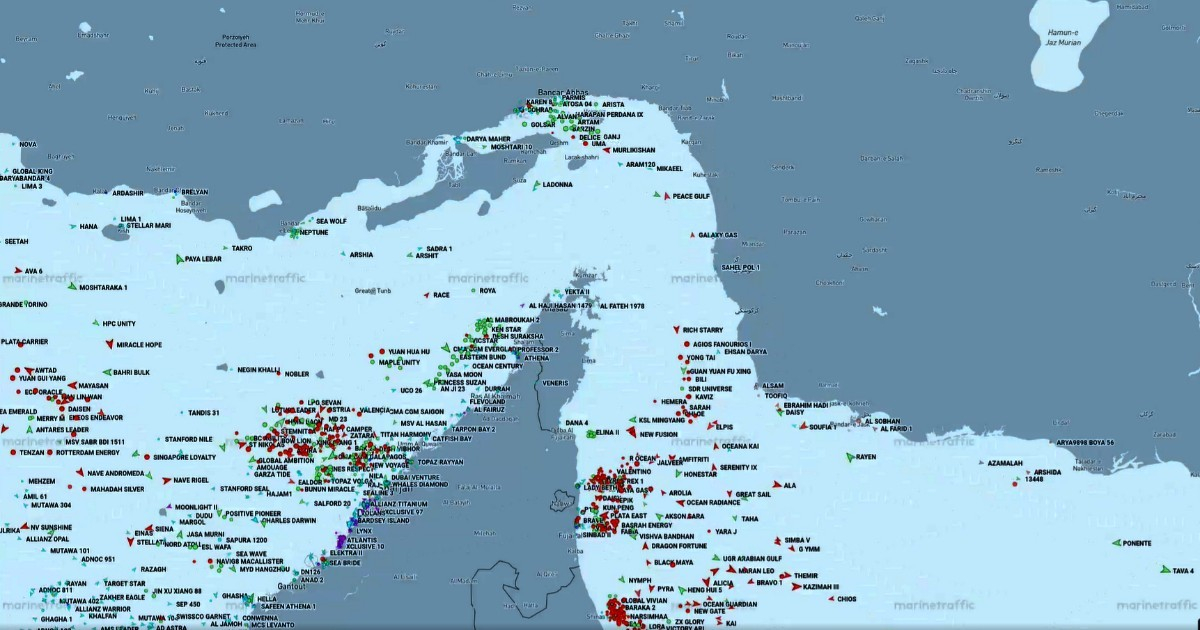
On Friday, President Donald Trump accused Iran of launching at least four attack drones at vessels navigating through the Hormuz Strait, calling it a direct breach of the existing ceasefire agreement between the two nations.
Trump announced the incident on Truth Social, revealing that one of the drones hit the upper deck of a large cargo ship. "Damage was sustained, but the vessel managed to continue its voyage," he stated. U.S. forces successfully downed the other three drones.
"This clearly represents a reckless violation of our ceasefire agreement," the president declared, signing the message with his full name.
This attack occurred just a day after a projectile struck a Singapore-flagged cargo ship 7.5 nautical miles southeast of Dahit, near the Omani coast, without causing any casualties. A Wall Street Journal investigation also attributed that strike to Iran.
Intensifying Iranian Hostility in Hormuz
The pattern of Iranian hostility towards commercial shipping in Hormuz has escalated over recent weeks. On June 13, Iran attacked commercial vessels with drones in the strait, although U.S. Central Command (CENTCOM) intercepted all projectiles.
On June 22, CENTCOM once again intercepted two Iranian drones threatening maritime traffic. Unlike previous incidents, the June 26 attack saw one drone successfully hit its target, marking an escalation in the attacks' effectiveness.
The ceasefire between Washington and Tehran, which began on April 8, 2026, has been fragile from the outset. On April 21, Trump accused Iran of violating the truce "numerous times."
Stalled Negotiations Amid Rising Tensions
On June 1, Iran halted negotiations with the U.S., citing Israeli attacks in Lebanon. Subsequently, on June 11, Trump canceled planned bombings on Iran and announced a new multilateral ceasefire agreement backed by over a dozen countries.
Following the Thursday attack on the Singaporean cargo ship, the International Maritime Organization (IMO) announced a temporary pause in its plan to evacuate ships from the strait, highlighting the high level of risk facing navigation in the area.
The Hormuz Strait is one of the world's most strategic maritime passages, with approximately 20% of global oil passing through it. Trump had set conditions for any definitive agreement, including the opening and supervision of the strait, removal of Iranian mines within 30 days, and Iran's permanent renunciation of nuclear weapons.
Just three days before the incident, the president asserted that the U.S. has "complete control" over this maritime passage.
The recent incident heightens tensions at a time when negotiations between the two powers remain stalled, and the international community watches with concern over the fragility of a truce that has yet failed to halt Iranian attacks on commercial shipping.
FAQs on the Hormuz Strait Conflict
What was the response of the U.S. to the drone attacks in the Hormuz Strait?
The U.S., through its forces, successfully intercepted and downed three of the four drones launched by Iran, mitigating potential damage to commercial vessels.
How significant is the Hormuz Strait in global oil transportation?
The Hormuz Strait is a critical maritime passage, with around 20% of the world's oil transiting through it, making its security vital for global energy supplies.
What conditions did Trump set for a permanent agreement with Iran?
Trump's conditions included the opening and supervision of the Hormuz Strait, the removal of Iranian mines within 30 days, and a permanent renunciation of nuclear weapons by Iran.