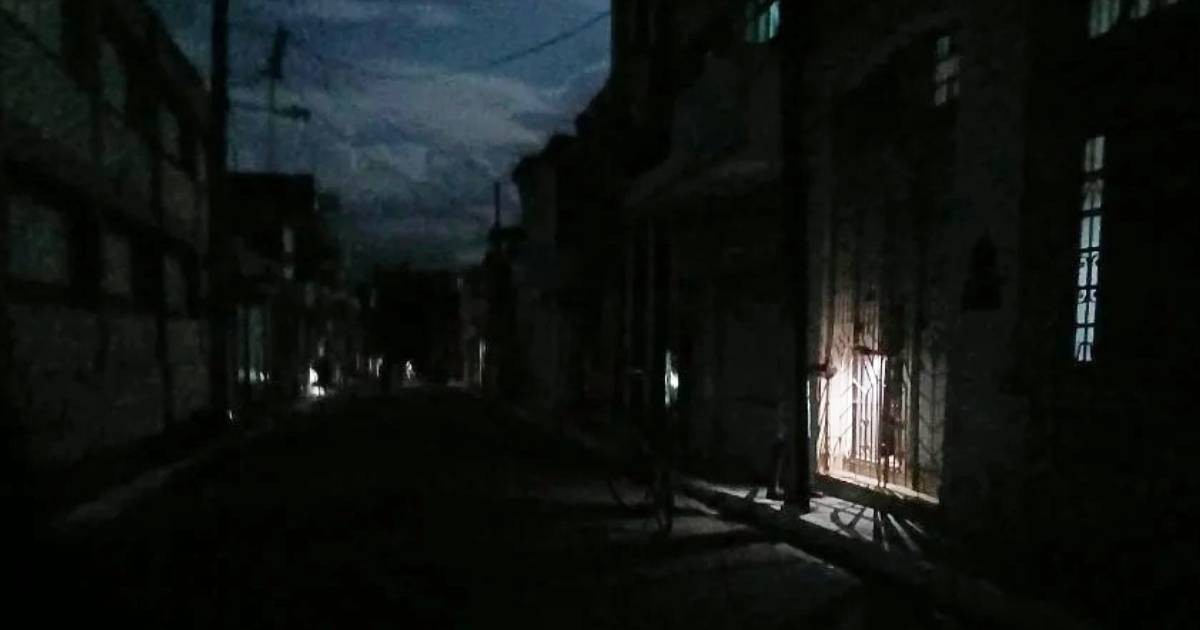
On Thursday, the Cuban Electric Union revealed that the peak power outage reached 2,208 MW at 8:50 p.m., surpassing the previous record of 2,174 MW set on May 14. Unfortunately, electricity service was unavailable throughout the entire day, with no prospects of restoration.
The crisis is expected to worsen during Friday’s peak hours. The state-run company forecasts an availability of only 1,065 MW against a maximum demand of 3,200 MW, resulting in a shortfall of 2,215 MW and an estimated impact of 2,245 MW. As of six in the morning, the system already showed 1,866 MW affected with merely 995 MW available.
Capital City in Darkness
In Havana, the situation was equally dire. Havana Electric Company announced via Facebook that the capital endured a 24-hour blackout on Thursday, with a peak outage of 640 MW at 11:10 p.m. “Emergency circuit shutdowns were necessary, affecting 245 MW. Service restoration was not possible,” the company stated. By the end of the report, the six emergency sections and circuits — totaling 581 MW — remained out of service.
Underlying Structural Issues
The root causes of the collapse are structural. A total of 106 distributed generation plants are offline due to fuel shortages, accounting for 890 MW out of service. Additional outages include the Regla and Melones barges, along with the Central Fuel plants at Mariel and Moa, summing up to 1,203 MW unavailable for the same reason. Furthermore, breakdowns in thermoelectric units, including the Antonio Guiteras plant, have added 311 MW to the deficit. This plant alone has experienced 16 breakdowns in 2026, with the latest occurring just this past Wednesday.
Insufficient Renewable Energy
The 54 solar photovoltaic parks installed by the regime provided 5,001 MWh on Thursday, achieving a midday peak of 775 MW, yet they fall short of compensating for the nighttime deficit when demand exceeds 3,200 MW.
The energy collapse stems partly from the sudden halt in Venezuelan oil supplies starting January 2026. Previously, Cuba relied on approximately 35,000 barrels of Venezuelan crude daily, covering nearly 30% of its energy needs. Alternative sources have not filled this gap effectively; although Russia delivered a one-time shipment of 740,000 barrels in March, the structural deficit remains unresolved.
Social Unrest and Government Response
The social impact is severe. Residents have protested in Vedado and other Havana neighborhoods against outages lasting nearly 24 hours. In Santiago de Cuba, similar unrest has erupted with pot-banging demonstrations in several areas.
The Cuban Conflict Observatory reported 1,311 protests in May alone, marking the highest monthly count to date. The regime has reacted with police deployments, arrests, and internet blackouts in conflict zones.
The Electric Union warned that the anticipated impact for Friday night's peak "depends on SEN availability conditions," without providing any assurances of short-term improvement.
Understanding Cuba's Energy Crisis
What is causing the power outages in Cuba?
The power outages in Cuba are primarily due to structural issues, including fuel shortages and breakdowns in thermoelectric units, compounded by a significant reduction in Venezuelan oil supplies.
How are the Cuban people reacting to the energy crisis?
The Cuban population has responded with protests, including demonstrations and pot-banging, particularly in Havana and Santiago de Cuba, expressing their frustration over nearly 24-hour outages.
What measures is the Cuban government taking in response to the protests?
In response to the protests, the Cuban government has deployed police forces, made arrests, and implemented internet blackouts in areas experiencing unrest.