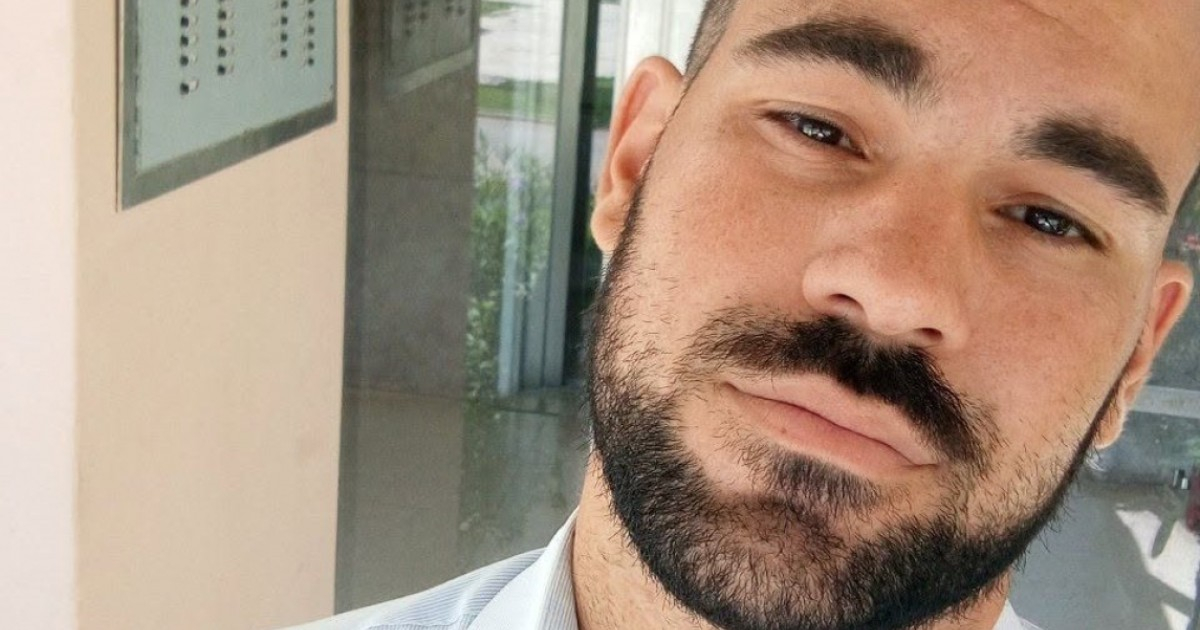
A young man from Havana, Damián Ochoa, aged 25, recently took to Facebook to express his disillusionment with the Cuban government. In his post, he accuses the regime of robbing him of his most precious asset: his youth.
"I feel like they're stealing my youth. I'm 25, I have a university degree that I worked hard for, and yet it can't even buy me a bottle of oil in the local stores," Ochoa wrote, capturing the paradox faced by many educated Cubans who are left without economic prospects.
Life in a Different Havana
Ochoa paints a picture of a Havana far removed from the one depicted in tourist brochures: "I live in a Havana where power outages melt your brain in the middle of the afternoon, where buses are a rare sight, and where 'there's none' is the eternal refrain."
His narrative focuses not just on material hardship, but on a thwarted desire: "What frustrates me the most is that I don't want to leave. I don't want to give my labor to another country. I want to succeed here, honestly, with my own hands and mind."
Obstacles to Entrepreneurship
Yet, the state obstructs him at every turn. "This system places a concrete ceiling over you. You try to start a legal business, do things the right way, and you encounter a state that is judge, jury, and executioner: bureaucratic hurdles, confiscatory taxes, and a government suspicious of anyone who earns more than what they deem acceptable."
Ochoa also criticizes the structural inequality that upholds the regime: "What justice is there in seeing the well-connected, military-businessmen, and the elite living in a different world, while the rest of us pawn everything to escape the island on a raft or humanitarian flight?"
The Elite and Economic Disparities
The elite he refers to has a name: the military conglomerate GAESA, which controls tourism, foreign trade, and telecommunications, creating a dual economy where those in uniform thrive while the general population struggles.
For Ochoa, the crisis goes beyond the financial realm: "It's existential. It's political because there's no freedom to express this same discontent without fearing repercussions." His warning is well-founded: as of 2026, Cuba has a historic record of 1,260 political prisoners, including 142 women and 33 minors, according to the organization Prisoners Defenders.
Energy and Economic Struggles
The young man's testimony emerges during one of Cuba's worst energy crises in decades. The Electric Union reports a generation deficit of 1,960 MW, with only 1,090 MW of installed capacity against a demand of 3,050 MW. Residents of Havana get a maximum of four hours of electricity per day.
The economic backdrop underscores his frustration. The average monthly salary in Cuba is 6,649 pesos, equivalent to around 15 to 20 dollars, while the basic basket costs 14 times that wage, and over 95% of the population lacks access to three dollars a day for essential needs.
Public Skepticism and a Cry for Freedom
The regime has announced 176 economic measures approved by the National Assembly, including private banking and opening up to foreign investment. Even Miguel Díaz-Canel admitted to "internal obstacles like slowness, bureaucracy, and regulations that hinder those who want to produce," yet he ruled out any political liberalization.
Cubans responded with widespread skepticism online, and Ochoa's testimony encapsulates that rejection. "I don't feel fulfilled. I feel cheated. I feel like a lion in a cage that's too small. I want the right to dream without being punished for it. I want the right to live without having to ask for permission. I want FREEDOM," he concluded.
Understanding the Cuban Crisis
What challenges do young Cubans face in the current political climate?
Young Cubans like Damián Ochoa face numerous challenges, including limited economic prospects, bureaucratic red tape, and a lack of political freedoms, which hinder their ability to succeed in their home country.
How does the military conglomerate GAESA impact Cuba's economy?
GAESA, a military conglomerate, controls significant sectors like tourism and telecommunications, contributing to a dual economy where military personnel prosper while the general population remains economically disadvantaged.
What measures has the Cuban government announced to address economic issues?
The Cuban government announced 176 economic measures, including private banking and foreign investment opportunities, but without any political liberalization, these measures have been met with skepticism.