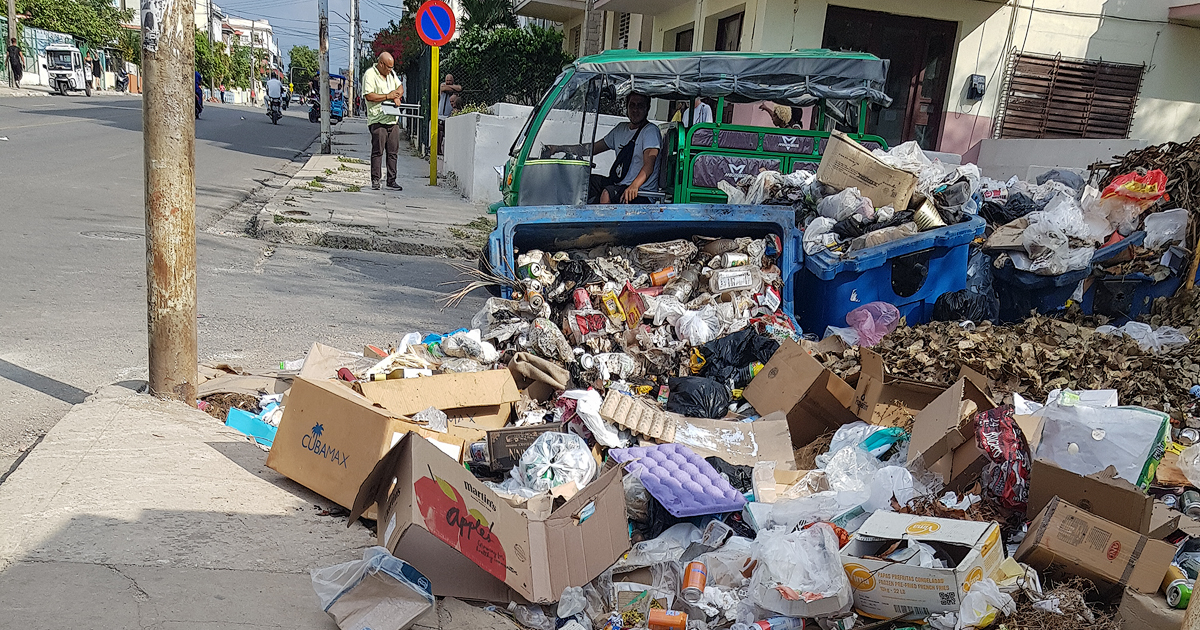
Since 1959, the economic saga of Cuba's Castro-communist regime can be summarized by a persistent pattern: the destruction of private property when the regime feels secure, partial tolerance when it is cornered, and a return to strangulation when external support appears. In Cuba, there have been no genuine economic reforms, only tactical concessions, limited openings, ideological retreats, and new patches disguised as structural changes.
The Assault on Private Property
The initial phase was a direct assault on private property. In the early years of the so-called "revolution," the new government implemented measures that many Cubans saw as "social justice": rent reductions, promises of land to farmers, intervention of foreign monopolies, and rhetoric against the abuses of the old order. However, it soon became clear that the goal was not to democratize property but to transfer it almost entirely to the "revolutionary" state.
The First Agrarian Reform Law, signed on May 17, 1959, limited rural ownership to 402 hectares, although exceptions were made for certain productive enterprises. Theoretically aimed at ending large estates and benefiting landless farmers, in practice, it established the National Institute of Agrarian Reform (INRA), a pivotal political and economic tool for concentrating power in the new regime's hands. While many farmers received land, the state began to dominate planning, credit, supplies, marketing, and prices.
Further Restrictions and State Expansion
The Second Agrarian Reform Law in October 1963 tightened the grip further by reducing the limit on private rural property to just 67 hectares. Everything beyond this was transferred to state control, effectively eliminating not only large estates but also much of the medium-sized agricultural ownership. This led to the expansion of state farms and cooperative forms subordinate to central planning.
In urban areas, the campaign against private enterprise advanced rapidly. Large companies, banks, refineries, sugar mills, and public service firms—primarily American and Cuban-owned—were seized. Compensation, when announced, was unrealistic, deferred, conditional, or completely absent for most affected parties. The state took ownership of factories, warehouses, hotels, theaters, stores, and rental properties.
The Eradication of Small Businesses
Small businesses such as grocery stores, barber shops, cafes, bars, workshops, shoemaking shops, food stalls, laundries, carpentry shops, butcheries, and family-run kiosks were the last to go during the 1968 "Revolutionary Offensive." Presented by Fidel Castro as a moral battle against selfishness, profit, and the "petty bourgeois mentality," in reality, it annihilated the last independent business fabric. Over 55,000 small enterprises were either nationalized or shut down, wiping out independent ownership.
Very little was left permissible. Some small farmers retained land within strict limits, and certain individual activities survived in a residual or informal manner. Nonetheless, the overarching principle was clear: citizens could not prosper independently; they had to rely on the state.
Episodes of Temporary Economic Flexibility
In the 1980s, the introduction of free farmers' markets allowed private producers and cooperatives to sell agricultural surpluses at market prices. This small market opening within a state-controlled economy revealed an inconvenient truth for the regime: producers are more productive when incentivized, and markets can efficiently address scarcity.
However, the relative success of these markets resulted in inequalities and enrichment among some producers and intermediaries. More importantly, it exposed a harsh reality for the castrismo: the market was more efficient than communist planning.
By 1986, Fidel Castro launched the "Rectification Process," shutting down free farmers' markets, attacking material incentives, and reviving Guevarist rhetoric against profit. The regime did not rectify its errors; it simply blocked the minimal economic freedom it had reluctantly allowed.
The Illusion of Reform in the 1990s and Beyond
The second significant opening in the 1990s was not out of conviction but urgent necessity. The fall of the Soviet Union and the socialist bloc left Cuba without subsidies, adequate oil supplies, preferential markets, and political credit. The "Special Period" was an admission of the structural failure of the model. Faced with potential collapse, the regime legalized dollar ownership, permitted self-employment in certain areas, opened agricultural markets, allowed "paladares" with restrictions, promoted international tourism, accepted foreign investment, and passed the 1995 Foreign Investment Law.
This was not comprehensive reform but an emergency economy. Cubans were allowed to survive but not be truly free. Self-employed workers could operate under limited licenses, suffocating taxes, absurd prohibitions, and constant persecution. "Paladares" could exist with restrictions on seating, employees, products, and supply. Farmers could sell, but only after meeting quotas and controls. Foreign investment could enter, but only in partnership with the state, without full legal security, and with workers hired through state agencies.
When Hugo Chávez took power in Venezuela, providing the Cuban regime with oil, credits, contracts, and professional service purchases, Havana felt it could halt the opening. From 2003 to 2004, recentralization was reinforced, the dollar was banned again in internal transactions, levies were imposed, and state control over foreign exchange was strengthened, reducing space for the private sector. The logic remained: when external support appears, the regime reverts to greater control.
A Call for Genuine Economic Freedom
Under Raúl Castro, starting in 2008, came another phase of "economic model update." Discussions included eliminating inflated payrolls, expanding self-employment, granting idle land in usufruct, allowing the purchase and sale of homes and cars, and recognizing certain non-state forms. However, the system was not dismantled. The Party continued to rule, state enterprises remained the "principal actor," the military retained control over strategic areas of the economy, and entrepreneurs were trapped between permits, inspectors, corrupt police, lists of activities, lack of a wholesale market, absence of full property rights, and fear of backtracking.
In 2021, under Díaz-Canel, the regime, at least in theory, authorized micro, small, and medium private enterprises (MSMEs). This was a belated measure over half a century after the destruction of national private enterprise. Once more, the opening responded to a profound crisis: a pandemic, tourism decline, inflation, shortages, the failure of the "Tarea Ordenamiento," productive collapse, and popular protests. MSMEs showed agility, capacity to import, distribute, supply, and generate employment, but also highlighted the state's failure. Consequently, the regime began to encircle them with new regulations, price controls, profit margin limits, wholesale trade restrictions, inspections, taxes, political suspicions, and accusations of enrichment.
The "reformillas" announced by Miguel Díaz-Canel on Friday, June 12, 2026, follow the same tradition. There is talk of attracting investment, including Cubans residing abroad, reducing state intermediaries in foreign trade, granting more autonomy to municipalities and companies, stimulating national production, targeting subsidies, and studying experiences like China and Vietnam. Yet, the issue lies not in the vocabulary but in the essence. The regime wants capital without capitalism, investment without rights, entrepreneurs without independence, markets without freedom, and prosperity without secure property.
The difference between each cycle is not in nature but context. In 1959-1968, the regime confiscated because it felt ascendant, backed by revolutionary epic. In 1980, it opened slightly to alleviate agricultural inefficiencies and shortages, and closed in 1986 due to ideological fear. In the 1990s, it opened because it lost Soviet subsidies and halted when Chávez provided relief. Under Raúl, it opened a bit because the state economy was unsustainable, but without democratizing power. With Díaz-Canel, MSMEs were allowed because the country was sinking, and then regulated when the private sector began to be more efficient than the state. Now, changes are announced again because the energy, food, fiscal, and migration crisis, along with social protests, threaten the continuity of the anti-democratic regime.
The lesson is clear: Cuba does not need another "reformilla," it needs genuine economic freedom. It's not enough to permit limited businesses under political surveillance and control. It's not enough to authorize investments while courts are not independent. It's not enough to invite the diaspora if the state can change the rules overnight. It's not enough to talk about decentralization if the Communist Party retains political monopoly and the military controls strategic sectors.
Nations that successfully emerged from communism or extreme statism thrived not through cosmetic reforms but through profound changes. Poland stabilized its currency, liberalized prices, opened trade, privatized companies, and built democratic institutions. Estonia focused on private property, trade openness, simple taxes, digitalization, legal security, and European integration. The Czech Republic advanced with privatizations, property restitution, monetary discipline, and institutional reconstruction.
Cuba can learn from these examples, but not by half measures or using China or Vietnam as an excuse to maintain a single-party dictatorship. Cuban prosperity demands a competitive market economy with protected private property, respected contracts, independent courts, freedom of enterprise, unrestricted access to imports and exports, a functional banking system, a credible currency, openness to national and foreign investment, and a state limited by law.
The fundamental issue in Cuba is the lack of freedom. As long as there is a single-party regime that decides for everyone and imposes its will, Cuba will remain under oppression and extreme poverty. The reality and the moment demand profound political and economic reforms.
Understanding Cuba's Economic Challenges
What are the main obstacles to economic freedom in Cuba?
The primary obstacles include the regime's control over private enterprise, lack of independent legal systems, and the political monopoly of the Communist Party. These factors prevent genuine market freedom and personal prosperity.
How have past economic policies affected Cuba's development?
Past policies, characterized by confiscation and limited concessions, have stifled economic innovation and growth. Each cycle of control and minor opening has shown temporary relief but failed to establish a sustainable economic model.
Why are genuine reforms crucial for Cuba's prosperity?
Authentic reforms are essential for creating a competitive market economy, protecting private property, and ensuring legal certainty. These changes would attract investment, spur innovation, and provide Cubans with the opportunity to prosper independently.