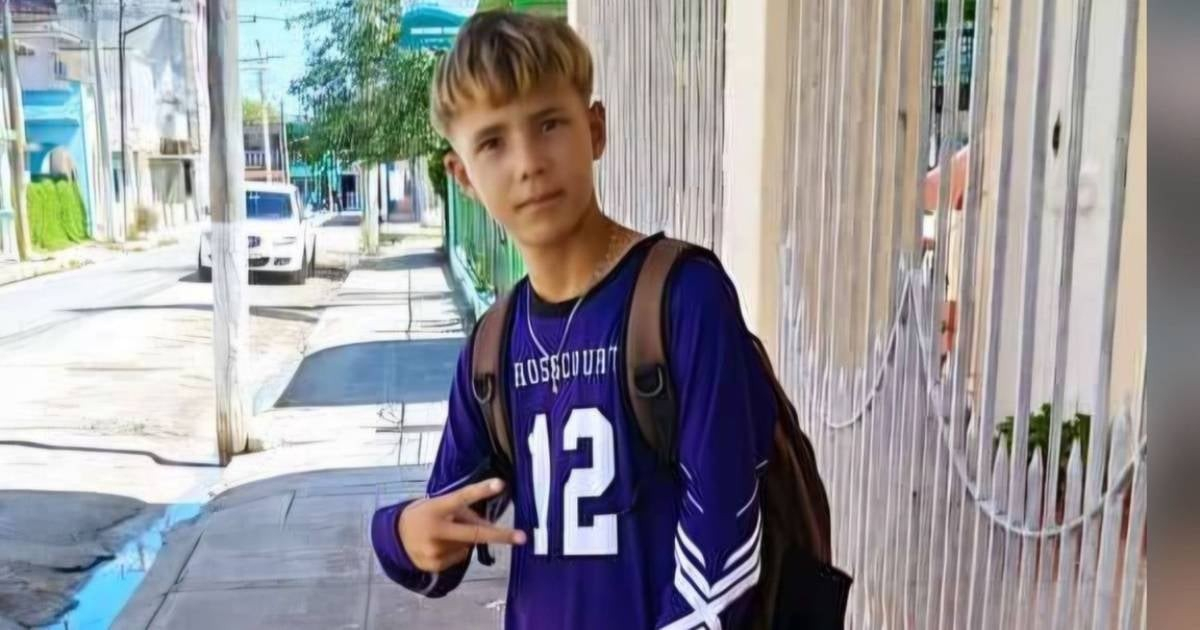
Jonathan David Muir Burgos, a Cuban teenager who had been detained for over three months in an adult prison on charges of "sabotage," was released this Wednesday, as confirmed by CubaNet through a direct phone conversation with the young man himself.
The journalist on the call initially asked if they were speaking with the father. "No, I'm Jonathan Muir," the teenager replied. "So, you've been released, is that right?" the reporter pressed. "Yes, yes," Jonathan confirmed. The news quickly spread on social media, where a family member posted: "Jonathan is home now!"
The young man was arrested on March 16, 2026, at the age of 16, alongside his father, evangelical pastor Elier Muir Ávila. They had responded to a police summons in Morón, Ciego de Ávila, just three days after the March 13 protests that shook the city due to power outages exceeding twenty hours a day and severe food shortages.
While his father was released the same day, Jonathan remained in custody. On April 2, the Morón Municipal Prosecutor's Office ordered his provisional detention on charges of "sabotage," a crime that, according to Amnesty International, can result in a prison sentence ranging from seven to 15 years.
Incarceration in Adult Prison Sparks Outrage
Despite being a minor, the regime kept him in Canaleta Prison, a maximum-security facility for adults in Ciego de Ávila. He turned 17 there on May 28 without facing trial.
His health condition heightened international concern. Jonathan suffers from chronic dyshidrosis, recurring skin infections, and gastrointestinal issues, and was supposed to start immunotherapy on March 18, which never commenced. His family reported inadequate nutrition, lack of potable water, and weight loss. On a May 12 visit, his family found him crying and extremely weak.
Government Propaganda vs. International Pressure
The regime attempted to counter these reports with propaganda. The pro-government platform Razones de Cuba published a photo of the teenager playing a piano in prison, captioned: "The piano doesn't lie. The photo is there. The inmates are there. And Jonathan... there he is, safe and sound, with his little hands on the keys." His father claimed the picture was taken without permission and that a visit was promised in exchange for his son playing the instrument.
The international community exerted persistent pressure. On April 24, the Inter-American Commission on Human Rights granted precautionary measures, stating that his rights to life, integrity, and health were at risk of "irreparable harm." The Cuban government ignored the commission's request for information sent on April 9.
Amnesty International and U.S. State Department Intervene
On May 19, Amnesty International demanded his immediate release, labeling him a prisoner of conscience: "We call on the authorities to immediately release Jonathan Muir Burgos and, until his release, protect him from the violence and mistreatment he may face while detained with adults." On June 17, the U.S. State Department formally demanded his release, marking three months of his incarceration.
As of Wednesday's closure, the legal details of his release remained unclear, as did whether the criminal proceedings for "sabotage" remain open, leaving the young man's legal status uncertain.
Key Questions About Jonathan Muir's Release
What were the charges against Jonathan Muir?
Jonathan Muir was charged with "sabotage," a serious offense that could lead to a prison sentence of seven to 15 years according to Amnesty International.
Why was Jonathan Muir's detention controversial?
His detention was controversial because he was a minor held in an adult maximum-security prison, and his health issues were not being addressed, raising international concerns.
How did international organizations respond to his arrest?
Organizations like Amnesty International and the Inter-American Commission on Human Rights called for his immediate release and granted precautionary measures, citing risks to his health and rights.
What role did social media play in his release?
Social media helped spread the news of his detention and release quickly, raising awareness and putting additional pressure on the authorities for his freedom.